
1130
Events of the year 1130 include a major papal schism after the death of Honorius II, the coronation of Roger II as King of Sicily, and the death of Norwegian king Sigurd the Crusader.
Overview
The year 1130 (MCXXX) falls in the High Middle Ages, a period of political consolidation, religious conflict, and cultural vitality across Europe and the Mediterranean. Several events in 1130 had lasting political and ecclesiastical consequences: a contested papal succession that produced a long schism, dynastic change in Norway, and the formal elevation of southern Italy and Sicily into a kingdom under Norman leadership.
Image gallery
2 Images
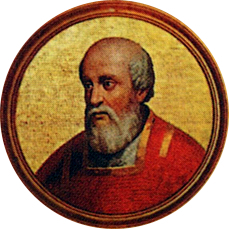
Major political and religious events
One of the defining developments of 1130 was the contested election to the papacy that followed the death of Pope Honorius II. Rival factions in Rome produced two claimants, giving rise to a schism between Pope Innocent II and Antipope Anacletus II. The division attracted the attention of secular rulers and church reformers and shaped papal politics for several years.
In the Kingdom of Sicily and southern Italy, Norman ruler Roger II consolidated his authority. On 25 December 1130 he was crowned King of Sicily, uniting a diverse territory of Norman, Lombard, Byzantine and Arab influences under a single royal title. His coronation strengthened central authority in the region and marked the emergence of a powerful Norman state in the central Mediterranean.
Regional developments and conflict
Northern Europe also saw significant change: King Sigurd I of Norway, known as Sigurd the Crusader, died in 1130. His death stimulated competing claims and contributed to an extended period of internal strife in Norway often described as the start of the Norwegian civil war era. Across the Byzantine world and the Crusader states, rulers continued to manage frontier pressures and local conflicts, though no single large-scale crusading expedition is associated with this year.
Culture, architecture and economy
The early 12th century remained dominated architecturally and artistically by the Romanesque style, visible in churches, monasteries and castles across Europe. Monastic centers and cathedral schools were important hubs for learning; they fostered the copying of manuscripts, theological debate, and the training of clerics who would serve both church and state. Maritime trade in the Mediterranean continued to link Italian city-states with markets in the Levant, North Africa and the Iberian Peninsula.
Notable births and deaths
- Deaths: Pope Honorius II (died February 1130), whose passing precipitated the papal schism; Sigurd I of Norway (died March 1130), the crusading king whose death led to succession struggles.
- Coronation: Roger II of Sicily crowned king on 25 December 1130, a key moment in Norman southern Italy.
Though not a year of single, world-changing battles, 1130 exemplifies the interplay of dynastic ambition, ecclesiastical power, and regional realignments that characterized the High Middle Ages. The political ripples from the events of this year—especially the papal split and the rise of Norman Sicily—would affect diplomatic and military affairs for decades.
Related articles
Author
AlegsaOnline.com 1130 Leandro Alegsa
URL: https://en.alegsaonline.com/art/111046