
1090 — a year in the High Middle Ages
Overview of the year 1090 (MXC): calendar details, major political and cultural events worldwide, notable developments such as the capture of Alamut, and broader historical context.
Overview
The year 1090 (written MXC in Roman numerals, see notation) falls in the High Middle Ages. It was a common year beginning on Tuesday according to contemporaneous reckoning of the Julian system; modern reconstructions show the sequence of days in the year on a calendar and reflect its place in the Julian calendar. Records from this period are uneven, so many regional developments are best described in terms of broader trends rather than exhaustive chronologies.
Image gallery
1 Image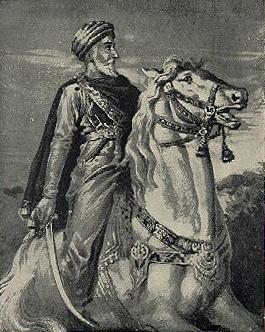
Notable events
Certain events of 1090 stand out because of their later significance. In the Persian lands, Hasan-i Sabbah secured the mountain fortress of Alamut and began establishing the Nizari Ismaili state, an organization later known in European sources as the "Assassins." In western Europe the political map continued to be shaped after the Norman conquests of the previous decades, with Norman influence extending in parts of southern Italy and Sicily. Across Iberia and North Africa, Muslim dynasties and emerging forces such as the Almoravids were active in the struggle for territory and political influence.
Cultural and technological context
The late 11th century was a period of sustained building, intellectual exchange and technological diffusion. Romanesque architecture and monastic reform movements (including Cluniac influences) were shaping ecclesiastical life in western Europe. In East Asia, Chinese dynasties supported scholarship and technical innovation, and long-distance trade routes continued to carry goods, ideas and technologies between Europe, the Islamic world and Asia.
Why 1090 matters
- It marks the consolidation of the Nizari Ismaili state at Alamut, which had enduring political and cultural repercussions.
- It sits within the period of dynamics that led to the First Crusade later in the decade.
- It exemplifies the interconnected political and cultural shifts of the High Middle Ages across Europe, the Mediterranean and Asia.
Records and limitations
Surviving chronicles and archaeological evidence provide glimpses rather than complete narratives. Many rulership changes, local conflicts, trade developments and cultural works occurred in 1090 but are documented unevenly. Scholars therefore place the year within larger trends—political consolidation, religious reform, and expanding trade—rather than as a moment defined only by discrete incidents.
Further reading: For calendar matters, see the linked references for notation and Julian calculations; for political history, consult region-specific studies of the Near East, Iberia and Norman Italy for the late 11th century.
Related articles
Author
AlegsaOnline.com 1090 — a year in the High Middle Ages Leandro Alegsa
URL: https://en.alegsaonline.com/art/110998