
Year 1041 (AD) — events, calendar, and historical context
Overview of the year 1041 (common year starting on Thursday in the Julian calendar), with political developments, cultural context, calendar notes, and notable figures associated with that year.
Year 1041 (MXL I) was a common year beginning on Thursday of the Julian calendar. It sits in the mid-11th century, a period of political fragmentation and gradual state consolidation across Eurasia. Chroniclers and later historians date events of this year according to regional regnal systems and the Julian civil calendar; a modern visual reference for the year's layout can be found on the full calendar, and background on the system then in use is available for the Julian calendar.
Image gallery
1 Image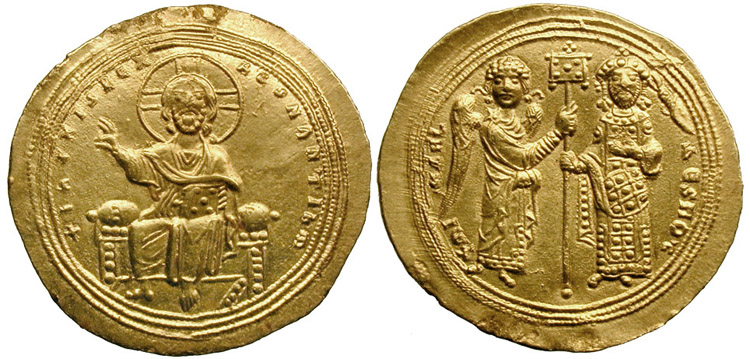
Political landscape and notable events
The year falls in a time when powerful regional courts shaped politics rather than a single global hegemon. In Western Europe, monarchies such as those of England and the kingdoms of France and Germany navigated succession, noble rivalry, and local autonomy. In the Iberian Peninsula the earlier collapse of centralized Caliphal authority had produced many independent taifa states, each ruled by its own dynasty and often competing with Christian kingdoms to the north.
In East Asia the Northern Song dynasty governed large parts of what is now China under Emperor Renzong, while in Japan the Heian court continued its aristocratic cultural predominance. Across the medieval Islamic world and in parts of Eastern Europe, regional dynasties, city-states, and principalities maintained shifting alliances and intermittent warfare rather than long periods of uninterrupted rule.
Byzantine succession and imperial affairs
One of the better-documented political developments of the year concerns the Byzantine Empire. The emperor who had reigned through the late 1030s died in 1041, and succession produced a brief change in the imperial household. These transitions were significant because imperial court politics, military command, and relations with neighboring powers could alter quickly after a change on the throne.
Culture, economy and daily life
Across regions, the mid-11th century saw flourishing local cultures: manuscript copying and ecclesiastical art in Western and Byzantine Christendom, court poetry and refined rituals in Heian Japan, and vibrant urban life including commerce and artisan activity in Song China. Agriculture remained the backbone of most economies, but trade—both overland and maritime—was increasingly important to urban prosperity.
Notable figures associated with 1041
- Byzantine: the reigning emperor whose death and succession shaped court politics during the year.
- English and Scandinavian realms: monarchs and claimants whose short reigns or contests influenced northern European succession dynamics.
Precise lists of births and deaths are patchy for the period because surviving records are uneven and often localized. Where chroniclers provide names, historians cross-check reign-lists, charters, and annals to establish approximate dates.
Significance: 1041 illustrates the character of the 11th century—regionalized power, dynastic succession, and cultural florescence within courts and cities. It is a useful reference point for examining how local change and continuity set the stage for later medieval transformations across Europe, the Islamic world, and East Asia.
Related articles
Author
AlegsaOnline.com Year 1041 (AD) — events, calendar, and historical context Leandro Alegsa
URL: https://en.alegsaonline.com/art/110949