
Zebu (Bos indicus): Tropical cattle of South Asia, Africa and beyond
Zebu are humpless-appearing domestic cattle (Bos indicus) adapted to tropical climates, valued for heat tolerance, draught work and cultural roles across South Asia, Africa and other warm regions.
Overview
The term zebu refers to domestic cattle belonging to Bos indicus (often considered a subspecies of Bos taurus) that are widespread across South Asia, parts of Africa and other tropical regions. Zebus are notable for their adaptation to hot, humid environments and have been kept by people for millennia for milk, meat, labour and cultural functions. They play a central role in many rural economies and traditions.
Image gallery
10 Images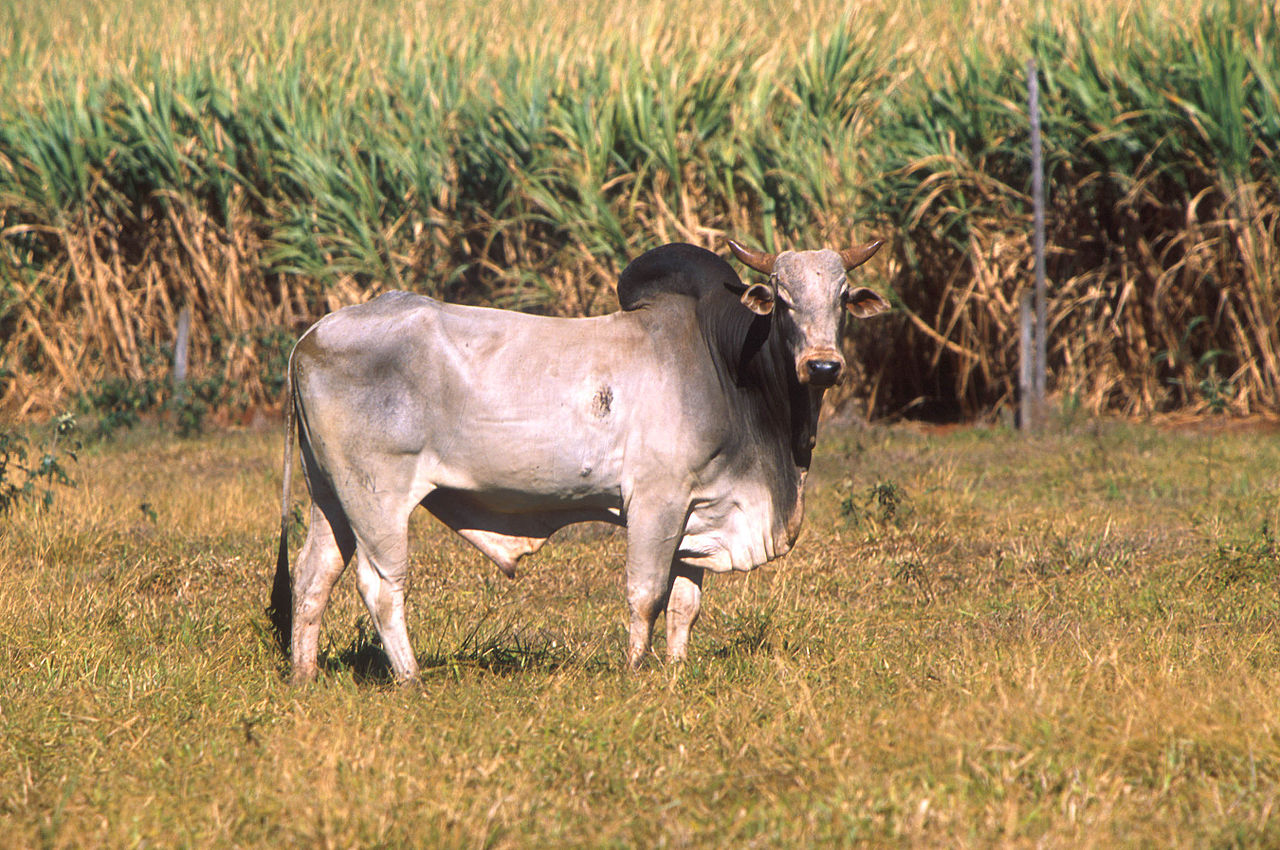




Physical characteristics
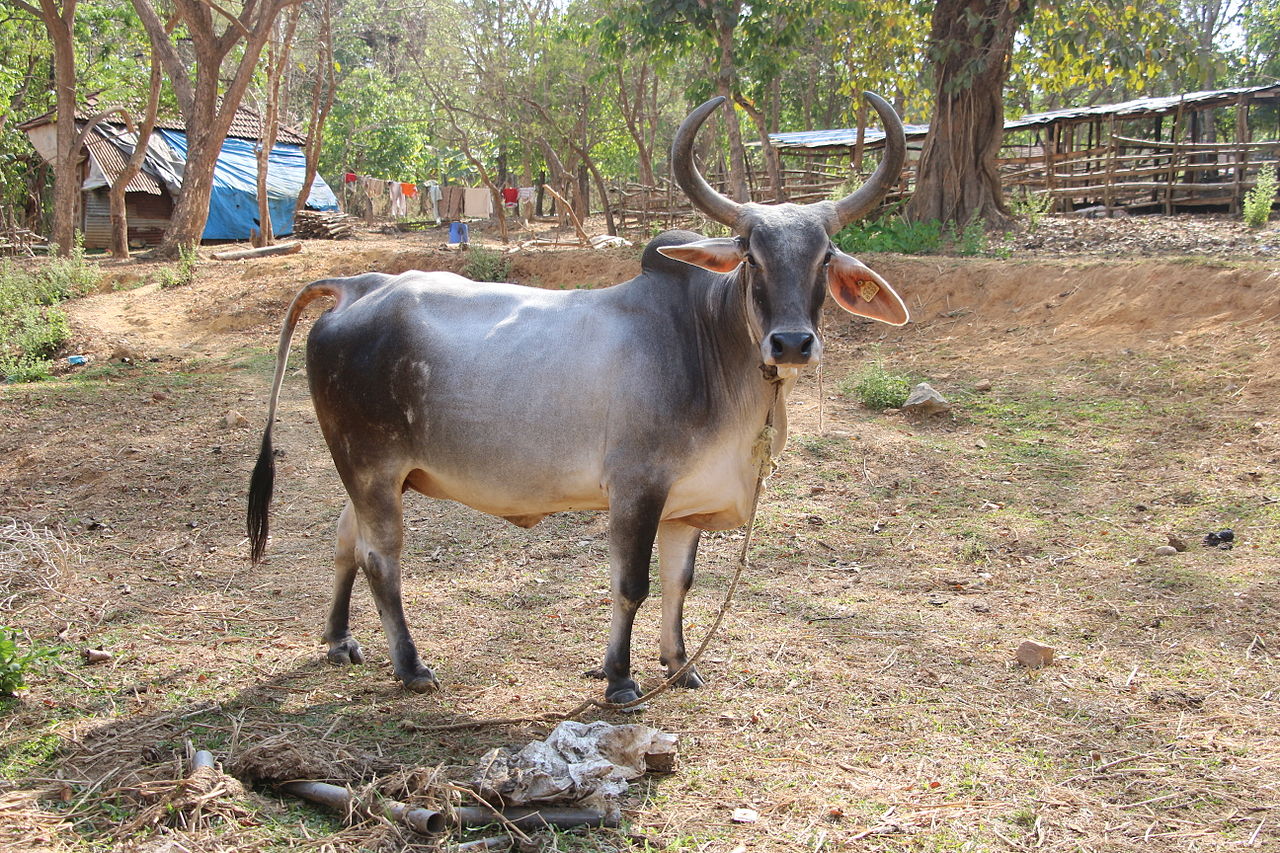
Zebu typically show a characteristic hump over the shoulders, a large dewlap (loose throat skin) and often drooping ears. Their skin and coat, body shape and metabolic traits confer improved tolerance to heat and to certain parasites and diseases compared with many European cattle. The hump contains muscle and fat and is one of the visible differences from taurine (European) breeds.
Origins and domestication
Genetic and archaeological evidence indicates that zebu cattle were domesticated in South Asia and spread to neighbouring regions over thousands of years. They were later introduced to East Africa and other tropical zones through trade and migration. Selective breeding in different regions produced many local types adapted to distinct ecological niches.
Uses and importance
- Milk and dairy products: some zebu breeds are important local dairies.
- Draught power: ploughing and transport in smallholder agriculture.
- Meat and hides: used for local consumption and materials.
- Cultural roles: religious, ceremonial and social significance in many societies.
Breeds and distinctions
Well-known zebu-derived types include South Asian breeds such as Gir, Sahiwal and Kankrej, and composite types like the American Brahman developed from Indian stock. Crossbreeding with European cattle is common to combine heat tolerance with higher milk yield or growth rates. The term zebu is sometimes used interchangeably with indicine or humped cattle in agricultural and veterinary contexts.
Contemporary issues
Modern agriculture balances conserving local zebu breeds with productivity improvements. Their resilience to heat and parasites makes them valuable under climate change, but economic pressures and crossbreeding can threaten pure local lines. For further regional information see Zebu in India.

Zebu breeds (selection)
Indian subcontinent
In the Indian 19th Livestock Population Census, i.e. the nationwide statistical survey of domestic animals in India 2011, 37 indigenous (zebu) cattle breeds were statistically recorded (enumerated in order of frequency):
1 Hariana2
Gir3
Sahiwal4
Kankrej5
Kosali6
Khillar7
Hallikar8
Malvi9
Bachaur10
Rathi11
Malnad Gidda12
Tharparkar13
Kenkatha14
Ongole15
Red Sindhi16
Motu17
Nagori18
Red Kandhari19
Nimari20
Khariar21
Deoni22
Gaolao23
Amritmahal24
Kherigarh25
Dangi26
Kangayam27
Binjharpuri28
Ghumsuri29
Umblacherry30
Mewati31
Ponwar32
Siri33
Bargur34
Krishna Valley35
Pulikulum36
Punganur37
Vechur
Pakistan's 2006 pet statistics distinguished the following indigenous (zebu) breeds (in order of frequency):
1 Red Sindhi2
Sahiwal3
Tharparkar (Thari)
4 Dhanni5
Bhag Nari6
Achai7
Lohani8
Rojhan9
Kankrej (Kankraj)
10 Gabrali
Worldwide
- Brahman
- Guzerat
- Indu Brazilian (Zebu)
- Nelore Cattle
- Philippines beef
- southern yellow cattle
- Dwarf Zebu
breeds of domestic cattle resulting from crosses with zebus
- Brangus
- Central Plains Gelbvieh (China)
- Santa Gertrudis Beef
- Senepol Cattle
- Tswana Cattle
- Watussi Cattle
- Canchim cattle (Central Brazil)
Gallery
· 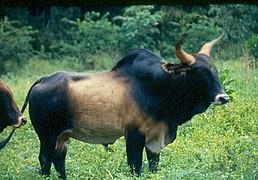
Zebus (B. namadicus)
· 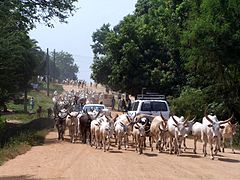
Cattle in Juba/South Sudan
· 
Heart of Beef
· 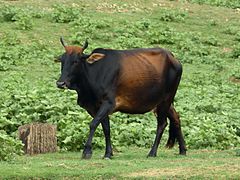
Female Zebu in Sri Lanka
Related articles
Author
AlegsaOnline.com Zebu (Bos indicus): Tropical cattle of South Asia, Africa and beyond Leandro Alegsa
URL: https://en.alegsaonline.com/art/110457