
Yotsuya Kaidan — classic Japanese ghost play
Yotsuya Kaidan is a famous 1825 Japanese ghost play by Tsuruya Nanboku. It tells the tragic tale of Oiwa and Iemon and shaped depictions of the vengeful female ghost in Japanese culture.
Overview
Yotsuya Kaidan is one of Japan's best known ghost stories, first staged as a dramatic play in the early 19th century. Written for Edo theatre by the playwright Tsuruya Nanboku IV, the work combines domestic tragedy and supernatural revenge to create a powerful example of the kaidan (ghost-tale) genre. The story is set around the Yotsuya neighborhood near Edo and has been retold in many forms.
Image gallery
4 Images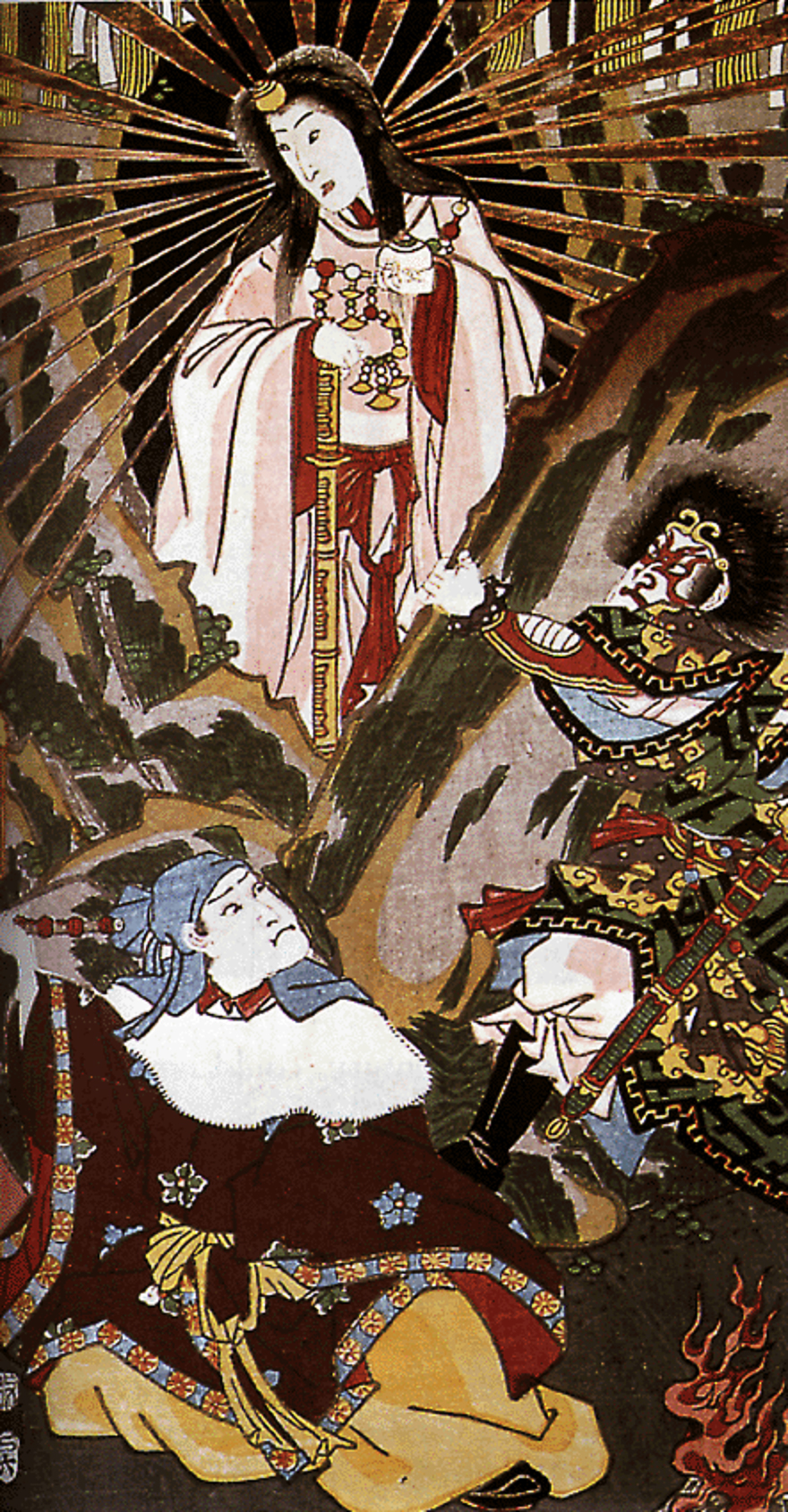


Plot and central figures
The narrative follows Oiwa, a young wife, and her husband Iemon. Deception, betrayal and violence lead to Oiwa's death; she returns as a vengeful spirit whose appearance and haunting settle accounts with those who wronged her. The strong emotional core and compact revenge plot made the tale suitable for theatrical presentation and helped it enter popular culture.
Performance and stagecraft
The play has been performed in both kabuki and puppet theatre traditions. Traditional stagings emphasize dramatic makeup, sudden apparitions and eerie lighting to represent the ghost; the image of Oiwa with a disfigured face is one of the most enduring visual motifs in Japanese theatre. The work is often cited when discussing techniques for portraying the supernatural on stage in Edo-period drama.
History and context
Tsuruya Nanboku IV wrote the version that became canonical in the 1820s, during the late Edo period. Its themes reflect contemporary anxieties about family, honor and social mobility, while drawing on older folk tales about wronged spirits. The play was popular with audiences for its emotional intensity and shocking scenes.
Adaptations and influence
Yotsuya Kaidan has inspired numerous adaptations: stage revivals, films, novels and visual arts. Filmmakers and writers have reinterpreted the narrative for modern audiences, and the figure of Oiwa influenced later portrayals of the onryō (vengeful female ghost). The story is frequently referenced in surveys of Japanese horror and theatre studies.
Notable distinctions
- Its title links the tale to a real place on the old Tōkaidō route and the Yotsuya quarter of Edo.
- It helped codify visual and thematic conventions for female ghosts in Japanese culture.
- Performances often bridge puppet theatre and kabuki traditions, illustrating Edo-period theatrical exchange.
Today Yotsuya Kaidan remains central to discussions of Japanese horror and theatrical history. Its blend of intimate cruelty and supernatural retribution continues to resonate, making it a frequent subject of academic study and artistic reinterpretation.
Related articles
Author
AlegsaOnline.com Yotsuya Kaidan — classic Japanese ghost play Leandro Alegsa
URL: https://en.alegsaonline.com/art/110035
Sources
- books.google.com : "Tōkaidō yotsuya kaidan"
- books.google.com : "Tsuruya Nanboku"