
Yellow Pages: directory of business listings and their evolution
Yellow Pages are categorized business directories originally printed on yellow paper; once a primary advertising medium, they have evolved into online local-search services and mobile directories.
Overview
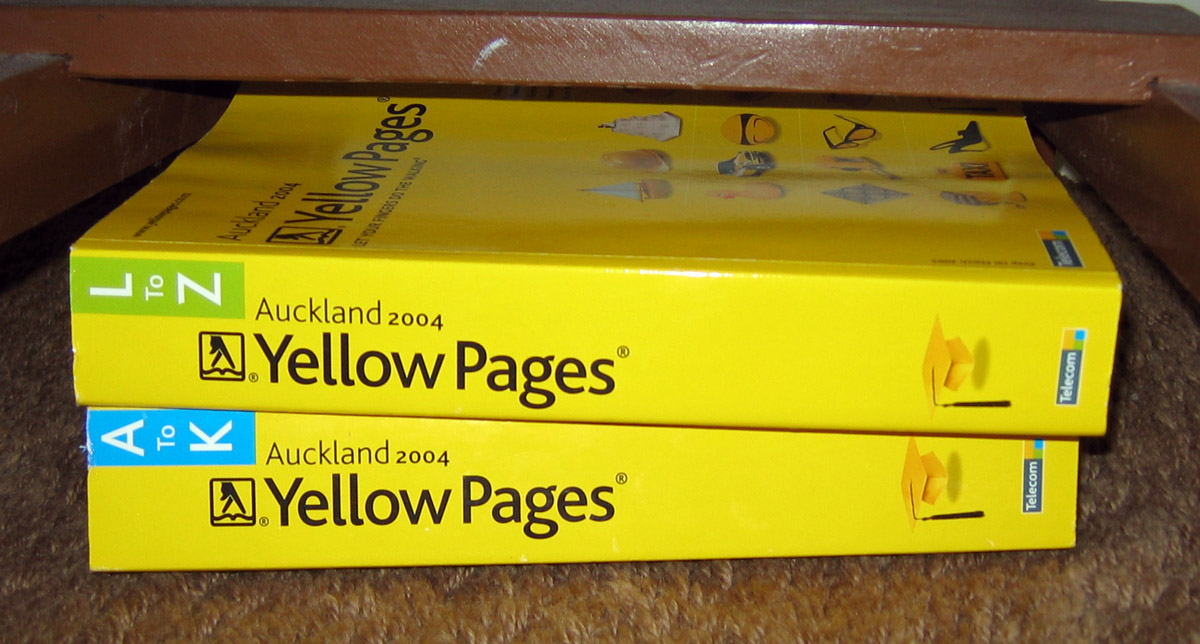
The term Yellow Pages describes a directory of commercial businesses organized by category rather than by individual name. Historically these volumes were printed on yellow paper to distinguish them from the white pages of residential telephone listings. Entries can include company names, addresses, telephone numbers, a brief description of services, and paid advertising elements such as display ads or enhanced listings. Today the phrase also refers to electronic and online business directories that serve the same local-search function.
Image gallery
2 Images
Structure and common components
Yellow Pages are typically arranged into topical headings (for example, plumbers, restaurants, or legal services) so users can browse by need. Common components include:
- Basic listings with contact details and category placement.
- Enhanced or premium listings featuring logos, photos, or extended descriptions.
- Display advertisements that occupy larger space and target particular categories or geographic areas.
- Index pages and maps to assist navigation within the directory.
Print editions were often updated annually or semiannually; digital editions can be updated continuously and may integrate user reviews, links, and directions.
History and development
Directories of businesses grew alongside public telephone networks, becoming a standard reference in many countries during the 20th century. Their yellow paper convention emerged as a practical visual cue and also as a brand identifier for commercial advertising. With widespread internet access and smartphone use, many traditional publishers adapted by offering online directories, mobile apps, and search engine partnerships.
Uses, business model and distinctions
Yellow Pages historically funded production through advertising sales and paid upgrades for prominent placement. Modern equivalents combine advertising revenue, pay-per-click models and subscription services for enhanced visibility. They differ from white pages (residential listings) and from classified ads by their organized, category-focused layout. For local businesses and consumers, both printed and digital Yellow Pages remain a tool for finding suppliers and services, although their prominence has declined as general web search and specialized local platforms have grown.
For more examples of contemporary directories and services, see the Yellow Pages directory.
Related articles
Author
AlegsaOnline.com Yellow Pages: directory of business listings and their evolution Leandro Alegsa
URL: https://en.alegsaonline.com/art/109769