
Winning the Oil Endgame
A 2005 Rocky Mountain Institute book by Amory B. Lovins outlining four integrated strategies to end U.S. oil dependence through efficiency, substitution, electrification and demand reduction.
Winning the Oil Endgame is a policy and technology roadmap published in 2005 by the Rocky Mountain Institute and written by energy analyst Amory B. Lovins. The work examines how a wealthy, industrialized country can sharply reduce its reliance on petroleum by combining technical innovation, market incentives and smarter system design. It frames oil dependence as an economic and security problem that can be solved without accepting large sacrifices in mobility or convenience.
Image gallery
1 Image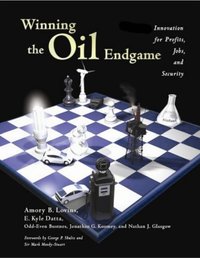
Four strategic approaches
- Use oil more efficiently. Improve vehicle fuel economy, cut waste and redesign systems so less fuel is needed for the same services.
- Substitute other fuels and feedstocks. Use low-carbon biofuels and other nonpetroleum inputs where they make economic and environmental sense.
- Replace oil with electricity. Electrify transportation and heating where grid-based power (from increasingly efficient sources) is cheaper or cleaner than direct oil use.
- Reduce demand and reshape systems. Reduce unnecessary travel, optimize logistics, and redesign cities and supply chains to lower fuel demand.
Lovins emphasizes that these strategies are complementary and often reinforce one another: greater efficiency lowers the cost of switching fuels, while electrification multiplies the gains of cleaner electricity sources. The book offers case studies and business-style analyses arguing many measures are cost-effective or profitable.
Content, proposals and examples
The book blends technical descriptions (for example of very lightweight cars, improved aerodynamics and hybrid-electric drivetrains) with policy recommendations such as market-based incentives, performance standards and public–private partnerships. It popularized the idea that radical oil savings can be achieved through integrated design rather than only through gradual substitution. The term "hypercarn" has appeared in related literature describing ultra-efficient vehicle concepts promoted by Lovins and collaborators.
History and impact
Since its release, Winning the Oil Endgame has been cited in debates over energy policy, climate strategy and transport planning. It helped focus attention on efficiency as a first-order resource and on the economic opportunities of reducing reliance on imported petroleum. The Rocky Mountain Institute continued to develop and promote many of the book's themes in subsequent research and projects.
For further background on petroleum and energy transition issues see general references on oil and energy policy. The book remains notable for reframing oil reduction as a practical, multifaceted program rather than a single technical fix.
Related articles
Author
AlegsaOnline.com Winning the Oil Endgame Leandro Alegsa
URL: https://en.alegsaonline.com/art/108605
Sources
- rmi.org : Hypercars, hydrogen, and the automotive transition
- rmi.org : Tilting at Energy Windmills