
Wilmersdorf — Berlin locality and former borough
Wilmersdorf is a residential and commercial quarter in Berlin, incorporated into Greater Berlin in 1920 and since 2001 part of the Charlottenburg-Wilmersdorf borough.
Wilmersdorf is an urban district in the western part of Berlin with a long history as a suburban village that became part of the expanding city in the early 20th century. Over time it developed a mixed character of residential streets, commercial boulevards and pockets of green space. The district is best known for its proximity to major shopping avenues and for a built environment that combines late 19th‑ and early 20th‑century apartment blocks with villa districts.
Image gallery
10 Images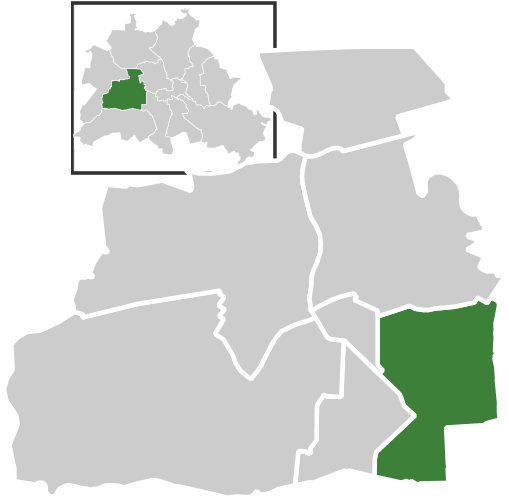



History and administrative changes
Originally a village outside the medieval core of Berlin, Wilmersdorf was incorporated into the newly formed Groß‑Berlin (Greater Berlin) in 1920, when many surrounding towns and villages were unified to create a single municipal entity. For much of the 20th century Wilmersdorf existed as a separate borough within Berlin. In 2001 an administrative reform merged the former borough of Wilmersdorf into the larger borough now known as Charlottenburg‑Wilmersdorf. Earlier administrative descriptions commonly refer to Wilmersdorf as a borough; historical references often use terms such as borough or locality depending on context.
Subdivisions and neighbouring areas
The territory historically associated with the borough included a number of recognisable localities and neighborhoods. Prominent names often mentioned in this context are:
- Halensee
- Schmargendorf
- Grunewald
Grunewald in particular is noted for its forested parkland and large private villas, which contrast with more densely built sections of Wilmersdorf. The area is linked to nearby Charlottenburg by major streets and transport corridors.
Urban character, commerce and transport
Wilmersdorf blends residential calm with commercial activity. Several important shopping streets and boulevards cross the district; most famously the Kurfürstendamm, a major west‑east thoroughfare, runs through or near Wilmersdorf and serves as a principal retail and cultural axis in western Berlin. Public transport serves the area well, with multiple tram, bus and rapid‑transit options connecting it to the rest of the city.
Culture, architecture and social life
Architecturally, Wilmersdorf shows a mix of Gründerzeit apartment buildings, interwar housing, and single‑family villas. In the decades around the First World War and during the Weimar Republic the area attracted a number of intellectuals and artists and supported an active local cultural scene. Like many Berlin districts, it also had a significant Jewish community before the Second World War, and traces of that heritage remain part of its historical memory.
Contemporary relevance and notable facts
Today Wilmersdorf is regarded as a desirable residential quarter with easy access to green spaces and urban amenities. Its administrative merger into Charlottenburg‑Wilmersdorf reflects broader municipal reorganisation, while its commercial corridors such as the Kurfürstendamm continue to be important for shopping and leisure. Visitors and residents value the combination of quiet streets, architectural variety and proximity to central Berlin facilities.
For further orientation and local details, municipal pages and local cultural guides provide maps, historical timelines and current events listings.
Related articles
Author
AlegsaOnline.com Wilmersdorf — Berlin locality and former borough Leandro Alegsa
URL: https://en.alegsaonline.com/art/108384