
Westside, Iowa
Small incorporated community in western Iowa known for its agricultural setting, local institutions, and history as a rural Midwestern town.
Overview
Westside is an incorporated city in the U.S. state of Iowa, located within the broader region of the United States. It is one of many small towns that serve as local centers for surrounding farmland. Westside retains a compact community character typical of rural Midwestern municipalities.
Image gallery
1 Image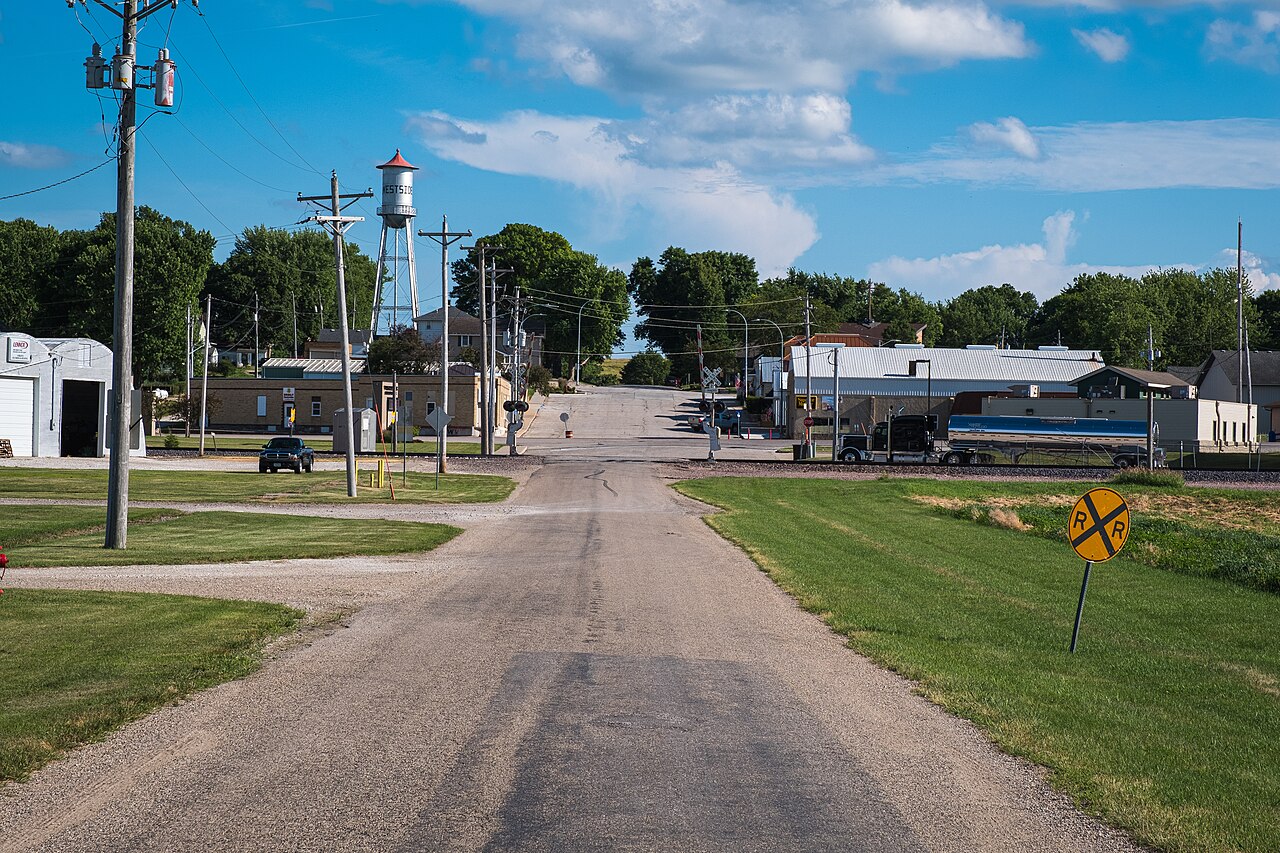
Characteristics
The city is composed of a residential core, a handful of local businesses and public buildings, and surrounding agricultural land. Typical features include a municipal hall or civic center, houses of worship, a volunteer fire or emergency service, and local schools or school services shared with nearby towns. Street patterns are modest and the built environment emphasizes low-density, single-family homes and farm-related structures.
History and development
Like many Iowa towns, Westside developed as settlers established farms and small commercial enterprises in the 19th and early 20th centuries. Its growth was shaped by agriculture, transportation links such as county roads and rail lines, and the rhythms of rural life. Over time the town adapted to changes in farming technology and regional consolidation while maintaining local institutions important to residents.
Economy and community life
Westside’s economy is principally tied to agriculture and services that support farming families—grain handling, equipment sales, maintenance and small retail. Community life often centers on school activities, church events, volunteer organizations and seasonal festivals. Residents typically travel to larger nearby towns for specialized services, healthcare and major shopping.
Notable facts and distinctions
- Serves as a local community hub for surrounding farms and rural neighborhoods.
- Maintains the social institutions common to small Midwestern towns: schools, churches and volunteer civic groups.
- Reflects broader regional trends such as demographic change, agricultural consolidation and cooperative community action.
For more specific information about local government, services or history consult municipal records or regional resources available through county or state channels. Local heritage is often preserved by historical societies and longtime residents whose recollections document the town’s development.
Related articles
Author
AlegsaOnline.com Westside, Iowa Leandro Alegsa
URL: https://en.alegsaonline.com/art/107604