
Weddell seal (Leptonychotes weddellii)
A large Antarctic true seal known for living on fast ice, maintaining breathing holes with its teeth, deep diving ability, and a population estimated in the hundreds of thousands.
The Weddell seal (Leptonychotes weddellii) is a large Antarctic true seal noted for its ability to live year-round on sea ice close to the continent. It was named for the British sealer and explorer James Weddell. These seals are among the most abundant in Antarctic waters, with rough population estimates ranging from several hundred thousand up to about one million animals. For general species information see Leptonychotes weddellii.
Image gallery
10 Images
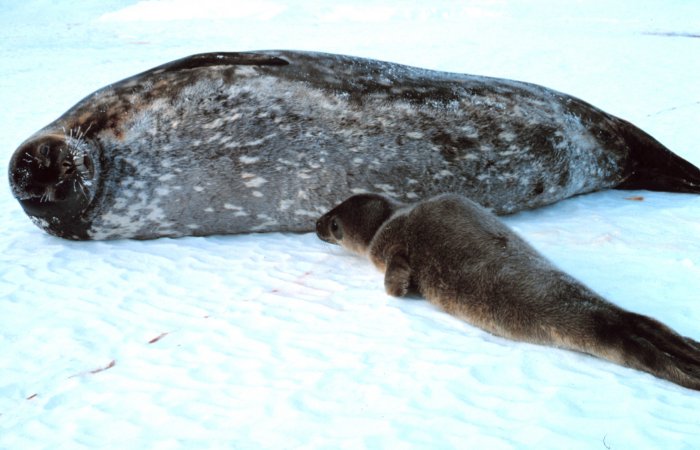


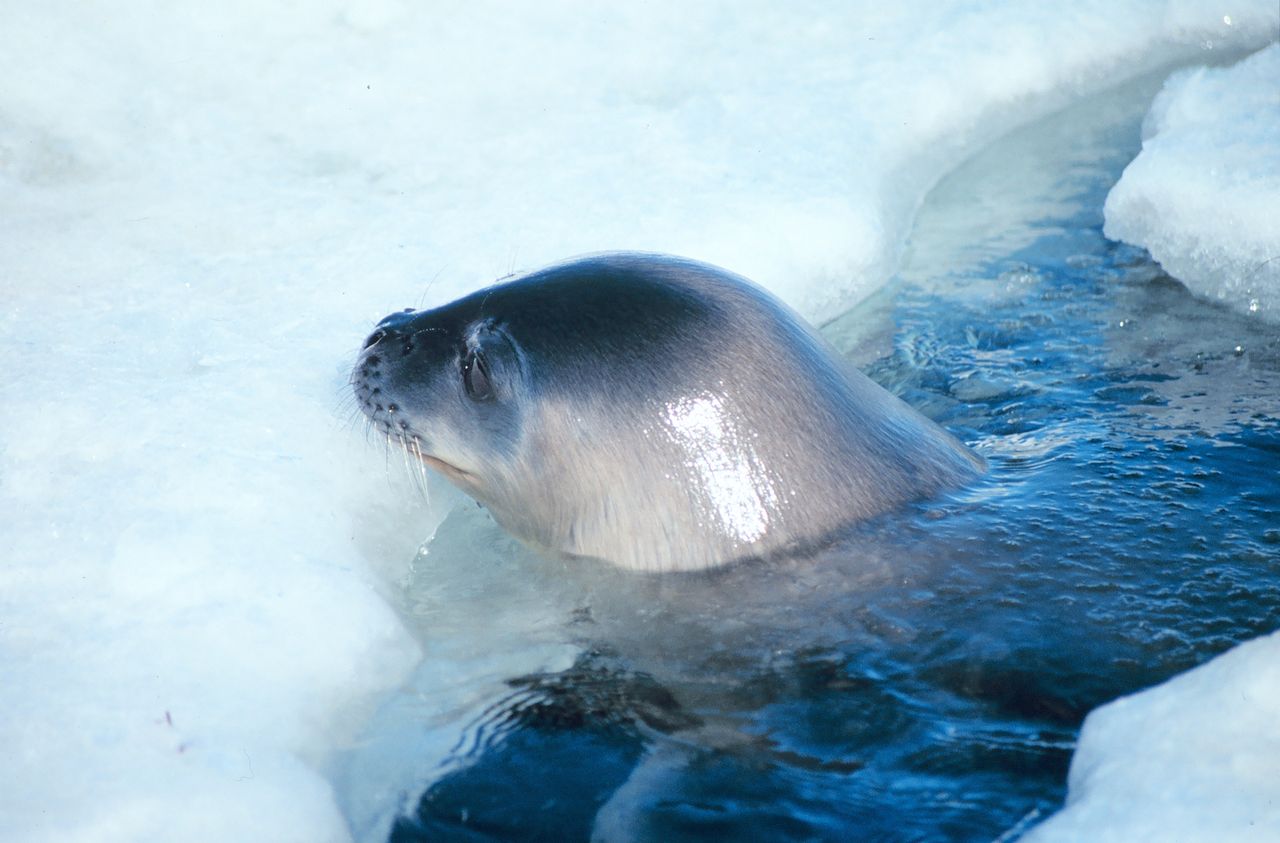

Appearance and adaptations
Weddell seals are robust, with a rounded body and short limbs adapted for swimming. Adults show relatively little sexual size dimorphism compared with many other pinnipeds. Their thick blubber and dense fur provide insulation in frigid water and help them maintain energy reserves. Physiological adaptations for deep and long dives include enhanced oxygen storage, a flexible circulatory response to conserve oxygen for vital organs, and high concentrations of oxygen-binding proteins in muscle.
Behavior, diving and breathing
These seals are expert under-ice hunters. They can dive for extended periods—often for tens of minutes and in some cases for an hour or more—and reach depths of several hundred metres. Weddell seals maintain access to the water by keeping breathing holes open in the sea ice; they use their incisors to rasp and widen holes, a behavior that gradually wears the teeth down. They are also vocal both above and below water, and underwater calls play a role in social interactions.
Diet and predators
Weddell seals feed primarily on fish, squid and other marine invertebrates available under the ice and in open water. Typical prey species vary with location and season. Predation pressure comes mainly from killer whales (orcas) and leopard seals. Their ability to use cracks, leads and maintained breathing holes helps them avoid some predators and exploit under-ice feeding opportunities.
Distribution, habitat and breeding
Weddell seals are distributed around the Antarctic coast where fast ice and stable pack ice provide platforms for resting, breeding and giving birth. They are among the southernmost breeding mammals and are often associated with the continental shelf and nearby islands. Breeding and pupping typically occur on fast ice during the austral spring; females give birth to a single pup and nurse for a period while the pup develops the skills to swim and dive.
Conservation and significance
Because of their broad distribution and large numbers, Weddell seals are classified as a low conservation concern by major assessments, though local populations may be affected by environmental change. They are ecologically important predators in Antarctic food webs and serve as useful subjects for studies of marine mammal physiology, diving biology and the ecological effects of sea-ice change. For regional context see Antarctic distribution and habitat.
- Notable trait: maintain breathing holes by gnawing ice with their teeth.
- Role: top mesopredator in under-ice ecosystems.
- Research value: model for diving physiology and climate-related studies.
Weddell seals remain one of the most familiar and well-studied Antarctic pinnipeds, valued both for their resilience in extreme conditions and for the ecological information they provide about the Southern Ocean environment.
Author
AlegsaOnline.com Weddell seal (Leptonychotes weddellii) Leandro Alegsa
URL: https://en.alegsaonline.com/art/107099
Sources
- bucknell.edu : "Order Carnivora"
- google.com : Mammal Species of the World
- worldcat.org : 62265494
- iucnredlist.org : "Leptonychotes weddellii"