
Wallace Rice: American author and designer of the Chicago flag
Wallace deGroot Cecil Rice (1859–1939) was an American author and vexillographer best known for designing Chicago’s flag in 1917; he wrote for local newspapers and influenced civic symbolism.
Overview
Wallace deGroot Cecil Rice (November 10, 1859 – December 15, 1939) was an American author and noted vexillographer. He is best known for creating the modern flag of Chicago in 1917, a design that has become one of the most widely recognized municipal flags in the United States. Rice combined an interest in symbolism with practical design principles to produce a flag intended for easy reproduction and strong civic identification.
Image gallery
1 Image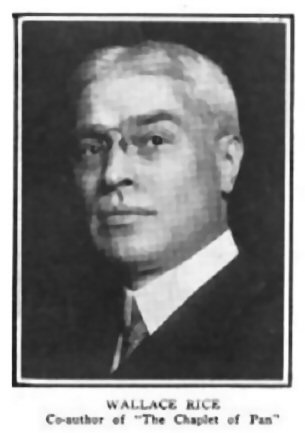
Early life and background
Rice was born in Hamilton, Ontario, to American parents and later made his career in the city of Chicago; his birthplace is commonly recorded as Hamilton, Ontario. Biographical accounts note that he was active in local literary and civic circles. Details of his personal life include a marriage that ended in a legal divorce and the presence of two children in his family.
The Chicago flag: design and symbolism
Rice's flag for Chicago features a white field with two horizontal light-blue bars and four red, six-pointed stars. The bars are widely understood to represent the waterways that shaped the city, while the stars commemorate major events and places in Chicago's history. Over the decades the stars and their points have been the subject of civic interpretation and explanation; they are treated in city histories and popular accounts as markers of the community's defining moments. Rice's approach emphasized clarity, geometric balance and the ability of a simple emblem to convey civic pride.
Writing career and public life
In addition to his work on civic symbols, Rice was a working journalist and writer. He contributed to newspapers in Chicago, including the Chicago Tribune and later publications such as the Chicago Herald American, producing articles, essays and commentary on local history, culture and the arts. His writing reflected an ongoing interest in how public expression—through print, monuments and flags—shapes civic identity.
Personal life, death and legacy
Rice spent much of his adult life in Chicago, where he remained engaged with civic and cultural affairs. He died in Chicago on December 15, 1939, of uremia at the age of 80. His most visible legacy is the Chicago flag, which continues to be used on municipal buildings, in civic events and in everyday displays of local pride. The flag's durability as a symbol has kept Rice's name in discussions of American municipal heraldry and the practice of flag design.
Further reading and resources
For concise biographical entries and summaries of his work, consult local histories and collections that cover Chicago’s civic symbols and early 20th-century journalists. Contemporary summaries often note Rice's dual role as a writer and designer and his lasting contribution to the city's visual identity. Primary-source and archival materials may be found via regional historical societies and newspaper archives that document his published work and civic activities; researchers may also locate brief online references to Rice in databases and municipal histories. Additional introductory references: biographical overview, vexillography reference, flag history, newspaper contributions, place of birth, personal records, medical and death record summaries.
Related articles
Author
AlegsaOnline.com Wallace Rice: American author and designer of the Chicago flag Leandro Alegsa
URL: https://en.alegsaonline.com/art/106280