
Vera Rubin: pioneering astronomer and evidence for dark matter
Vera Rubin (1928–2016) was an American observational astronomer whose measurements of galaxy rotation helped establish the need for dark matter and reshaped modern cosmology.
Overview
Vera Cooper Rubin was an influential American observational astronomer known for careful measurements of how stars move inside galaxies. Her work provided some of the clearest empirical evidence that most of the mass in the universe is not visible in stars or gas. She is widely recognized both for her scientific discoveries and for her advocacy for women in science. She is often described simply as an astronomer, but her legacy reaches into cosmology, instrumentation and public science policy.
Image gallery
10 Images







Key scientific contributions
Rubin's most important achievement was the systematic study of galaxy rotation curves. Using sensitive spectrographs and long exposures on major telescopes, she and her collaborators found that orbital speeds of stars in the outer parts of spiral galaxies remain nearly constant with radius, rather than falling off as expected if visible matter were the only source of gravity. This discrepancy strongly suggested the presence of a large amount of unseen mass, a conclusion that became a cornerstone in the development of the concept of dark matter.
Methods and collaborators
Her observational approach combined careful instrumentation, long-term observing programs, and meticulous data analysis. Rubin worked closely with instrumentalists to improve the sensitivity of spectral measurements and often spent many nights at telescopes to build samples large enough to establish clear patterns. Her papers emphasized robust, repeatable results that could be tested by other observers.
Career and influence
Over a multi-decade career she held research positions at major institutions and participated actively in the astronomical community. Beyond technical results, Rubin used her visibility to mentor younger scientists and to highlight the barriers facing women in the physical sciences. Her quiet persistence helped change attitudes about who could pursue research astronomy.
Legacy and notable facts
- Her rotation-curve results remain central evidence for the need to include unseen mass in models of galaxies and cosmology.
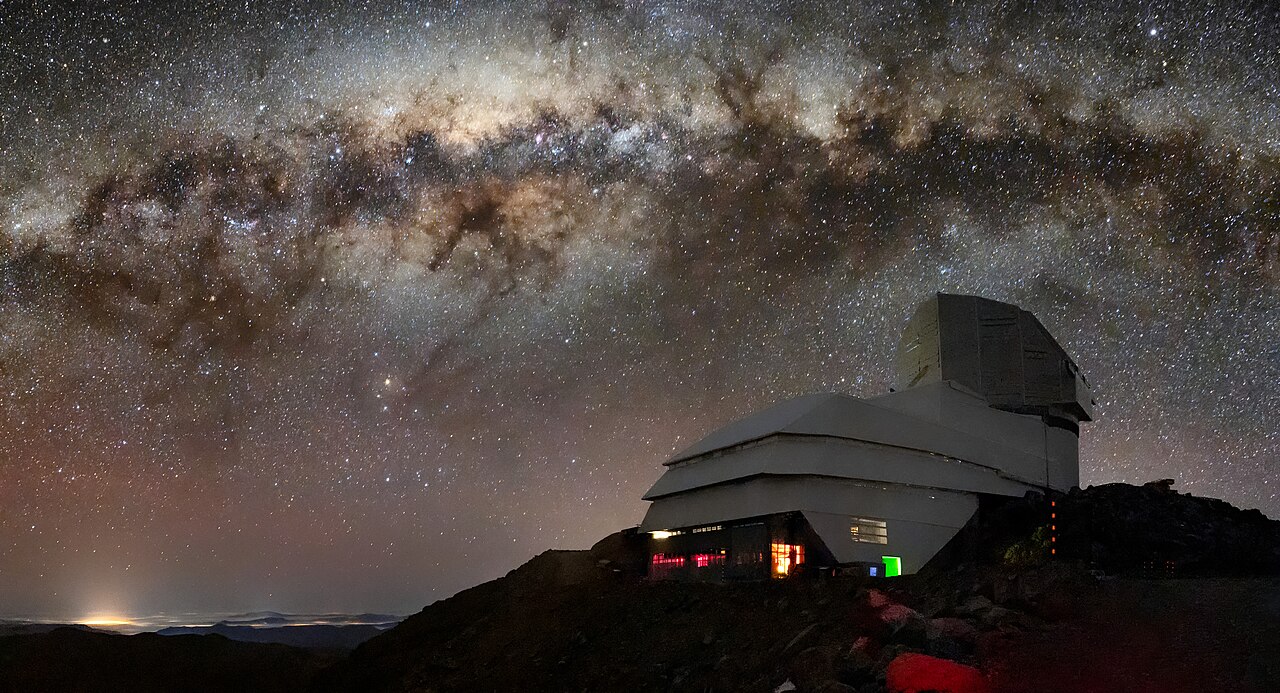
- The name Vera Rubin has been used to honor her contributions in observatory and outreach contexts.
- She is remembered both for scientific rigor and for efforts to broaden participation in science.
Rubin's work did not identify the nature of the unseen matter, but it established a persistent observational problem that guides laboratory searches and theoretical work in particle physics and cosmology today. Her measurements changed how astronomers estimate galaxy mass, interpret large-scale structure, and confront questions about the composition of the universe.
Related articles
Author
AlegsaOnline.com Vera Rubin: pioneering astronomer and evidence for dark matter Leandro Alegsa
URL: https://en.alegsaonline.com/art/104622
Sources
- wikidata.org : wikidata.org/wiki/Q234888
- catalogue.bnf.fr : cb12311646c
- data.bnf.fr : (data)
- d-nb.info : 154030708
- isni.org : 0000 0001 1475 0628
- id.loc.gov : n88039663
- nla.gov.au : 35435701
- data.bibliotheken.nl : 074253778
- snaccooperative.org : w6xw4ncg
- idref.fr : 079288561
- viaf.org : 73920450
- worldcat.org : lccn-n88039663