
Belmont, Massachusetts
Residential suburb of Boston in Middlesex County, Massachusetts. Known for strong public schools, historic neighborhoods such as Belmont Center and Cushing Square, institutions like McLean Hospital, and commuter access to Boston.
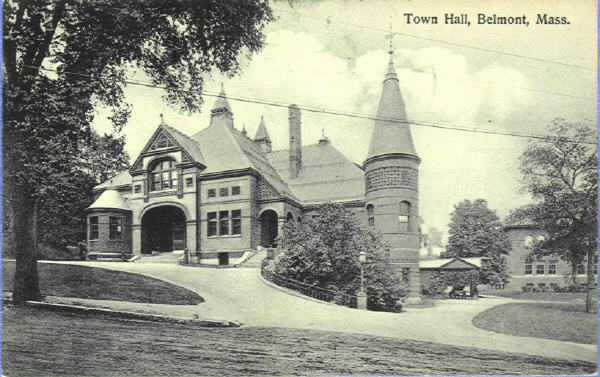
Belmont is a primarily residential town in Middlesex County, in the Commonwealth of Massachusetts. A suburb of Boston, Belmont is part of the Greater Boston metropolitan area and had a population of 24,729 at the 2010 United States Census. The town is noted for its tree-lined streets, neighborhood commercial centers, and proximity to major academic and medical institutions.
Image gallery
6 Images



Geography and neighborhoods
Belmont occupies a modest area of mostly residential lots with several small commercial squares that serve as focal points for community life. Commonly mentioned neighborhoods include Belmont Center, Waverley, and Cushing Square. Scattered parks, greenways and conservation land provide recreational opportunities and help maintain a suburban character close to an urban core.
History
Belmont grew in the 19th century as improved rail and road connections to Boston encouraged suburban development. The town was incorporated in 1859, and its development reflects typical New England suburbanization: farmland gradually gave way to commuter housing, civic institutions, and small commercial districts.
Government, education and institutions
Belmont is governed through a town meeting form of government with an elected board overseeing municipal affairs. The Belmont Public Schools district serves local students, with Belmont High School as the principal secondary school. The town is also home to notable health and research institutions, including McLean Hospital, a long-established psychiatric hospital with regional significance.
Transportation and economy
Residents rely on commuter rail, local bus routes and nearby highways for travel to Boston and other employment centers. The local economy is largely residential in character; small businesses and retail shops concentrate in the town squares while many residents commute to nearby universities, hospitals and employers in the Boston region.
Community character and points of interest
- Historic streetscapes: Belmont retains examples of 19th- and early 20th-century residential architecture and well-established neighborhoods.
- Community services: Public schools, libraries, parks and civic organizations contribute to an active local life.
- Regional connections: Close proximity to Boston makes the town attractive to commuters seeking suburban amenities with urban access.
For visitors and residents alike, Belmont blends suburban quiet and neighborhood cohesion with convenient access to the cultural, educational and medical resources of the greater Boston area.
Tags
Related articles
Author
AlegsaOnline.com Belmont, Massachusetts Leandro Alegsa
URL: https://en.alegsaonline.com/art/10379