
Uno (card game)
Uno is a popular shedding card game created in 1971. Players match cards by color or number, use special action cards to disrupt opponents, and try to discard their hand while calling “Uno.”
Overview
Uno is a family-oriented shedding card game in which the primary aim is to be the first player to discard all the cards in one’s hand. Originally developed in the United States, the game combines simple matching mechanics with a set of action cards that interrupt normal play and create tactical opportunities. Players match either the color or the number/symbol on the top card of the discard pile; when a player has just one card left they must call “Uno” (one) to avoid a penalty.
Image gallery
3 Images
Deck composition and card types
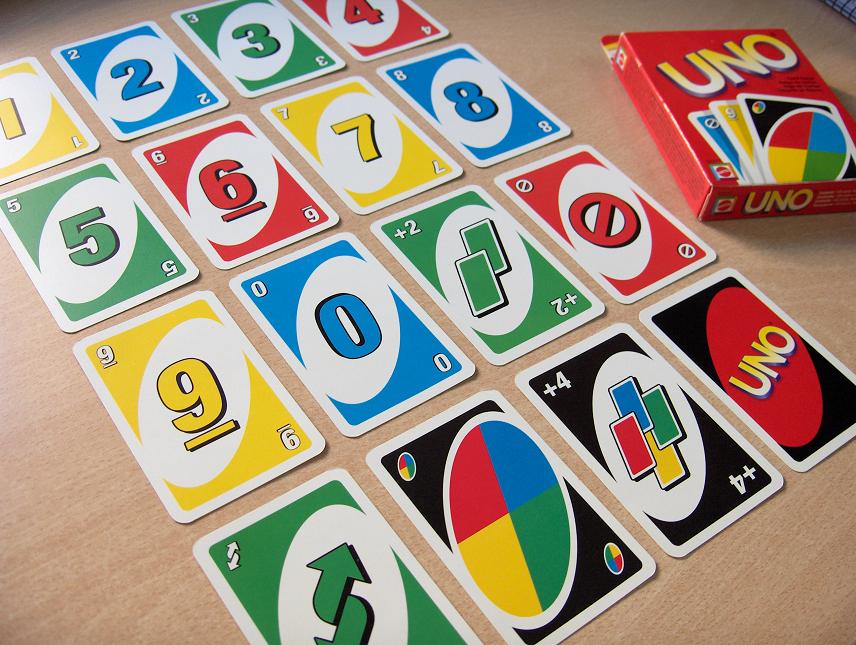
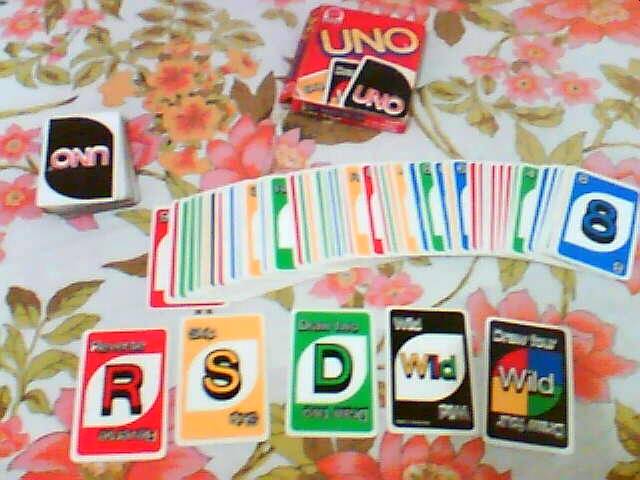
The standard Uno deck contains 108 specially printed cards divided into four color suits: red, yellow, green, and blue, plus a set of wild cards. The most commonly cited distribution is:
- Number cards: one zero card and two copies each of 1 through 9 in each color.
- Action cards in each color: two Skip, two Reverse, and two Draw Two.
- Wild cards: four Wild and four Wild Draw Four.
Action and wild cards change normal play by skipping turns, reversing direction, forcing opponents to draw cards, or allowing the player to choose a new color. House rules and many official variants add more types of special cards.
Basic rules and play
At the start each player is dealt a hand of cards (commonly seven). Players take turns playing a card that matches either the color or the number/symbol of the top discard. If unable to play, a player draws one card from the draw pile and may play it if it fits. The first player to play their last card wins the hand; scoring can then be applied by summing values of remaining opponents’ cards. Common scoring variants set a target score (for example, 500) and multiple hands are played until someone reaches that total.
History and ownership
Uno was developed in 1971 by Merle Robbins and produced as a commercial product shortly thereafter. Its play style is closely related to traditional shedding games such as Crazy Eights. Ownership and distribution have changed over the years; Uno has been marketed by different publishers and was later acquired by Mattel. The game’s rules and packaging have evolved since its first release in 1971, and it is available in many localized editions.
Variants, editions and digital versions
Uno has spawned numerous official variants and themed editions, including versions with alternative action cards, electronic dealing machines, and licensed themes. It is also available as a digital app and videogame tie-in, enabling online multiplayer. Different rule sets—official and house—can change gameplay significantly, so players often agree on a ruleset before starting. For reference to official rules and variant descriptions see relevant manufacturer or community resources such as official card lists and fan-run guides (gameplay FAQs).
Strategy, etiquette and notable facts
Successful play blends attention to card counting, timing of action cards, and forcing opponents to draw. A few widely observed rules and customs affect play: failing to announce Uno when down to one card typically incurs a penalty draw; the Wild Draw Four card is traditionally intended for use only when the player has no other legal play; and house rules often govern stacking draw cards or challenging wild-card plays. Uno’s simple rules, colorful components, and adaptable variants have helped it remain a popular social and family game worldwide. For more detailed rule clarifications and official updates consult manufacturer or authoritative sources via historical notes and publisher guidance, or community pages and strategy write-ups at related shedding-game resources and creator biographies.
Author
AlegsaOnline.com Uno (card game) Leandro Alegsa
URL: https://en.alegsaonline.com/art/103410