
Umerkot District
Umerkot District in Sindh province, Pakistan: overview of its geography, history, population, culture, administration and economic character, including its historical association with the Mughal era.
Overview
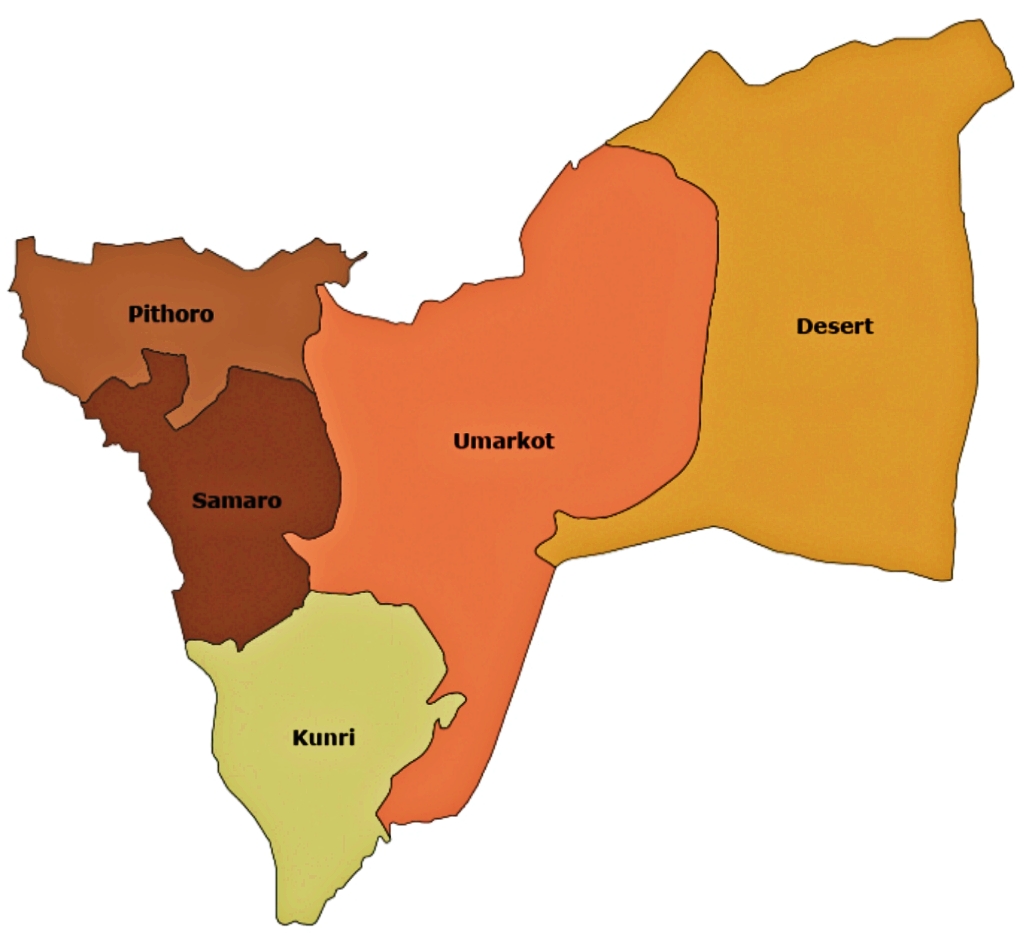
Umerkot District is an administrative district in the eastern part of Sindh province of Pakistan. Centered on the historic town often called Amarkot or Umerkot, the district combines rural agricultural areas with small urban settlements. It is known for its cultural diversity and long local history.
Image gallery
4 Images


Geography and climate
The district lies close to the Thar Desert and experiences an arid to semi‑arid climate. Summers are very hot and winters mild. Agriculture depends on seasonal rains and irrigation where available; soils and water availability shape local livelihoods. The landscape includes plains, sandier tracts toward the desert, and pockets of cultivated land.
History
Umerkot has deep historical roots and was long associated with local rulers and Rajput chieftains before and during Mughal times. The town of Amarkot (Umerkot) is famous in South Asian history for its ties to the early Mughal period: it is traditionally identified with the birthplace of the Mughal emperor Akbar. The area experienced administrative changes under colonial rule and later within Pakistan’s provincial system.
People and culture
The district has a mixture of ethnic and religious communities, with Sindhi culture predominant alongside a sizable Hindu minority relative to many other districts in the country. Sindhi is widely spoken, and Urdu and other local languages are also present. Social life features agricultural rhythms, folk music, traditional crafts and communal religious festivals observed by different communities.
Administration and economy
Umerkot functions as a district administration with its own local government structure, subdivided into smaller units such as talukas and union councils. The economy is primarily agricultural, supplemented by local trade, services and small enterprises. Challenges include water management, rural infrastructure and access to services common to border and desert‑fringe districts.
Notable facts and significance
- Historical association: The town of Amarkot/Umerkot has a prominent place in regional history because of its connection to the Mughal era.
- Cultural diversity: The district is often cited for the coexistence of Muslim and Hindu communities and related cultural traditions.
- Borderland character: Its location near the desert and international boundary influences climate, economy and development priorities.
For administrative details, maps and current governance arrangements consult official district sources and provincial references for further reading. See also the district entry at official district page.
Related articles
Author
AlegsaOnline.com Umerkot District Leandro Alegsa
URL: https://en.alegsaonline.com/art/102748