
Tridentine Mass (Extraordinary Form of the Roman Rite)
The Tridentine Mass is the traditional Latin celebration of the Roman Rite, standardized after the Council of Trent and used widely until reforms in the 20th century; still permitted in various forms today.
Overview
The Tridentine Mass is the form of the Roman Rite Mass that was standardized in the wake of the Council of Trent (16th century) and remained the prevailing liturgy of the Latin Church until the liturgical revisions of the 1960s. Celebrated almost universally in Latin, it is often characterized by fixed rubrics, a structured sequence of prayers and chants, and a degree of ceremonial continuity that many Catholics associate with the historic practice of the Church.
Image gallery
10 Images




Distinctive features
Several features distinguish this form of Mass from the post‑Conciliar liturgy often called the "ordinary form":
- Language: The principal language is Ecclesiastical Latin, with some communities using adaptations in Church Slavonic for local use.
- Rubrics and structure: The liturgy follows a highly codified rubric set out in the Roman Missal; it includes the Prayers at the Foot of the Altar, the Roman Canon (Eucharistic Prayer I), and the Last Gospel, among other elements.
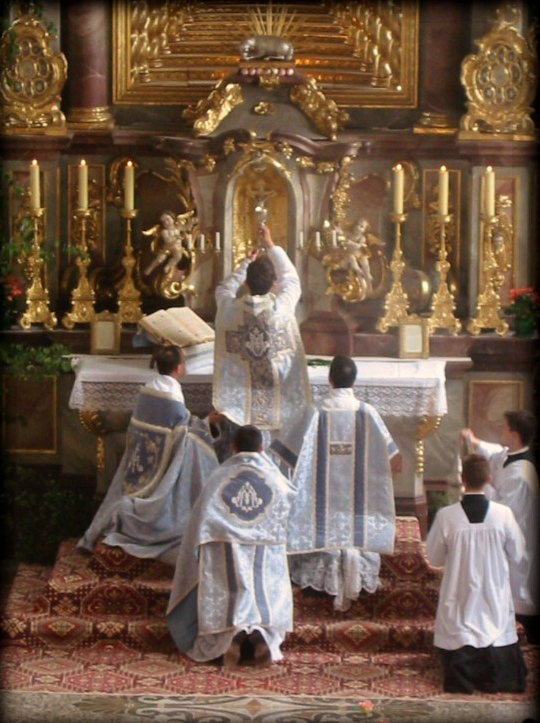
- Musical and ceremonial style: Gregorian chant, polyphony and a variety of ceremonial gestures (incense, altar boys, bells, and more) are commonly used; celebrations may be "low," "sung" (Missa cantata) or "solemn" (Missa solemnis).
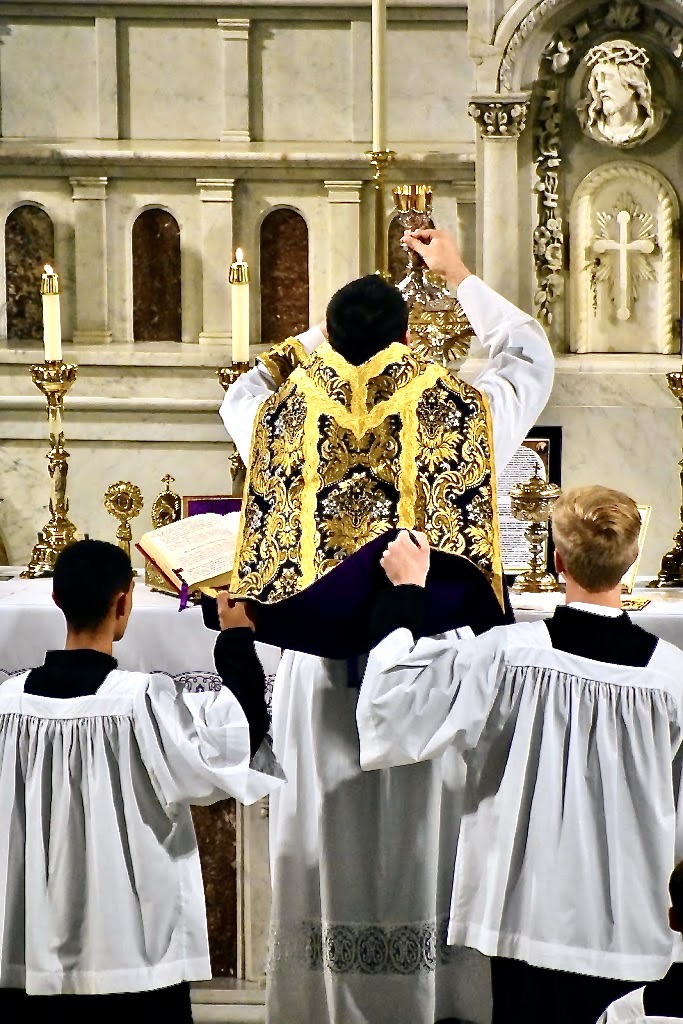
- Orientation and participation: Traditionally the priest often celebrated facing the altar (ad orientem); lay participation in vernacular responses is more limited than in later forms.
History and development
The name "Tridentine" derives from Trent (Tridentum), where the Council of Trent undertook liturgical and doctrinal reforms in the 16th century. In 1570 Pope Pius V promulgated a standardized Roman Missal which was subsequently revised at intervals; the edition issued in 1962 represents the last typical edition before the reforms initiated after the Second Vatican Council. In the decades since the council, a new Roman Missal (often called the Novus Ordo) became the ordinary form of the Mass.
Liturgical use and contemporary status
Since the late 20th and early 21st centuries, the Tridentine Mass has continued to be celebrated in many places. Various papal documents addressed its use: some expanded access in response to requests for the older form, while later norms refined how it may be celebrated. It is most often celebrated by priests and communities that emphasize traditional rites and liturgical continuity.
Geographical and linguistic variations
Although Latin is the common language of the Tridentine rite, there exist translations and adaptations. A Church Slavonic version of the Roman Missal has been produced and is used by certain communities, especially in parts of Eastern Europe and the Balkans; this form preserves the traditional Latin structure while substituting the vernacular language for the people served (see Church Slavonic and areas of use such as the Balkans).
Importance and distinctions
The Tridentine Mass is not only a liturgical form but also a cultural and spiritual marker for many Catholics. It represents a continuity with centuries of Western liturgical practice, a distinctive musical and artistic heritage, and a focal point for discussions about tradition, reform and unity within the Church. While it differs in language, ritual detail and style from the ordinary form, both forms belong to the liturgical life of the Latin Church and have been subjects of pastoral and juridical guidance from the Holy See.
Author
AlegsaOnline.com Tridentine Mass (Extraordinary Form of the Roman Rite) Leandro Alegsa
URL: https://en.alegsaonline.com/art/101489