
Treptow-Köpenick: overview of Berlin’s largest borough by area
Treptow-Köpenick is a borough of Berlin formed in 2001 by merging Treptow and Köpenick. It combines extensive lakes, forests and urban districts with research and cultural sites.
Overview
Treptow-Köpenick is a borough in the southeastern part of Berlin. It was created in 2001 through the administrative merger of the former boroughs of Treptow and Köpenick. The borough is notable for its large area, a strong presence of water and woodland, and a mixed character that ranges from dense urban neighbourhoods to sparsely populated natural zones. For administrative information see the borough page Treptow-Köpenick.
Image gallery
1 Image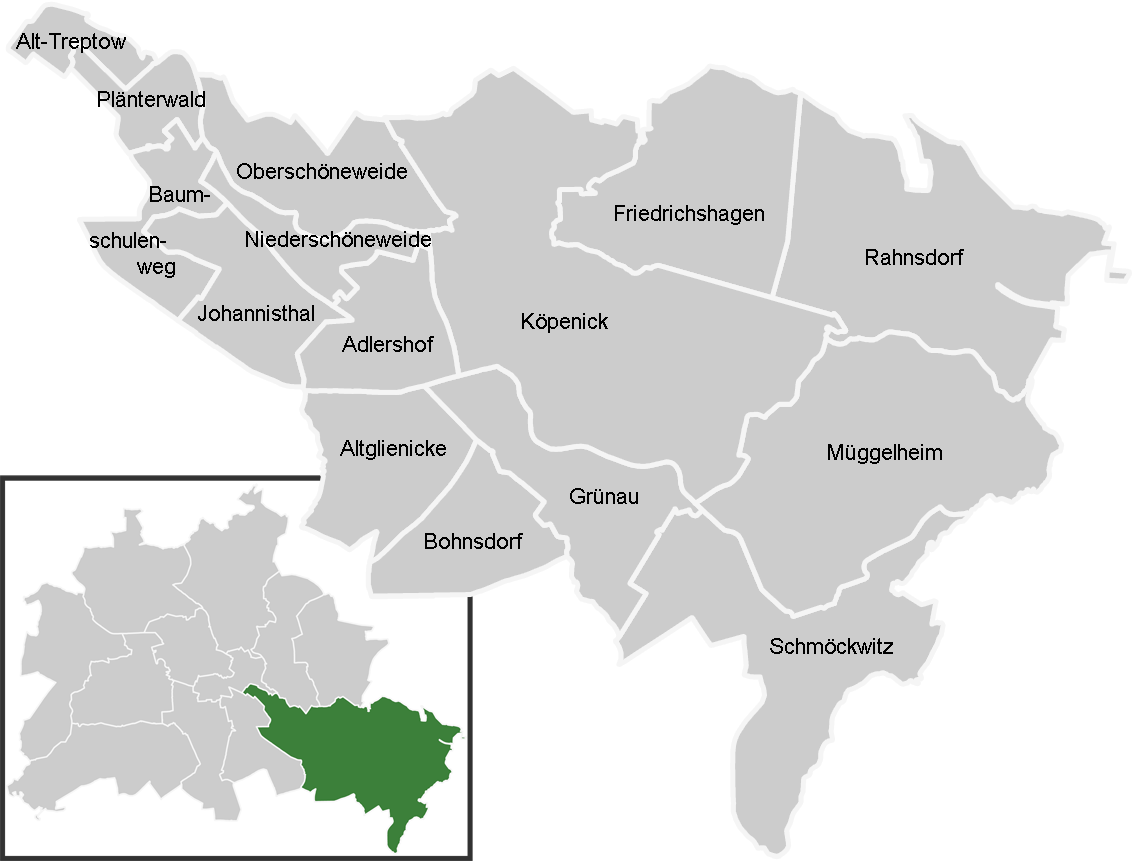
Geography and environment
Covering roughly 168.43 km² (65.0 sq mi), Treptow-Köpenick is the largest of Berlin's boroughs by area. It contains parts of the river Spree, several lakes including the Müggelsee, and extensive forested tracts and protected natural areas. These features make the borough a significant recreational green belt for the city and provide habitat for diverse wildlife.
Population, districts and government
The borough has a population in the low hundreds of thousands; official counts have varied over time (for example, an early-2000s estimate was about 233,700 inhabitants). Treptow-Köpenick is subdivided into multiple localities such as Köpenick, Alt-Treptow, Friedrichshagen and Adlershof. Local governance follows Berlin's system of a borough council and a district mayor; in 2003 the mayor was Gabriele Schöttler (SPD) SPD.
History and development
The modern borough reflects layers of history: Köpenick preserves an old town centre and a baroque palace, while Treptow developed industrial and working-class districts in the 19th and 20th centuries and now includes large parks and memorials. Since reunification and the 2001 reform, parts of the borough—most notably Adlershof—have been redeveloped into a science and technology campus and media centre, combining research institutions with new commercial and residential projects.
Landmarks, recreation and economy
- Water recreation on Müggelsee and boating on the Spree and canals.
- Treptower Park with monuments and riverside promenades.
- Köpenick Palace (Schloss Köpenick) and a historic town centre.
- Adlershof science and technology park, a local economic hub.
Transport links include regional rail, S-Bahn lines and major roads that connect the borough to central Berlin and surrounding Brandenburg. Its combination of nature, industry, research and heritage makes Treptow-Köpenick a distinctive and varied part of the capital; for municipal services, maps and visitor information consult local resources here or regional guides about Berlin.
Related articles
Author
AlegsaOnline.com Treptow-Köpenick: overview of Berlin’s largest borough by area Leandro Alegsa
URL: https://en.alegsaonline.com/art/101393