
The Polar Express (2004 film)
2004 computer-animated holiday fantasy film directed by Robert Zemeckis, adapted from Chris Van Allsburg's picture book; noted for motion-capture visuals, Tom Hanks' multiple roles and its seasonal appeal.
The Polar Express is a 2004 American computer-animated musical fantasy film directed by Robert Zemeckis and produced by Tom Hanks. It adapts Chris Van Allsburg's celebrated children's picture book into a full-length holiday feature, expanding the short source material into a cinematic adventure. The film was released in theaters on November 10, 2004, and has since been associated with seasonal programming and family viewings.
Image gallery
10 Images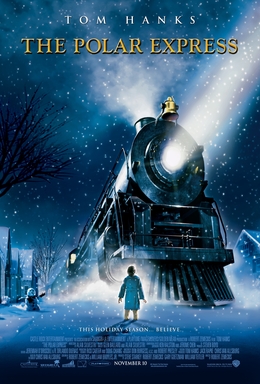




Production and visual style
The movie is widely remembered for its use of performance-capture technology to translate actors' movements and facial expressions into digital characters. This technique aimed to create a realistic, immersive world while retaining expressive performances; it sparked discussion about the "uncanny valley" and the challenges of photorealistic animation. The film combines motion-capture data with traditional animation and computer-generated environments to stage sequences on the train, at the North Pole, and in wintry landscapes. The score and songs complement the visual approach with sweeping orchestral themes and original musical numbers.
Cast and main characters
Tom Hanks performs multiple major roles and is credited as a performer and producer. Principal cast members include:
- Tom Hanks — voices and motion-captures several characters, including the Conductor.
- Daryl Sabara — voices the young boy who narrates the central journey.
- Eddie Deezen — appears as one of the supporting characters.
- Steven Tyler — provides a voiced supporting role.
- Nona Gaye — contributes to the ensemble cast.
- Michael Jeter — one of his final film performances appears in the movie.
Reception and legacy
On release, critics and audiences praised the film's ambition, visual scope, and holiday spirit, while some reviewers critiqued the lifelike animation and emotional distance created by the performance-capture aesthetic. Over time it has become a familiar part of holiday viewing for many families, known for its memorable set pieces, the train's journey as a vehicle for wonder and belief, and its expansion of Van Allsburg's spare narrative into a cinematic retelling.
Adaptation choices and notable facts
Adapting a short picture book required adding characters, sequences, and musical interludes to create a feature-length story. These additions include extended train sequences, new supporting personalities, and a more detailed North Pole setting. The film's production marked a significant investment in early 21st-century motion-capture filmmaking and remains a frequent example in discussions about the technology's artistic possibilities and limits. For more details on its animation techniques, cast interviews, or production notes, see additional resources linked below.
Learn more about the film's animation | Director profile | Producer and lead actor | Cast contributions | Notable performances
Related articles
Author
AlegsaOnline.com The Polar Express (2004 film) Leandro Alegsa
URL: https://en.alegsaonline.com/art/98644