
The Addams Family (1964 TV series)
A black-and-white American sitcom (1964–1966) that adapted Charles Addams' macabre New Yorker cartoons into a comic, affectionate portrait of a spooky but loving family.
The Addams Family is an American television sitcom that presented a playful, gothic take on family life. Based on the single-panel cartoons of Charles Addams, the series blended macabre visual gags with gentle satire of mid‑20th century suburban norms. Often described as a horror-inflected or “black comedy” sitcom, the program packaged eccentric characters and darkly comic situations into a half-hour, black‑and‑white format that ran on ABC from 1964 to 1966.
Image gallery
2 Images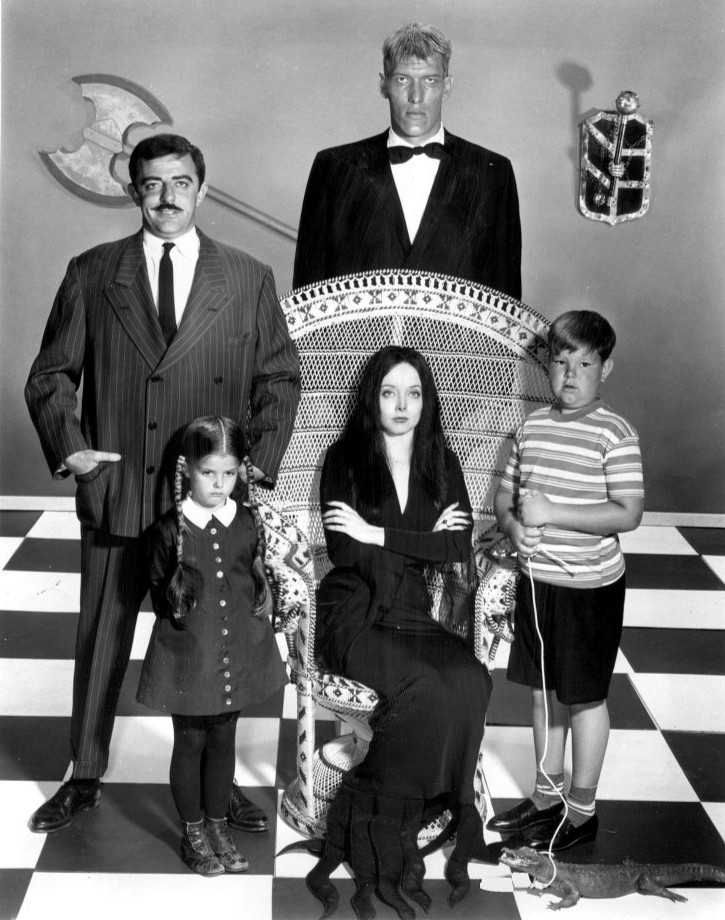

Series format and tone
Created for television by David Levy and Donald Saltzman, the show was produced in two seasons and totaled 64 episodes. Each episode typically staged a domestic set piece—family dinners, visits from unsuspecting neighbors, or household mishaps—framed to highlight the family’s fondness for the unusual. Despite macabre trappings (spiders, crypts, and the occasional contraption of doom), the series treated its characters with warmth: its humor relied on contrasts between their morbid tastes and the polite expectations of the outside world.
Principal cast and characters
- Gomez Addams — the exuberant, knife‑throwing patriarch, played by John Astin.
- Morticia Addams — the elegant and coolly deadpan matriarch, played by Carolyn Jones.
- Uncle Fester — a bulbous, eccentric uncle, played by Jackie Coogan.
- Lurch — the towering, slow‑moving butler, played by Ted Cassidy.
- Grandmama — the family’s witchlike elder, played by Marie Blake.
- Wednesday Addams — the deadpan, morbid daughter, played by Lisa Loring.
- Pugsley Addams — the mischievous son, played by Ken Weatherwax.
Recurring and guest characters (including the diminutive, fast‑talking Cousin Itt and assorted neighbors) rounded out a cast that thrived on strong physical performances and expressive visual comedy.
Music, visuals and production
The show was filmed in black and white, which reinforced its spooky, stylized atmosphere. Its opening theme — a jaunty tune punctuated by distinctive finger snaps — was composed and performed by Vic Mizzy, and remains one of the program’s most recognizable features. Production design favored exaggerated Gothic elements: a cavernous mansion set, odd contraptions, and props that became part of recurring jokes.
Historical context and legacy
When it premiered in the mid‑1960s, the series offered an offbeat contrast to more conventional family comedies of the era. The Addamses were affectionate, loyal and eccentric rather than sinister villains, and that twist made them enduringly popular. Though the original run lasted only two seasons, the concept continued to inspire adaptations: animated series, feature films in the early 1990s, stage productions, and subsequent television reboots have all drawn on the characters and moods established by the 1964 series. Scholars of television note the show’s role in expanding what a sitcom family could look like while preserving the genre’s focus on domestic relationships.
Why it matters
The 1964 Addams Family combined striking visual design, memorable character work, and a consistent comic sensibility to create a distinct place in American pop culture. It translated single‑panel cartoon ideas into recurring television narrative, introduced a generation to Charles Addams’ world, and left a recognizable soundtrack and array of character icons that continue to be referenced and reinvented. For more background on its origins and influence, see links related to the original cartoons and principal contributors: series overview, Charles Addams, Carolyn Jones, John Astin, Jackie Coogan, Ted Cassidy, Marie Blake, Lisa Loring, Ken Weatherwax, ABC network, and Vic Mizzy.
Related articles
Author
AlegsaOnline.com The Addams Family (1964 TV series) Leandro Alegsa
URL: https://en.alegsaonline.com/art/97461