
Stardust Memories (1980 film)
Woody Allen's 1980 black-and-white comedy-drama about a successful filmmaker confronting fame, artistic doubt and personal relationships; noted for dreamlike sequences and mixed initial reception.
Overview
Stardust Memories is a 1980 comedy-drama written, directed by and starring Woody Allen. Shot in black-and-white, the film follows a celebrated filmmaker who struggles with the expectations of audiences, critics and people close to him. Its tone mixes humor, melancholy and surreal interludes, and it is frequently discussed as one of Allen's more self-reflective and formally bold films.
Image gallery
1 Image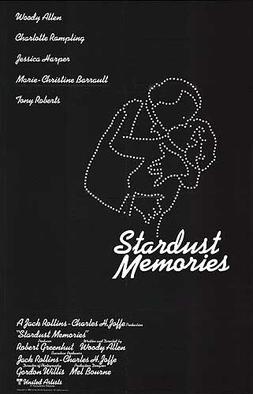
Plot and style
The story centers on a successful director who wrestles with artistic dissatisfaction, romantic entanglements and uprooted memories. The narrative intersperses reality with dreamlike sequences and fantasy vignettes, blurring the boundary between the protagonist's internal anxieties and the events around him. Critics and viewers often note its structural echoes of European art cinema, particularly films about filmmakers and creative paralysis.
Cast and production
The cast includes Charlotte Rampling in a prominent role along with supporting performances by Daniel Stern (Daniel Stern), Jessica Harper and Cynthia Gibb. A young Sharon Stone appears in a brief early screen role (Sharon Stone). The picture was distributed by United Artists, and the black-and-white photography and staging were deliberate choices to emphasize mood and memory.
Themes and reception
Key themes include the burdens of fame, the fragility of creativity, the search for meaning, and the gap between public persona and private doubt. On release the film divided critics: some criticised it as self-indulgent, while others praised its ambition and emotional honesty. Over time it has been re-evaluated by many as an important entry in Allen's exploration of the artist's psyche.
Notable facts
- It is commonly compared to other films about filmmakers for its meta-cinematic approach.
- Its black-and-white cinematography and episodic structure support a mood of introspection.
- The movie is often cited when discussing Allen's darker, more reflective works rather than his pure comedies.
For further reading on the director and principal performers, see profiles and filmographies linked to the names above.
Related articles
Author
AlegsaOnline.com Stardust Memories (1980 film) Leandro Alegsa
URL: https://en.alegsaonline.com/art/93462