
Bat‑Signal
The Bat-Signal is a fictional searchlight projecting a bat-shaped emblem, used in Batman stories to summon the hero and as a cultural symbol of vigilante justice across comics, film, and television.
Overview
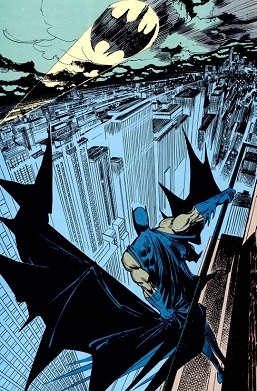
The Bat‑Signal is a fictional distress device commonly depicted in the Batman franchise. It consists of a powerful searchlight that projects a stylized bat silhouette onto clouds or buildings. In narrative terms it is used to request the attention or aid of the vigilante known as Batman or his allies. Beyond its practical function as a call for help, the Bat‑Signal has become an emblematic visual shorthand for the relationship between Gotham City's police and its masked protector.
Image gallery
7 Images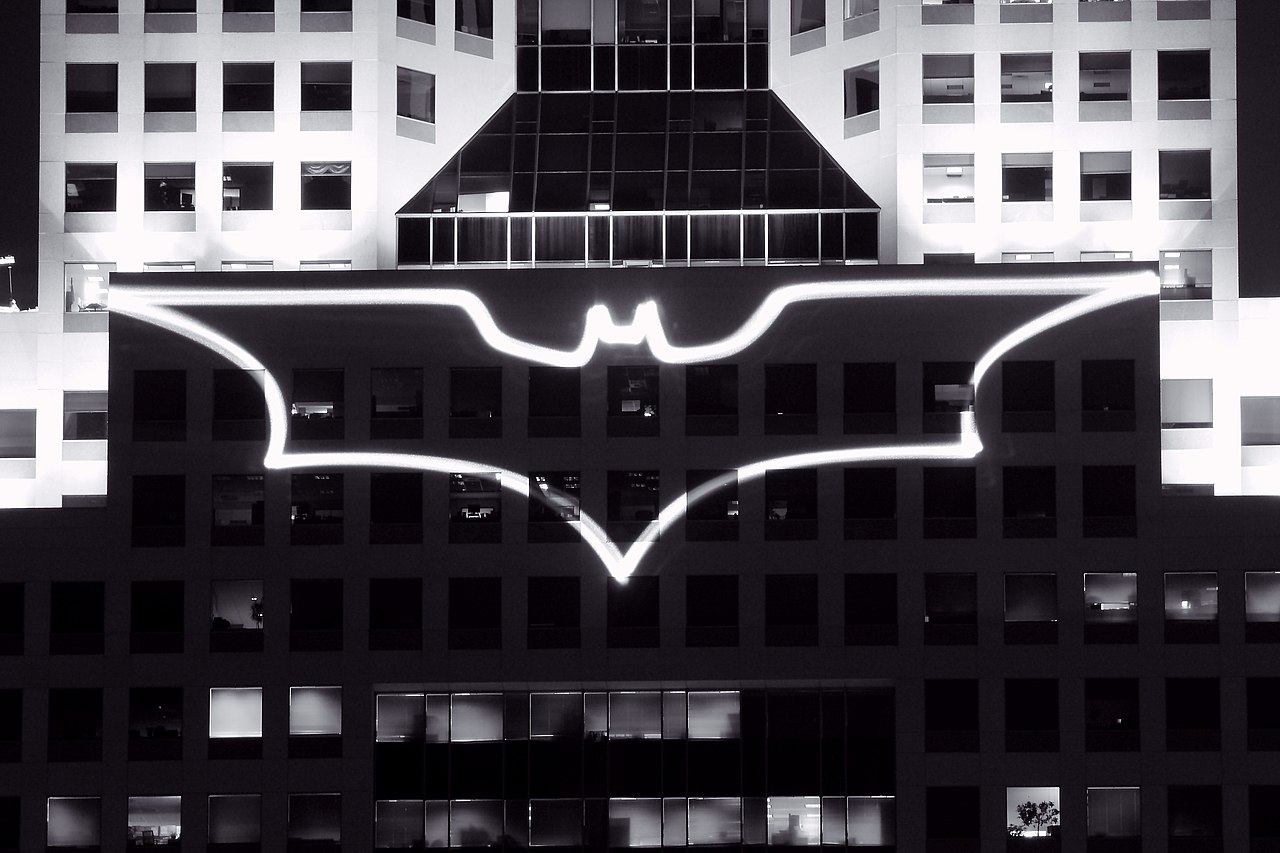


Design and mechanics
At its simplest the Bat‑Signal is a high‑intensity lamp with a metal or glass cutout in the shape of a bat placed in front of the reflector. When switched on, the lamp casts the cutout's shadow at a distance, producing a large, high‑contrast bat emblem visible on low clouds or tall structures. Depictions vary widely: some versions are large rooftop projectors operated by police, others are smaller handheld or vehicle‑mounted units. Modern adaptations sometimes show electronic or holographic variants that can project the emblem without relying on cloud cover.
History and development
The device originated within the Batman mythos as a practical tool used by Gotham City authorities to summon help from the vigilante. It has been presented in comic books, live‑action television, animated series and feature films, with each medium adapting its appearance to match contemporary technology and visual style. Over time the Bat‑Signal grew from a plot device into a widely recognized symbol associated with Batman and Gotham City itself.
Typical operators and access
In stories the Bat‑Signal is most often operated by police officials or trusted allies. Typical operators include:
- Commissioner James Gordon (frequently shown as its primary operator).
- Deputy or allied officers and officials such as Harvey Dent or members of the Gotham police force.
- Other characters who have been shown accessing or activating it in various adaptations include Harvey Bullock, Hamilton Hill, and Barbara Gordon.
- Occasionally it is activated by civilians, allies, or even antagonists for dramatic effect.
Uses, symbolism and cultural impact
Narratively, the Bat‑Signal summons a hero, signals a new crime or leads, or serves as a public reassurance that someone is watching over the city. Symbolically it represents a pact between law enforcement and extrajudicial vigilantism, raising questions about authority, deterrence and spectacle. Its striking silhouette and simple concept have made the Bat‑Signal a frequent target for pastiche and parody in other media, and it appears widely on merchandise, posters and promotional material.
Variations and notable appearances
Creators have introduced many variations: signals tailored for allies, false or counterfeit Bat‑Signals used by villains, and technologically advanced projections in science‑fiction inflected versions of the stories. The Bat‑Signal is also used as a narrative device to establish tone or to mark turning points in plots. In adaptations the device is sometimes accompanied by commentary on the ethics of calling a masked crusader to intervene in civic affairs, underscoring its role as both tool and symbol.
Beyond the canonical stories, the Bat‑Signal appears in popular culture as a widely recognized icon; references to it often appear alongside depictions of Robin or other members of the Bat‑family in crossovers and spoofs.
Tags
Related articles
Author
AlegsaOnline.com Bat‑Signal Leandro Alegsa
URL: https://en.alegsaonline.com/art/9337