
Stall (flight)
A stall is the loss of effective lift by a wing when its angle of attack exceeds its critical value. It can cause loss of control; pilots train to recognise, recover and prevent stalls in many flight regimes.
Overview
A stall in aeronautics occurs when an aerofoil (wing or control surface) no longer produces sufficient lift to support the aircraft because the airflow separates from the surface. This separation is closely tied to the wing's angle of attack: beyond a limited, aircraft-specific value called the critical angle of attack, lift falls off rapidly and the aircraft may lose altitude or control.
Image gallery
5 Images

Characteristics and types
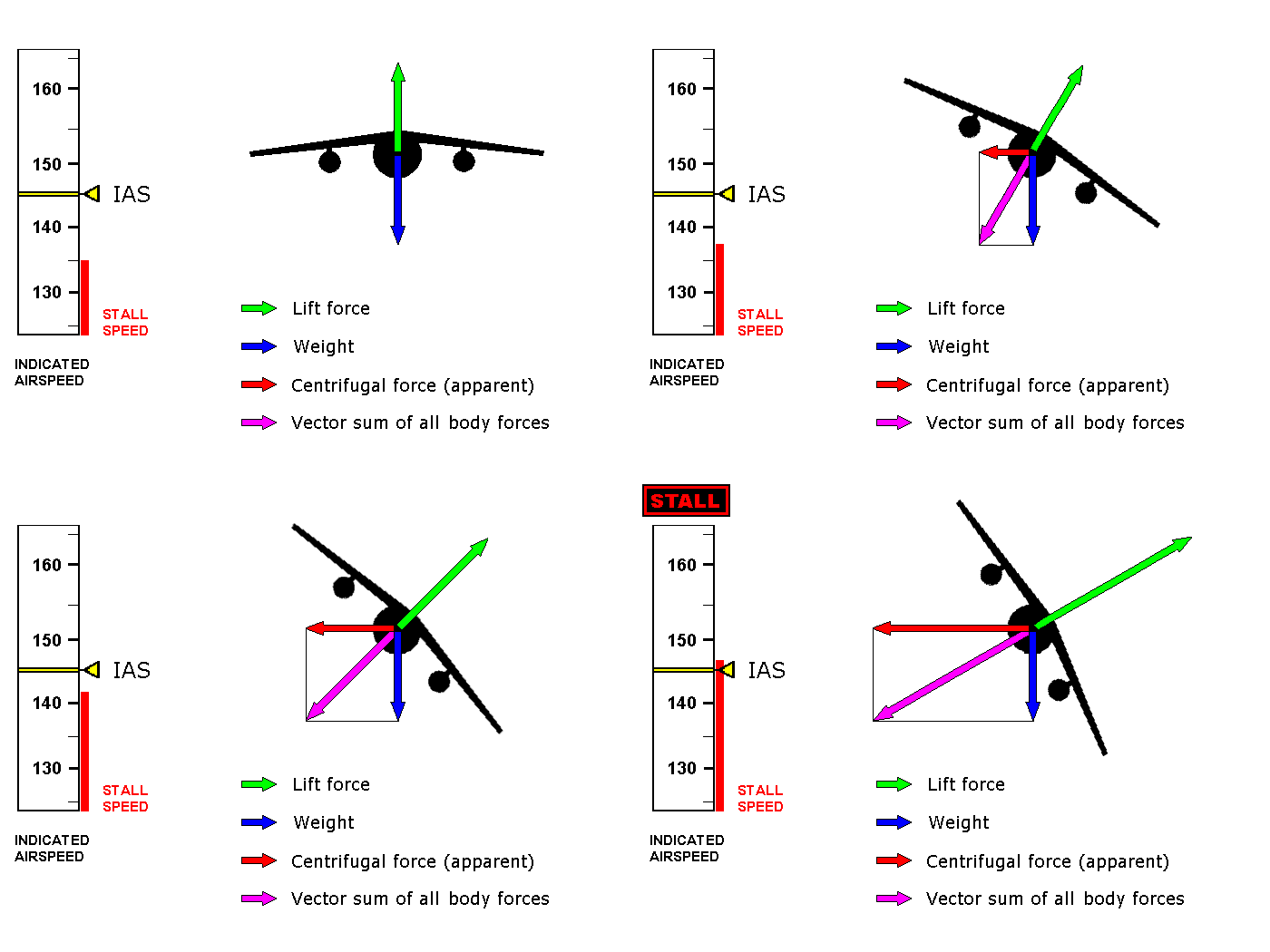
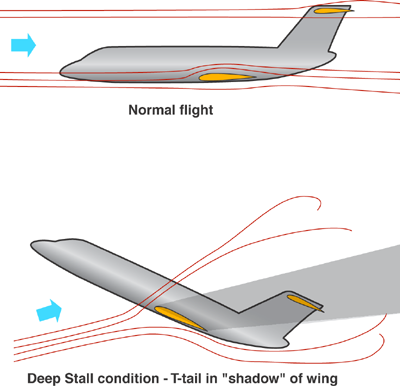
Stalls are fundamentally aerodynamic rather than purely speed-related: a stall can happen at any airspeed if the angle of attack is high enough. Variants include basic (symmetric) stalls, accelerated stalls that occur during abrupt manoeuvres, tip stalls where the wingtip collapses first, and deep stalls that affect some T-tail designs. A stalled condition can develop into a spin if yaw and roll are present and not corrected.
Causes and common scenarios
- Excessive angle of attack during slow-speed flight, climb or aggressive control inputs.
- Flap or gear changes that alter wing airflow near the ground.
- Abrupt manoeuvres or abrupt control deflections causing accelerated stalls.
- Contaminated surfaces (ice, frost, dirt) and asymmetric loading that change stall behaviour.
Recognition and recovery
Pilots detect a developing stall by a combination of cues: buffet or vibration, nose-high attitude, loss of control effectiveness, and stall warning systems. Standard recovery emphasises reducing the angle of attack (push the nose down), applying power as appropriate, and returning to coordinated flight. Recovery technique varies by aircraft type and situation; recovery may require prompt altitude and airspeed margins to be safe.
Training, history and significance
Understanding stalls has been central to aeronautical research since early powered flight. Flight training emphasises stall recognition and recovery in many configurations (clean, flaps, takeoff/landing). Modern certification and design incorporate stall-warning systems, stick shakers or pushers, and aerodynamic features to mitigate abrupt departures. Because stalls underlie many loss-of-control accidents, they remain a primary focus of pilot education and safety programmes.
Author
AlegsaOnline.com Stall (flight) Leandro Alegsa
URL: https://en.alegsaonline.com/art/93281