
Barangay (Philippines): Local administrative unit
A barangay is the smallest political and administrative unit in the Philippines, providing local services, governance, and community dispute resolution. It evolved from precolonial settlements called balangay.
Overview
A barangay is the most basic unit of local government in the Philippines. It functions as a community-level administrative division within cities and municipalities. Barangays handle many everyday aspects of local life, from basic services and public safety to community organizing and recordkeeping.
Image gallery
4 Images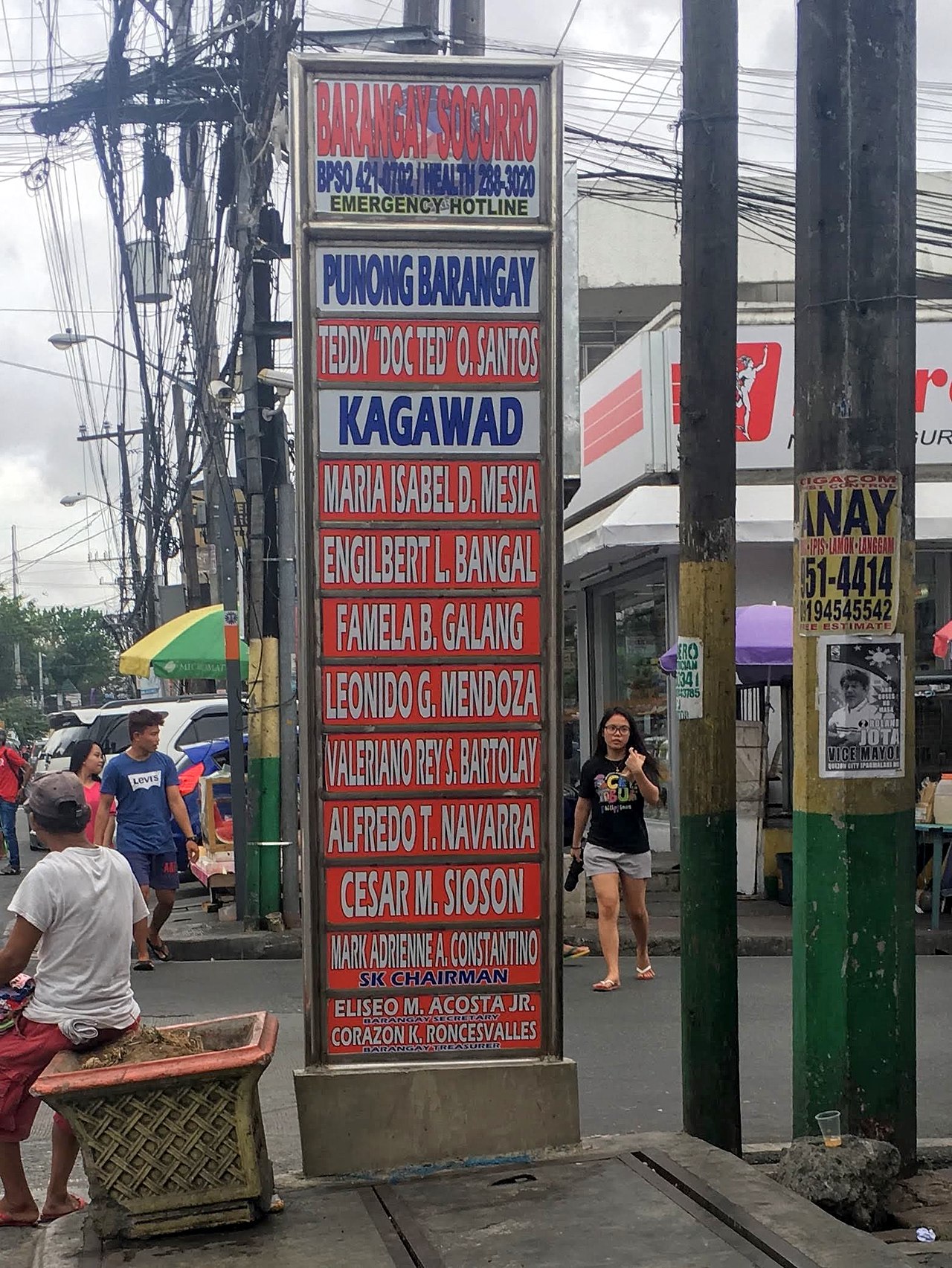


Structure and officials
Each barangay is led by an elected chief called the punong barangay (commonly "barangay captain") and a legislative body known as the Sangguniang Barangay (barangay council). Councils usually include several councilors and officers responsible for specific areas such as health, youth, and finance, while additional local volunteers or appointed personnel support delivery of programs.
Key roles and functions
- Delivering basic services like street maintenance, waste collection, and community health initiatives.
- Maintaining local records and assisting with civil registration and census activities.
- Implementing local ordinances and development plans.
- Operating the Katarungang Pambarangay, a community dispute-resolution system that seeks to settle minor conflicts before they reach the courts.
History and origin
The term derives from precolonial maritime communities called balangay, which were organized under local leaders. Over centuries the settlement structure was reshaped by colonial and national reforms; the modern barangay system was formalized in the 20th century to replace older administrative terms and to emphasize local governance.
Variation and significance
Barangays vary widely: some urban barangays are densely populated neighborhoods, while rural barangays may include several small villages or hamlets. They are essential for grassroots democracy and local development, serving as the primary contact between residents and higher levels of government. For more background and official information see Philippine local government resources.
Tags
Related articles
Author
AlegsaOnline.com Barangay (Philippines): Local administrative unit Leandro Alegsa
URL: https://en.alegsaonline.com/art/8856