
Ramban district, Jammu and Kashmir
Ramban is a relatively new administrative district in the Jammu region of Jammu and Kashmir, centred on the Chenab valley and a key transit corridor linking the Kashmir Valley with the plains.
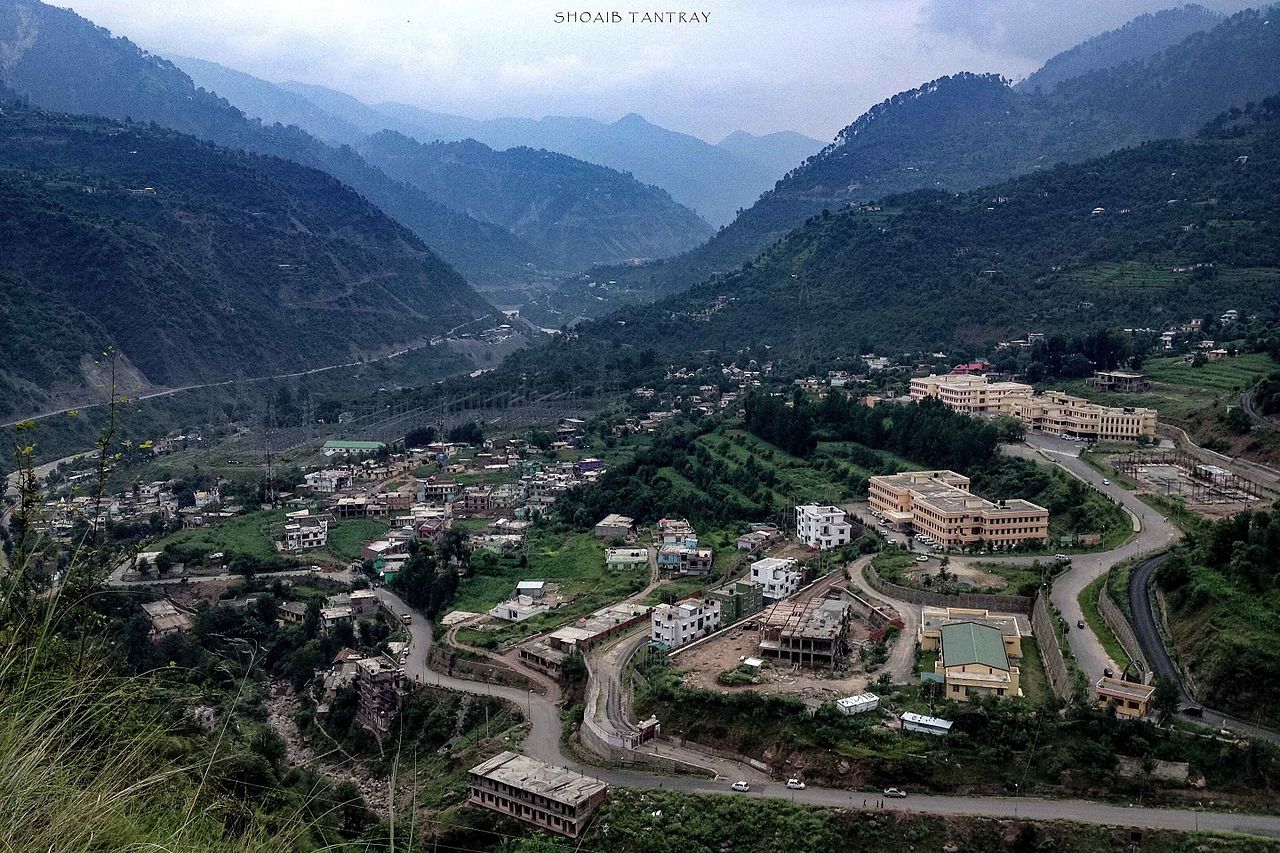
Ramban is a relatively new administrative district located in the Jammu region of Jammu and Kashmir. The district is centred on the town of Ramban and occupies a stretch of the Chenab River valley along the route that links the Kashmir Valley with the Indian plains. Its terrain is predominantly hilly, cut by deep river gorges and mountain passes of the Pir Panjal range.
Image gallery
5 Images


Geography and environment
The district lies largely in a temperate montane zone. Rivers, steep slopes and narrow road corridors characterise the area. Vegetation ranges from riverine scrub and agricultural terraces in the valleys to temperate forests on the higher slopes. The climate is seasonal, with cold winters and warm summers, and the area is prone to heavy rainfall and occasional snowfall at higher elevations.
Administration, communities and languages
Ramban functions as an administrative district with a headquarters in the town of Ramban and a number of subordinate local subdivisions. The population is ethnically and linguistically mixed: communities include speakers of Dogri, Kashmiri, Urdu and Gojri, along with nomadic and semi‑nomadic pastoral groups such as Gujjar and Bakarwal communities. Local governance addresses rural development, road maintenance and basic services in scattered settlements.
History and connectivity
Historically the area formed part of the broader Jammu and Kashmir princely state and has long served as a transit corridor between the valley and the plains. In recent decades investment in road and tunnel projects has aimed to improve all‑season access along the national highway and rail links that pass through or near the district. These works have increased strategic and economic significance by reducing travel time and improving supply routes.
Economy, uses and tourism
The local economy is based on subsistence and commercial agriculture (cereal crops, pulses, and horticulture where terrain permits), pastoralism, small‑scale trade and services linked to transit traffic. The river and steep gradients offer potential for hydropower development, while scenic valleys and passes attract trekkers and visitors seeking rural mountain scenery and local cultural sites.
Notable facts and challenges
- The district occupies a strategic corridor that connects the Kashmir Valley with Jammu and the plains, making it important for transport and logistics.
- Its steep slopes and geology make it vulnerable to landslides, floods and seismic activity; disaster preparedness and resilient infrastructure are ongoing priorities.
- Ramban lies within the wider Jammu and Kashmir region, which is subject to long‑standing territorial disputes; administrative arrangements and terminology can vary depending on perspective.
Overall, Ramban combines mountainous landscapes, a role as a transit hub and a mixed rural economy. Continued infrastructure investment, disaster mitigation and sustainable development are central to its local priorities.
Related articles
Author
AlegsaOnline.com Ramban district, Jammu and Kashmir Leandro Alegsa
URL: https://en.alegsaonline.com/art/81018