
Pyramid (game show)
Pyramid is a long-running television game show format in which contestants and celebrity partners give short verbal clues to guess words or phrases. It debuted in the 1970s and has had many revivals.
Pyramid is a television game show format built around timed word‑clue play between contestants and celebrity partners. First developed for American television in the early 1970s, the series became notable for its clear, fast rounds, celebrity involvement, and a two‑stage finale in which the day's winner attempts to match several categories. Over decades the format has been revised with higher top prizes and several network revivals, but its core gameplay — rapid clueing and cooperative guessing — has remained constant.
Image gallery
4 Images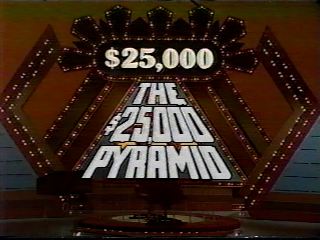


Format and gameplay
Each episode generally pits two contestants against each other, each teamed with a rotating celebrity partner. Gameplay proceeds through a series of short rounds in which one teammate gives verbal clues to prompt the other to guess words, phrases or categories. Clues must avoid saying any of the words in the answer and are constrained by a time limit, usually thirty seconds.
Rounds are often arranged into pairs so both teams have equal opportunities to give and receive clues. Points or money are awarded for correct answers, and the team with the higher score advances to the championship round, commonly known as the Winner's Circle. In that final stage, the winning contestant tries to match a list of categories to answers provided by the celebrity partner, with successful matches yielding the top prize.
History and versions
The concept originated with producer Bob Stewart and became a staple of daytime television in the 1970s. It has been produced in variants with different top prize amounts and under different titles, which reflect rises in prize money and periodic rebrandings. Hosts and presentation styles have changed over time, and the show has returned to television multiple times, both as reruns and as newly produced revivals on broadcast networks, cable outlets, and in syndication. A notable modern revival premiered in the 2010s with a significantly enlarged top prize, attracting renewed attention.
Legacy and notable features
- Celebrity partners: The show pairs everyday contestants with well‑known performers, which creates moments of humor and chemistry that are central to its appeal.
- Simple rules, high tempo: The concise, timed clue rounds make the show easy to follow and exciting to watch.
- Adaptability: The core idea has been updated repeatedly — through altered scoring, themed weeks, and larger jackpots — allowing it to survive shifting television tastes.
- International versions: The format has inspired local adaptations outside the United States and influenced other word‑guessing game shows.
Pyramid's endurance rests on a compact, repeatable structure that highlights quick thinking and rapport between players. Its mixture of competitive pressure and celebrity banter has made it both a durable daytime staple and a format frequently revived for new audiences.
Related articles
Author
AlegsaOnline.com Pyramid (game show) Leandro Alegsa
URL: https://en.alegsaonline.com/art/80227