
Pondicherry (Puducherry): city and capital of the union territory
Pondicherry, officially Puducherry since 2006, is the capital city of the Indian union territory of Puducherry. Known for its French colonial heritage, coastal promenade, and spiritual communities.
Pondicherry, officially renamed Puducherry in 2006, is the principal city and administrative capital of the Indian union territory of Puducherry. Located on the southeastern coast of India, it is widely recognised for a compact, walkable city core where French colonial architecture, tree-lined boulevards and seaside promenades meet contemporary Indian urban life. The city serves as a regional centre for government, tourism, education and small-scale commerce.
Image gallery
10 Images




History and identity
The modern identity of Pondicherry reflects a long history of maritime trade and colonial contact. From the 17th century, the area became an important French settlement in India and retained a distinct Franco-Indian culture for centuries. French influence remains visible in street names, architecture and some local institutions. After mid-20th-century political changes the territory was integrated with the Republic of India; the dual names "Pondicherry" and "Puducherry" are still used in different contexts, with Puducherry being the official name since 2006.
Geography and environment
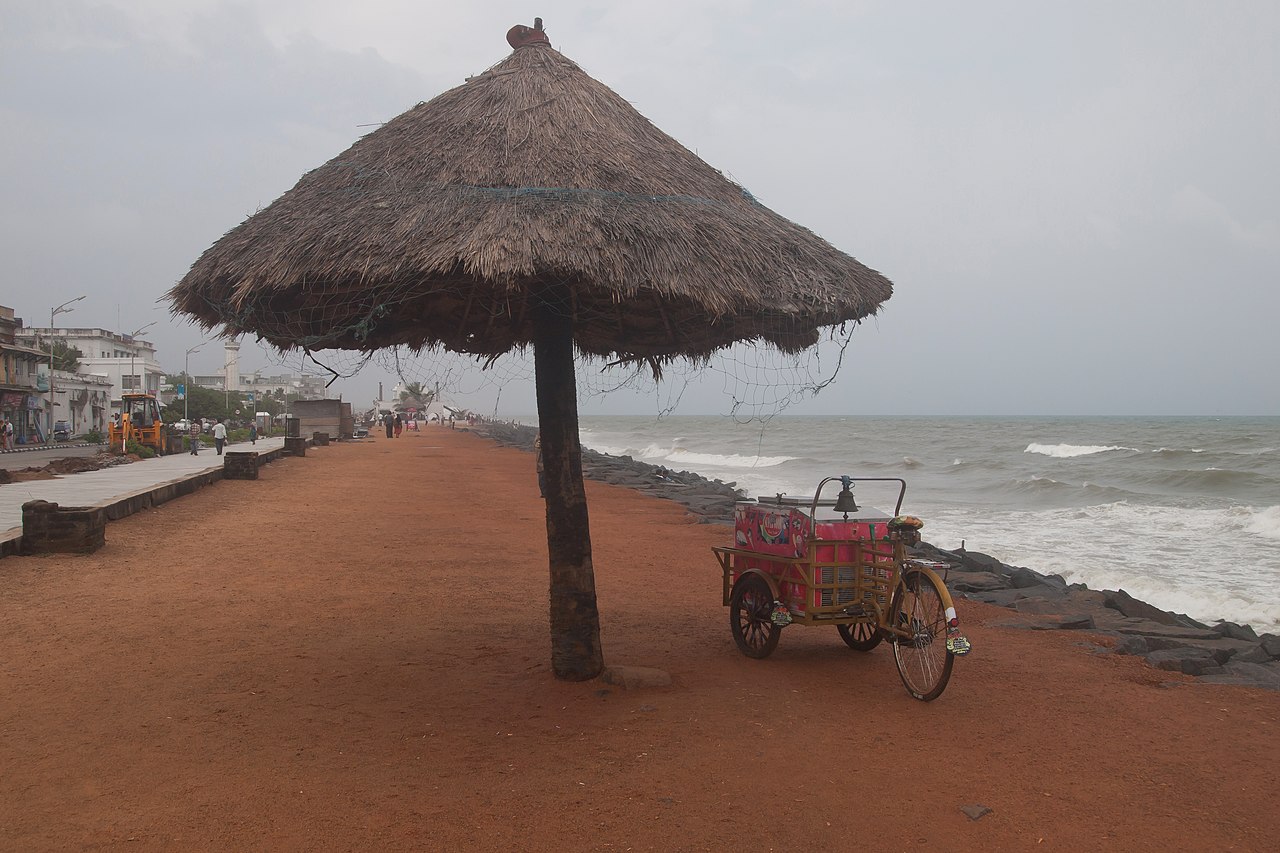
The city lies on low-lying coastal plains and includes a long beachfront popular with residents and visitors. Its climate is tropical, with a hot season, a monsoon period bringing most annual rainfall, and a milder season that is the peak tourist period. Urban green spaces, small parks and the nearby backwaters and mangroves contribute to local biodiversity and provide settings for recreation and ecological study.
Culture, landmarks and institutions
Pondicherry's cultural life blends Tamil and French influences alongside international spiritual communities. Notable places associated with the city include the French Quarter with its colonial buildings, the Promenade Beach, and spiritual centres such as the Sri Aurobindo Ashram. Auroville, an experimental township founded near the city with an international community, is often mentioned in the same context. Local cuisine, festivals and arts reflect layered traditions and contemporary tourism.
Economy, transport and administration
The city's economy is diversified: government services and administration dominate because it is the union territory capital, and tourism, education, fishing, small industry and handicrafts are significant. Road connections link Pondicherry with regional cities; an airport and rail links serve the broader territory though many visitors travel by road. The municipal and territorial governments manage urban planning, heritage conservation and basic services.
Distinctive facts and visiting
- Pondicherry's French-era architecture and planned streets make its old town visually distinctive.
- The city is a gateway to nearby cultural and ecological attractions, drawing both domestic and international visitors.
- For official information about the territory and administration see official Puducherry resources.
Visitors and scholars often highlight Pondicherry for its compact scale, layered history and ongoing role as a place where colonial heritage, Indian traditions and global spiritual movements intersect.
Related articles
Author
AlegsaOnline.com Pondicherry (Puducherry): city and capital of the union territory Leandro Alegsa
URL: https://en.alegsaonline.com/art/77936