
Physical Graffiti (Led Zeppelin album)
Physical Graffiti is Led Zeppelin's sixth studio album, released Feb 24, 1975. A double album mixing older outtakes and new material, it features 'Kashmir' and became a critical and commercial landmark.
Overview
Led Zeppelin's sixth studio release, Physical Graffiti, arrived as a two‑LP set on February 24, 1975. The double album format allowed the band to assemble a varied collection that combined freshly written material with songs drawn from earlier recording sessions and rehearsals. Musically it extends the group's range, moving from heavy rock and blues to orchestral riffs and more experimental arrangements; among its best known tracks is the hypnotic, modal composition commonly called "Kashmir."
Image gallery
5 Images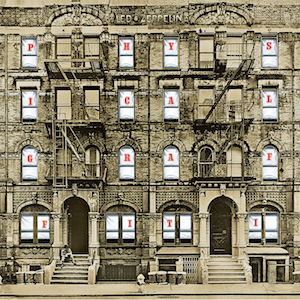


Recording and composition
The sessions that produced the album took place over several years and at multiple studios, reflecting an episodic process rather than a single continuous recording project. Some tracks began as unused pieces from previous albums, while others were written specifically for this release. The band members—guitarist and producer, bassist, drummer and vocalist—brought a mixture of improvisation and structured songwriting to the sessions, resulting in songs that vary in length, mood and instrumentation.
Packaging and presentation
Physical Graffiti is notable for its distinctive sleeve: a die‑cut outer cover showing the façade of an urban building, revealing inner artwork beneath the windows. The striking visual presentation matched the album's ambition and helped make the package a collectible object for listeners. The double‑album format also allowed longer compositions and diverse sequencing, giving the band room to balance radio‑friendly tracks with sprawling pieces.
Release, tour and live presence
When the album was released the band supported it with an extensive tour that included dates across Europe and the United States. Concert appearances and stadium shows reinforced the record's commercial success and public profile; the touring run culminated in a series of high‑profile performances at Earl's Court in London. Several live performances from that era have circulated in official and unofficial formats, and selections from the band's concerts were later documented on film and home‑video releases.
Reception and legacy
Upon release the album received strong attention from critics and fans, earning praise for its ambition and the strength of individual tracks. It has been cited frequently in discussions of the band's peak creative period and is often singled out for its blend of raw power and compositional ambition. Over time the record's reputation has remained high among rock audiences and it figures prominently in retrospectives of the group’s work.
Notable tracks and distinctions
- Kashmir — an expansive, riff‑driven piece with an eastern‑influenced harmony that became one of the band's signature songs.
- Trampled Under Foot — a funk‑tinged rocker built on a repeated groove and energetic keyboard lines.
- Ten Years Gone and In My Time of Dying — examples of the band's range from personal reflection to extended blues.
- Boogie With Stu — a loose, honky‑tonk flavored number that showcases the group's playful side.
The album represents an important moment in the band's catalog: their first official double LP, a commercially successful statement that combined archival material with new creative directions. For listeners exploring the group's development, Physical Graffiti remains a frequently recommended starting point, illustrating both the scale of the band's ambitions and the diversity of their musical palette. For more on live performances and tour dates, see contemporary accounts of the band's concerts and the documented shows linked to the album era: concert listings.
Related articles
Author
AlegsaOnline.com Physical Graffiti (Led Zeppelin album) Leandro Alegsa
URL: https://en.alegsaonline.com/art/76654
Sources
- led-zeppelin.org : "Physical Graffiti album information at led-zeppelin.org"