
Ocean City, New Jersey — family resort and coastal community
Ocean City is a barrier-island borough in Cape May County, New Jersey, known for long beaches, a classic wooden boardwalk, family-oriented regulations and a large seasonal population surge.
Overview
Ocean City is a municipal borough on a barrier island along the southern New Jersey Atlantic coast in Cape May County. Founded in the mid‑19th century as a seaside retreat marketed with a strong religious and family orientation, it has retained a reputation as a family‑friendly resort town. The borough combines year‑round residential neighborhoods with a tourism economy that peaks strongly in summer; the permanent population is small compared with the seasonal influx of visitors who come for beaches, boardwalk amusements and annual events.
Image gallery
10 Images
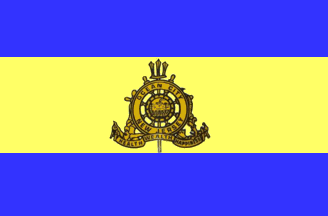



Geography and environment
Ocean City occupies a narrow barrier island separated from the mainland by marshes and tidal creeks. The borough faces the Atlantic Ocean to the east and a series of protected back bays and salt‑marsh estuaries to the west. More than six miles (over 12 kilometers) of public sandy shoreline run along the oceanfront; dunes, dune vegetation and periodic beach nourishment projects are part of local coastal management efforts. The island supports salt‑marsh habitats that are important for shorebirds, fish nurseries and other coastal species, and the surrounding waters are used for boating, fishing and wildlife observation.
History
Prior to organized settlement, the island was used intermittently during the colonial and early American periods for shore activities such as temporary storage by whalers and for seasonal grazing. Permanent, year‑round settlement developed in the 19th century when land was subdivided and promoted as a Christian seaside retreat. Early civic life included churches, temperance institutions and guest houses. Over the 20th century Ocean City evolved into a mixed residential and tourist community. Portions of the built environment, including Victorian and early 20th‑century houses, have been recognized in a designated historic district and on the National Register of Historic Places.
Culture, regulations and identity
Ocean City is widely known for policies and civic branding that emphasize family recreation. For many years the borough has been a ‘‘dry’’ municipality with restrictions on the public sale of alcohol; that status is central to the town’s marketed identity and has shaped visitor expectations. Historical restrictions on Sunday retail and business hours were relaxed in stages in the late 20th century, but Ocean City continues to cultivate a family‑oriented atmosphere through programming, policing and zoning aimed at daytime beach and boardwalk activities.
Boardwalk, recreation and events
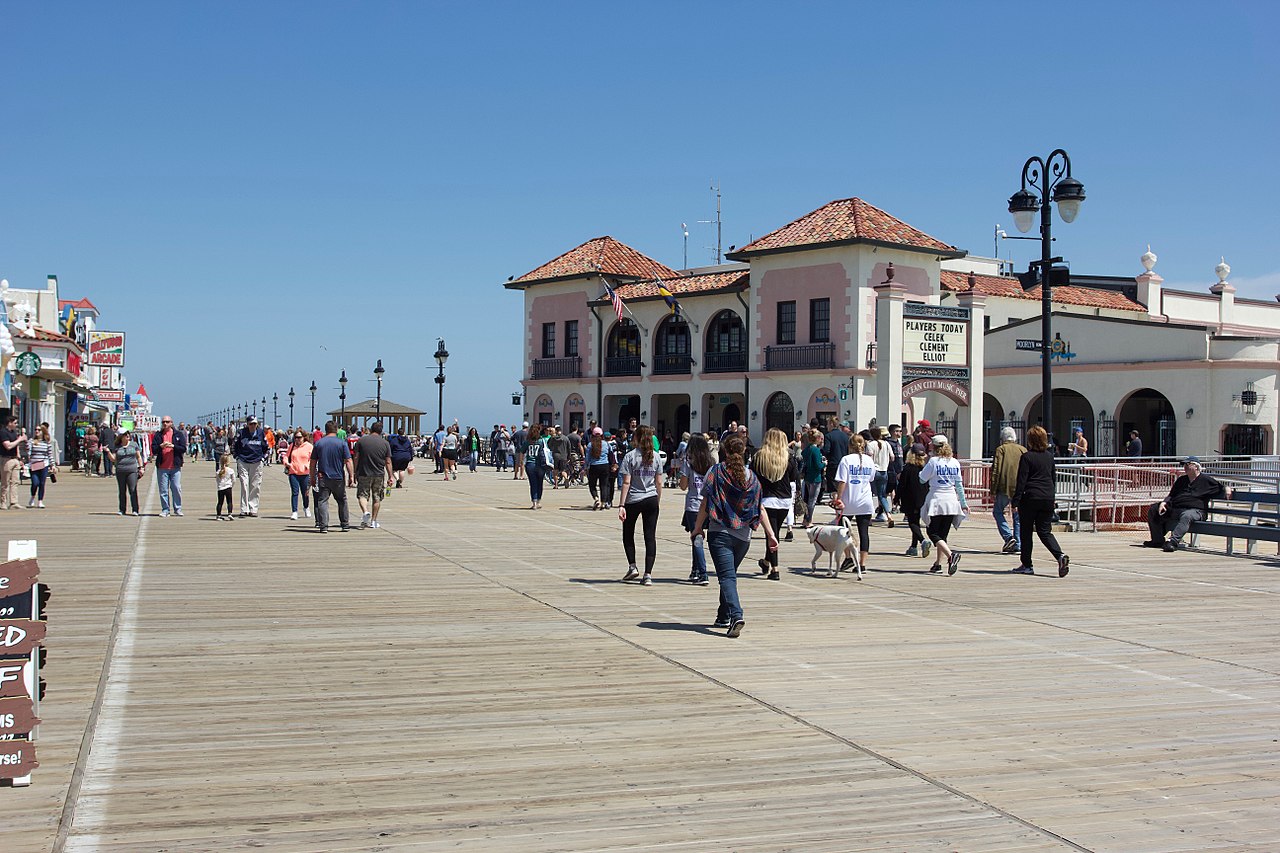
The wooden boardwalk near the oceanfront is a focal point of the visitor experience. The boardwalk contains arcades, amusement rides, miniature golf, shops and restaurants and serves as a pedestrian spine for summer activity. Lifeguard‑supervised beaches, seasonal surf conditions, shore fishing and bicycle routes are important recreational draws. A longstanding summertime highlight is the Night in Venice boat parade, a decorated‑boat procession held in July that attracts large spectator crowds; other seasonal events include concerts, fireworks, family festivals and charity runs.
Demographics, education and economy
The borough’s year‑round population is a fraction of its summer occupancy. Census counts and municipal estimates have shown a permanent population measured in the low tens of thousands, while summer occupancy can exceed one hundred thousand as visitors, second‑home owners and renters occupy seasonal housing. The local public school system serves resident families; Ocean City High School accommodates students from the borough and some neighboring communities. The economy depends heavily on tourism, hospitality, retail and real estate tied to seasonal demand, together with municipal services that scale for the summer surge.
Transportation and nearby cities
- Access: the island is connected to the mainland by multiple bridges and is reached by road via the Garden State Parkway (Exit 25) and other regional highways.
- Proximity: Ocean City lies a short drive from Atlantic City and within a one‑to‑two‑hour drive of major metropolitan areas on the mid‑Atlantic coast, making it accessible for day and weekend visitors.
- Local mobility: pedestrian circulation on the boardwalk, local bus services in season and parking management are all elements of how visitors move around the borough.
Conservation, hazards and planning
Like many coastal communities, Ocean City faces challenges from coastal erosion, storm surge and long‑term sea level rise. Municipal and regional planning efforts address dune restoration, beach replenishment, marsh conservation and resilient infrastructure. Balancing development pressures, historic preservation and the needs of a seasonal economy are ongoing issues in local planning and civic debate.
Why visitors come
Visitors are drawn to Ocean City for family vacations, safe swimming beaches, classic boardwalk entertainment and a compact, walkable downtown. Its mix of historic neighborhoods, natural salt‑marsh areas and programmed seasonal events appeals to families, older visitors and those who value a traditional East Coast resort atmosphere. While the town’s identity as a family‑oriented, largely alcohol‑restricted community differentiates it from nearby resort destinations, its combination of beaches, amusements and community events remains the core attraction for most visitors.
Sons and daughters of the city
- Preston Foster (1900-1970), actor
- Keith Andes (1920-2005), actor
- Walter Trout (* 1951), composer, guitarist and singer
- Gay Talese (* 1932), journalist and co-founder of literary journalism
Related articles
Author
AlegsaOnline.com Ocean City, New Jersey — family resort and coastal community Leandro Alegsa
URL: https://en.alegsaonline.com/art/71838