
Morphology (linguistics): structure, types and applications
Study of word structure and meaning-bearing units (morphemes), their types, processes, typology, theoretical approaches, and applications in linguistics and language technology.
Morphology is the branch of linguistics that examines how words are formed from smaller meaning-bearing units called morphemes. A morpheme is the smallest element that contributes semantic or grammatical content to a word. Morphology explains patterns such as plural marking, verb conjugation, word derivation, and compounding across different languages and relates closely to phonology and syntax.
Image gallery
1 Image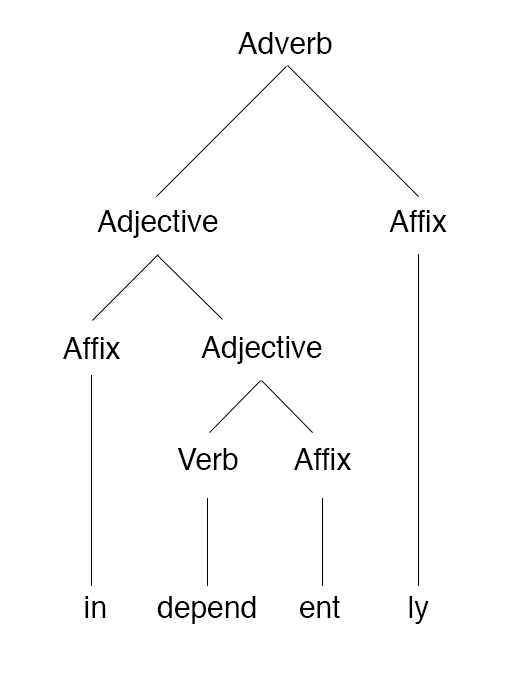
Basic units and categories
Morphemes are commonly divided into free morphemes, which can stand alone as words (for example, "cat"), and bound morphemes, which must attach to other elements (for example, the plural suffix "-s"). Another important distinction is between inflectional morphemes, which modify grammatical properties (tense, number, case) without creating a new lexical item, and derivational morphemes, which form new words or change word class (e.g., "happy" → "unhappy" or "teach" → "teacher"). Affix types include prefixes, suffixes, infixes and circumfixes, and many languages use compounding to build complex words from two or more stems.
Processes and examples
Morphological processes go beyond simple affixation. Common operations include inflection (adding grammatical endings), derivation (creating related lexemes), compounding (combining stems), reduplication (repeating part or all of a word), cliticization (attachment of clitics), and suppletion (irregular forms such as "go" → "went"). Allomorphy describes different phonological realizations of the same morpheme (for instance, the English plural pronounced as /s/, /z/, or /ɪz/). Morphophonology studies how morpheme shapes interact with sound rules.
Typology and language profiles
Languages show different morphological typologies. Isolating (analytic) languages use few affixes and rely on word order and separate words for grammatical relations. Agglutinative languages attach multiple clear-cut affixes in sequence, each marking a single grammatical function. Fusional languages use affixes that combine several grammatical meanings in one form. Polysynthetic languages can incorporate many morphemes into single long words that express what other languages convey with entire phrases.
History and theoretical approaches
Historically, morphology emerged from traditional grammar and later became central to structuralist and generative theories. Different frameworks emphasize morphemes as discrete units, paradigms of inflection, or word-based representations where stems and patterns interact. Contemporary work also integrates psycholinguistic evidence about processing and acquisition and computational models for automatic segmentation and tagging.
Applications and methods
Understanding morphology is important for language teaching, dictionary creation, and literacy work because it reveals how words convey meaning and grammar. In natural language processing, morphological analysis and morphological generation are critical for tasks such as tokenization, lemmatization, part-of-speech tagging, machine translation, and speech recognition. Methods include descriptive fieldwork, corpus analysis, experimental approaches, and algorithmic parsing.
Key distinctions to keep in mind include morphology versus syntax (word-internal structure versus sentence structure) and morphology versus phonology (shape and alternations of morphemes). Notable concepts include productivity (whether a process freely creates new words), allomorphy, and the role of morphology in shaping typological patterns across the world’s languages.
Author
AlegsaOnline.com Morphology (linguistics): structure, types and applications Leandro Alegsa
URL: https://en.alegsaonline.com/art/66746