
Linebacker (American football defensive position)
Defensive position in American football responsible for run stopping, pass coverage, and playmaking; includes middle and outside roles that vary by scheme and alignment.
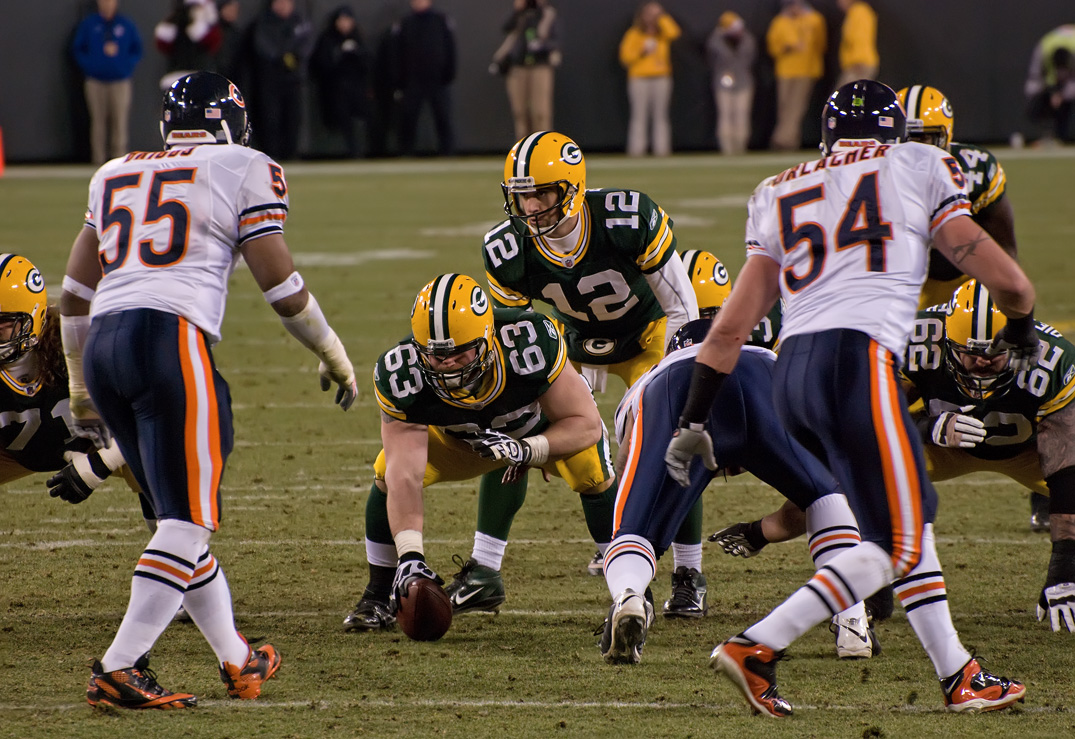
A linebacker is a defensive player in the sport of American football who operates behind the defensive line and performs a mix of run-stopping, pass coverage and quarterback pressure duties. Linebackers serve as versatile, on-field playmakers; their tasks change with each defensive scheme, down and distance, and opponent. The middle linebacker is often described as the "quarterback of the defense" because of the role's leadership and communication responsibilities, while outside linebackers frequently balance pass-rushing assignments with coverage responsibilities.
Image gallery
6 Images


Role and responsibilities
Linebackers must read offensive plays quickly and react to ball carriers, receivers and the quarterback. Core responsibilities include tackling ball carriers on running plays, dropping into zones or matching up in man coverage against tight ends and running backs on passing downs, and blitzing to disrupt passes or pressure the quarterback. They also align protections and communicate adjustments to teammates, often calling pre-snap signals or shifting alignments when offenses present motions or audibles.
Types and alignments
Most defenses deploy linebackers in one of several common groups. Names and duties vary by team, but these are broadly used:
- Middle linebacker (MLB or "Mike"): central defender who reads the play, leads the group and frequently makes the primary tackles against inside runs.
- Strong-side outside linebacker (SLB or "Sam"): lines up near the offense's tight end or strength of formation, often engaged in setting the edge against the run and covering tight ends.
- Weak-side outside linebacker (WLB or "Will"): typically freer to pursue plays, with more pass-coverage and pursuit responsibilities on the open side.
Defensive formations change how many and what type of linebackers play. A 4-3 defense uses three linebackers (two outsides and a middle), a 3-4 employs four linebackers (two inside and two outside) with outside players often acting as primary pass rushers, and heavier fronts such as a 4-4 emphasize run defense by deploying four linebackers. Subpackages like the nickel and dime reduce the number of linebackers in favor of extra defensive backs on obvious passing downs.
Physical and technical characteristics
Linebackers combine size, strength, speed and instincts. They must engage with offensive linemen at times, shed blocks, pursue plays sideline-to-sideline and change direction to cover receivers. Technical skills include tackling technique, hand usage to disengage from blocks, route recognition for coverage, and timing for effective blitzes. Teams select and train linebackers to fit scheme needs—some prioritize bulk and power for interior run defense, others favor speed and agility for coverage and edge pursuit.
History and evolution
The linebacker role developed as football offenses evolved away from seven-man fronts and more passing and versatile running schemes. As offenses diversified in the mid-20th century, defenses created an intermediate position between linemen and defensive backs to provide flexibility against both run and pass. Over decades, linebackers have adapted to increasingly specialized roles—edge rushers in hybrid packages, coverage specialists for spread offenses, and multi-positional defenders who can play inside or outside, depending on tactical needs.
Importance and distinctions
Linebackers are often pivotal to a defense’s identity. A strong middle linebacker can anchor run defense and make pre-snap calls; an excellent outside linebacker can pressure the quarterback and cover critical receiving targets. Modern defensive strategy frequently asks linebackers to be multifunctional, capable of rushing, dropping into complex zone schemes, and matching athletic tight ends or running backs in space. Understanding the distinctions among Sam, Mike and Will—along with how a team uses inside vs outside linebackers in different fronts—is key to appreciating a defense’s strengths and limitations.
Author
AlegsaOnline.com Linebacker (American football defensive position) Leandro Alegsa
URL: https://en.alegsaonline.com/art/58269