
Ariwara no Narihira
Heian-period Japanese noble and waka poet (825–880), celebrated for his emotive tanka and long association with the Ise Monogatari and later poetic anthologies.
Overview
Ariwara no Narihira (825–9 July 880) was a prominent Heian-period poet and courtier often remembered for his lyrical waka (tanka) and romantic reputation. Born into imperial blood, his life bridged the world of aristocratic politics and literary circles. Later generations admired him both for individual poems and for the poetic persona that grew up around his life.
Image gallery
9 Images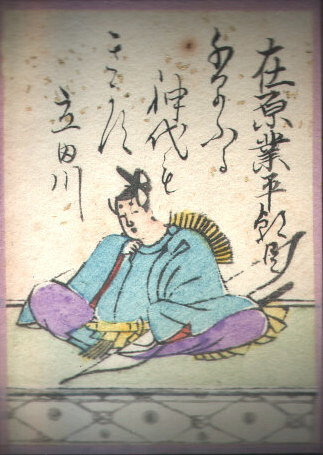


Family background and rank
Narihira was the fifth son of Prince Abo and a grandson of Emperor Heizei through his paternal line; his mother, Princess Ito, was a daughter of Emperor Kammu, so he had close imperial connections. Because of political rules then in force, he and some brothers were removed from the direct line of succession and granted a civilian family name, becoming members of the Ariwara clan. Although not always active in the highest circles of the Imperial Court, he retained social standing as a noble with ties to powerful households and patrons.
Life and literary activity
Narihira’s surviving output consists mainly of short poems in the classical waka form. He is traditionally counted among the celebrated early poets: referenced in Heian anthologies and critics’ lists, he is often grouped with the so‑called Rokkasen (Six Poetry Immortals) and later placed among the Thirty‑six Poetry Immortals. Many of his verses appear in imperial collections and later compilations that helped preserve his reputation.
Style and themes
His poetry is known for concise emotional intensity, an affinity for images of seasons, travel and love, and a conversational tone that suited courtly exchange. Several of his poems convey longing, sudden rapture, or the melancholy of separation—qualities that made them suitable for inclusion in anthologies and for citation in later literary works.
Legacy and cultural influence
Narihira’s name is closely linked with the Ise Monogatari (The Tales of Ise), a Heian narrative that compiles episodes and poems about a handsome, amorous protagonist widely identified with him. Over subsequent centuries his poetry continued to be anthologized and commented on; a poem attributed to him appears in the classical Hyakunin Isshu tradition and his work is included in major collections such as the Kokin Wakashū. Scholars and readers have long debated where the historical man ends and the literary legend begins.
Notable facts and further reading
- Contemporary critics praised him as a leading waka composer; later generations idealized his romantic image.
- He has been the subject of poetic commentaries, illustrated tales and dramatic adaptations.
- For introductions to Narihira’s poems and the texts that preserve them, see standard translations and critical studies that survey Heian waka and the family networks of court poets.
For more on his historical context and literary reception, consult annotated anthologies and histories of early Japanese poetry and court culture: useful entry points include collections of Kokin-period waka and guides to Heian literature (Emperor Heizei period sources) and modern overviews of courtly poetry (poet studies). For primary-text access, look for curated editions and translations that reproduce the verses and their classic commentaries (noble studies).
Although the outline of his life is straightforward—born into imperial lineage, given the Ariwara name, and recognized as a gifted poet—the particulars of many episodes associated with him are shaped by literary tradition as much as by historical record.
Tags
Related articles
Author
AlegsaOnline.com Ariwara no Narihira Leandro Alegsa
URL: https://en.alegsaonline.com/art/5576