
Lady in the Iron Mask (1952 film)
A 1952 American swashbuckling adventure film directed by Ralph Murphy, loosely adapted from the final section of Alexandre Dumas's novel The Vicomte de Bragelonne.
Overview
Lady in the Iron Mask is a 1952 American adventure film produced for the postwar Hollywood market of costume dramas and swashbucklers. Directed by Ralph Murphy and released by 20th Century Fox, the picture draws its inspiration from the closing episodes of Alexandre Dumas's multi‑volume novel The Vicomte de Bragelonne, the section that has traditionally given rise to the "Man in the Iron Mask" legend. The film reworks that material into a compact, studio‑era entertainment that foregrounds mystery, identity and palace intrigue.
Image gallery
1 Image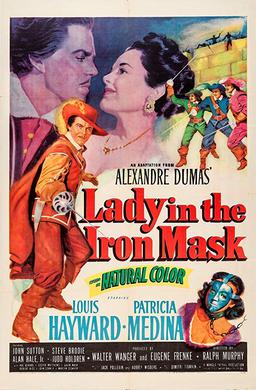
Characteristics and style
Made in black and white, the film follows the conventions of mid‑century adventure cinema: swordplay, daring escapes, secret prisons and court conspiracies. Its narrative adapts the broad premise of a hidden or imprisoned royal whose face is obscured by an iron mask, here presented with a gendered twist that sets the title apart from many earlier retellings. Production values reflect studio craftsmanship of the era, with emphasis on clear storytelling and brisk pacing rather than historical exactitude.
Cast and production
The picture features a small ensemble of familiar screen names of the period. Principal performers include:
- Louis Hayward
- Patricia Medina
- Alan Hale Jr.
- Judd Holdren
Ralph Murphy directed the film for 20th Century Fox, working within the studio system that shaped many literary adaptations during the 1940s and 1950s. The screenplay condenses and alters elements from Dumas's sprawling narrative to fit the constraints and audience expectations of a single feature.
Source material and adaptation
The movie takes its core idea from the last portion of Dumas's novel cycle, which has produced numerous stage and screen versions over the centuries. Filmmakers frequently reinterpret the "iron mask" theme—about concealed identity and political manipulation—by changing character relationships, motives or gender to create fresh dramatic situations. This film is one such variation that leverages the recognizable Dumas premise while offering a distinct, audience‑friendly plot.
Reception and legacy
Lady in the Iron Mask occupies a modest place in the long tradition of Dumas adaptations. It was marketed as popular entertainment rather than prestige art and is remembered chiefly by enthusiasts of classic adventure films and literary adaptations. While not as widely known as some larger studio adaptations of Dumas's work, it demonstrates midcentury Hollywood's appetite for historical melodrama and the flexibility of a well‑known literary motif to support different narrative choices.
Notable points
- Part of a continuum of films inspired by the "Man in the Iron Mask" story derived from Dumas.
- Distinctive for presenting the iron‑masked figure in a version that emphasizes a female‑centered mystery.
- Reflects studio tendencies to simplify and dramatize lengthy source novels for mass audiences.
Related articles
Author
AlegsaOnline.com Lady in the Iron Mask (1952 film) Leandro Alegsa
URL: https://en.alegsaonline.com/art/55321
Sources
- nytimes.com : "' Lady in the Iron Mask' Makes Debut at the Globe -- Two Other Films Have Premieres"
- worldcat.org : 0362-4331