
Icicle: formation, characteristics, hazards and cultural notes
An icicle is a tapered spike of ice formed when dripping water freezes. This article describes how icicles grow, what affects their shape, safety concerns, prevention, and why they interest scientists and artists.
An icicle is a tapering column or spike of ice that forms where liquid water repeatedly drips or flows and then freezes. They commonly appear on roofs, eaves, gutters, tree branches, and other edges during periods when melting and refreezing alternate. The visible shape results from thin layers of water freezing at the tip and along the sides, building outward and downward into a conical or elongated form.
Image gallery
2 Images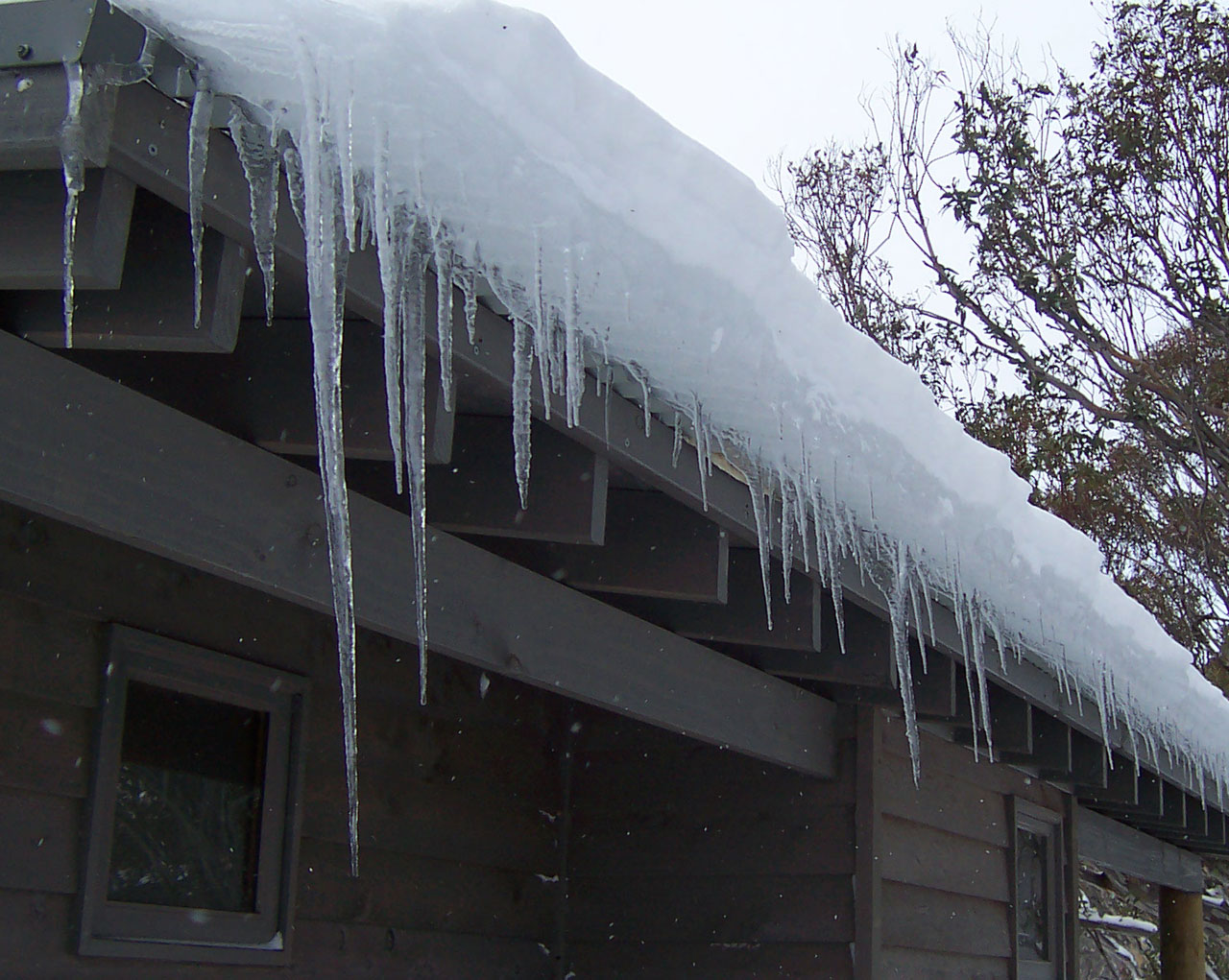

How icicles form
Formation requires three basic elements: a supply of liquid water (often from melting snow or ice), subfreezing ambient air that can extract heat, and an edge or surface from which the water can drip. Heat from sunlight, building interiors, or warm roof surfaces can melt snow; the meltwater then flows to an edge where cold air causes it to lose heat and crystallize. A steady, slow drip tends to produce long, smooth icicles, while intermittent flow or wind can create irregular, multi-branched or scalloped forms.
Structure and influencing factors
- Temperature and gradients: The difference between the water temperature and the surrounding air controls freezing rate and layering.
- Flow rate: Slow continuous flows favor elongation; surges make bulbous or beaded shapes.
- Impurities and bubbles: Minerals, dirt and trapped air affect clarity, color and internal structure; some icicles are hollow because water channels persist inside a frozen shell.
- Wind and sunlight: Air movement distorts drip paths and heat from sunlit surfaces can melt bases even as tips grow.
Hazards and prevention
Detached icicles can injure people and damage property. Accumulated ice also stresses gutters, roof edges and vegetation. Preventive strategies include improving roof insulation and ventilation to limit unwanted melting near eaves, removing snow from roofs where safe to do so, and using controlled de-icing methods or heat cables in targeted areas. When removing icicles, stand clear of their fall zone and use tools from a safe distance or call professionals.
Research, measurement and cultural notes
Icicles are of interest in physics and engineering as natural examples of heat transfer, phase change and pattern formation. Researchers study their growth to understand crystal formation and fluid dynamics on freezing surfaces. In popular culture, icicles are common motifs in winter photography, art and folklore, symbolizing cold, stillness and the season. For related information on the processes that produce meltwater, see melting snow.
Author
AlegsaOnline.com Icicle: formation, characteristics, hazards and cultural notes Leandro Alegsa
URL: https://en.alegsaonline.com/art/46479
Sources
- wonderopolis.org : "How Are Icicles Formed?"
- scienceabc.com : "How Can Icicles Drip Even When The Temperature Is Below Freezing? » Science ABC"
- thoughtco.com : "The Science of Snowflakes Explained"
- gogreentravelgreen.com : "Death by Icicle - 10 Chilling Tales of People Killed by Icicles"