
Huelva, Andalusia — port city and provincial capital in southwestern Spain
Huelva is a historic port city in Andalusia, southwestern Spain. It is the capital of Huelva province, notable for its maritime trade, mining heritage, proximity to Doñana National Park, and links to early Atlantic exploration.
Overview
Huelva is a city in the autonomous community of Andalusia in southwestern Spain. It serves as the administrative capital of the province of Huelva and is a regional hub for commerce, transport and industry. The city itself houses roughly 150,000 people according to recent national statistics, and it anchors a wider urban and peri-urban area with a substantially larger population.
Image gallery
10 Images



Geography and climate
Located on the Gulf of Cádiz at the confluence of the Odiel and Tinto rivers, Huelva occupies a strategic port site with direct Atlantic access. Its coastal position gives it a Mediterranean climate with mild, wet winters and hot, dry summers. Nearby natural areas, notably Doñana National Park to the east and coastal wetlands, are important for biodiversity and tourism.
History and development
Human settlement around Huelva dates back to ancient times, with archaeological evidence of Phoenician and Roman activity in the region. In the modern era the city grew as a trading and fishing port. The 19th-century exploitation of the Rio Tinto mines and the arrival of foreign capital and technology transformed the local economy and left a marked industrial heritage.
Economy, transport and industry
Huelva's economy combines port operations, petrochemical and industrial facilities, agriculture, fishing and tourism. The port handles bulk cargo, minerals and containers, while regional transport links connect the city by road and rail to Seville and other Andalusian centres. The legacy of mining and heavy industry has shaped both economic opportunities and environmental challenges.
Culture, landmarks and events
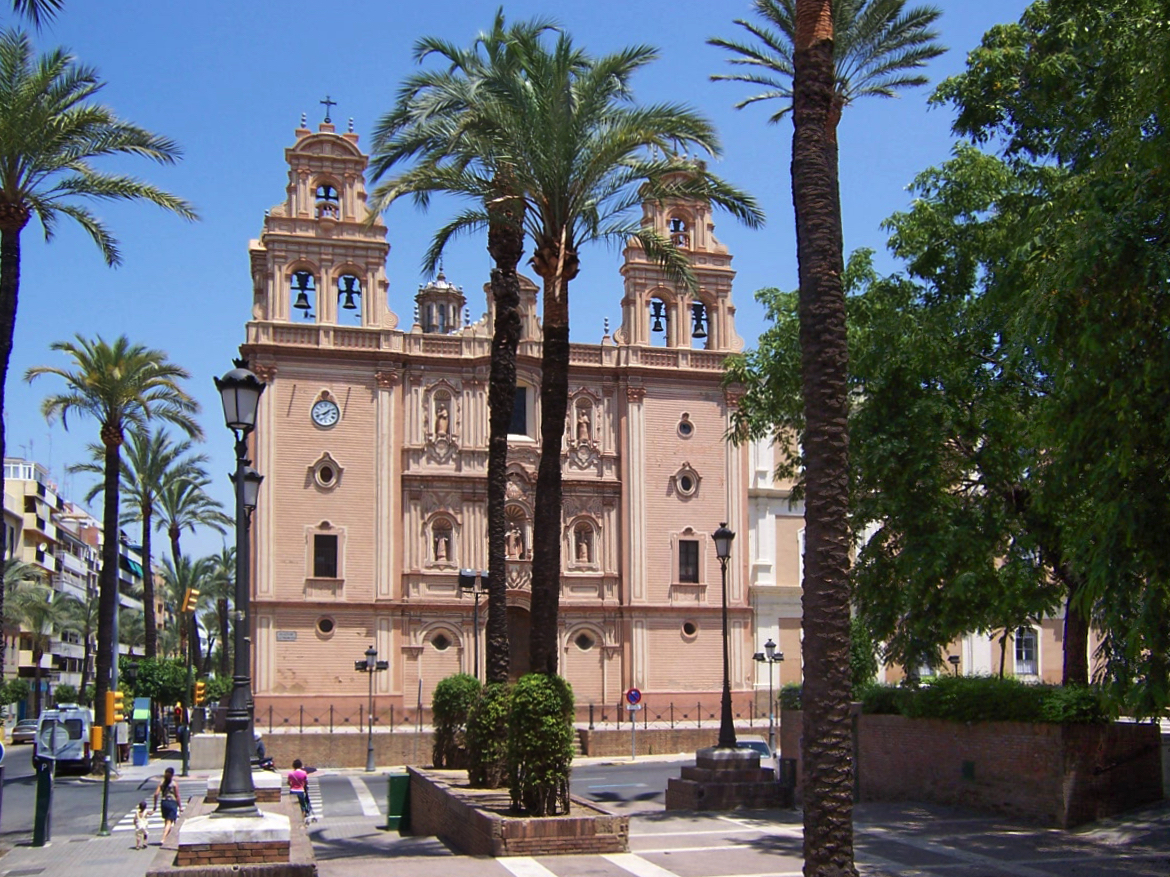
The city features a compact historic centre, civic buildings and modern waterfront developments. Notable sites include the city’s cathedral, listed monuments and the Muelle del Tinto (an historic iron-ore pier). Huelva also has cultural ties to the voyages of late 15th-century Atlantic explorers; nearby towns such as Palos de la Frontera are famous for those connections. Religious festivals, local cuisine based on seafood, and seasonal fairs form part of the civic calendar; Catholic traditions remain culturally significant in many public celebrations (see local traditions).
Notable facts and distinctions
- Huelva is both an industrial port and a gateway to protected coastal ecosystems.
- The Rio Tinto mining area influenced global mining history and science, and its unusual landscapes attract scientific and touristic interest.
- Proximity to important ecological reserves gives the city roles in conservation and sustainable tourism.
Related articles
Author
AlegsaOnline.com Huelva, Andalusia — port city and provincial capital in southwestern Spain Leandro Alegsa
URL: https://en.alegsaonline.com/art/45558