
How the Grinch Stole Christmas (2000 film)
Live-action 2000 adaptation of Dr. Seuss's How the Grinch Stole Christmas, directed by Ron Howard and starring Jim Carrey. Expanded backstory, distinctive makeup and set design, and themes of redemption.
How the Grinch Stole Christmas is a 2000 live-action film adaptation of Dr. Seuss's classic children's story. Directed and produced by Ron Howard, the movie reimagines the original 1957 book and the familiar 1966 animated television special for a wider, contemporary audience. It blends family comedy and drama while retaining the core tale of a green recluse who sets out to steal Christmas from the holiday-loving Whos of Whoville.
Image gallery
4 Images
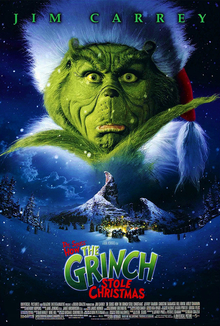


Cast and production highlights
The title role was performed by Jim Carrey, whose energetic physicality and comic timing shaped much of the film's tone. The cast also includes a supporting ensemble portraying members of Whoville, among them the child who becomes central to the Grinch's transformation. The production is notable for its extensive prosthetic makeup and creature design, overseen by prominent effects artists, and for elaborate practical sets intended to evoke Dr. Seuss's distinctive illustrations.
Adaptation and creative choices
Rather than a direct scene-for-scene translation of the short book or the 1966 television version, the film expands the Grinch's backstory, introduces new characters and subplots, and lengthens the narrative to feature-film scale. These choices allowed filmmakers to explore the Grinch's motives and to create a fuller social setting for Whoville. The movie mixes practical effects, costumes, and visual effects to translate the whimsical look of the source material into live action.
Themes, reception and legacy
Central themes include loneliness, the meaning and commercialization of Christmas, and personal redemption. Upon release the film attracted large audiences and became a prominent holiday movie for a generation; critical response was mixed, with praise often aimed at the lead performance and design work, and criticism directed at tonal shifts and expansions beyond the original parable. The movie extended the cultural life of the character and inspired subsequent adaptations and merchandise.
Notable facts and distinctions
- The film draws directly from the original Dr. Seuss book and acknowledges the 1966 animated special as part of its lineage; readers may consult the original Dr. Seuss book and the earlier 1966 TV special to compare versions.
- Its production emphasized handcrafted sets and makeup to preserve a tangible, storybook quality.
- It remains one of the better-known live-action retellings of a Dr. Seuss property and a recurring title in holiday programming.
For viewers, the 2000 film offers a more detailed, humanized portrait of the Grinch than shorter adaptations, while keeping intact the narrative arc from mischief to remorse and, finally, to communal reconciliation. Its place in holiday cinema rests on the combination of a familiar source, an iconic lead performance, and distinctive visual design.
Author
AlegsaOnline.com How the Grinch Stole Christmas (2000 film) Leandro Alegsa
URL: https://en.alegsaonline.com/art/45400