
Glassport, Pennsylvania
Glassport is a borough on the Monongahela River in Allegheny County, Pennsylvania, United States. Historically industrial, it had 4,483 residents at the 2010 census and remains a small Mon Valley community.
Glassport is a small borough located along the Monongahela River in Allegheny County, Pennsylvania, United States. It had 4,483 residents recorded in the 2010 U.S. Census. The borough lies within the greater Pittsburgh metropolitan area and is one of several riverfront communities that make up the Mon Valley.
Image gallery
5 Images


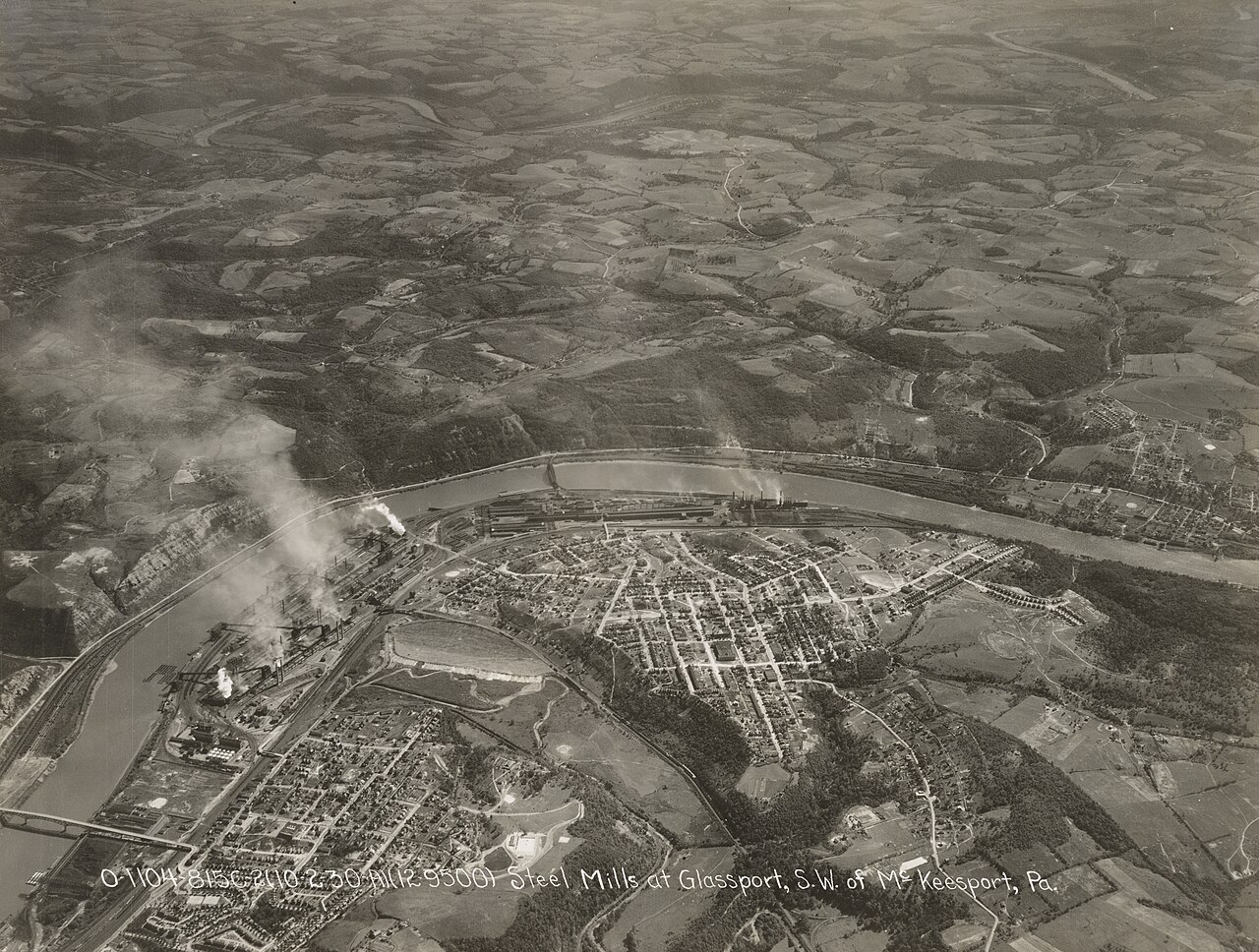
Characteristics and location
Glassport's riverside position shaped its streets, industry and recreation. The borough is compact and primarily residential, with clusters of commercial buildings near former industrial sites. Local government follows Pennsylvania's borough model, with an elected council and mayor overseeing municipal services such as public works, parks and emergency response.
History and development
Glassport developed as an industrial town in the late 19th and early 20th centuries. Its name reflects an early association with glassmaking and related manufacturing that complemented the steel and river-transport industries of the Mon Valley. Like many communities in the region, Glassport experienced growth during periods of heavy industry and later faced economic changes as manufacturing declined in the postwar decades.
Economy and community life
Today Glassport combines legacy industrial sites with small businesses, community organizations and residential neighborhoods. Local life includes parks, volunteer civic groups and annual events that bring residents together. Redevelopment and preservation efforts have focused on converting former industrial parcels to recreational or mixed uses while supporting neighborhood services.
Education and transportation
Families in Glassport are served by the regional public school system and by nearby educational and cultural resources in the Mon Valley and Pittsburgh area. Transport connections are typical of suburban river towns: local streets link to regional highways and bus routes provide access to employment centers across the county.
- County: Allegheny County
- State: Pennsylvania
- Country: United States
- Population (2010): 4,483 (2010 census)
As a Mon Valley borough, Glassport illustrates broader trends in northeastern U.S. river towns: an industrial heritage, mid‑century prosperity, and contemporary efforts to adapt to a post‑industrial economy while maintaining community identity.
Related articles
Author
AlegsaOnline.com Glassport, Pennsylvania Leandro Alegsa
URL: https://en.alegsaonline.com/art/39130