
Galaga
Galaga is a 1981 fixed‑shooter arcade game by Namco, sequel to Galaxian. Players control a lone starfighter against formation-based alien attackers; it is noted for its capture/dual‑fighter mechanic and enduring influence.
Overview
Galaga is a science‑fiction themed arcade video game released in 1981. Developed by Namco, it follows the earlier arcade title Galaxian and belongs to the fixed‑shooter subgenre. The player pilots a single starfighter positioned at the bottom of the screen and fires upward at waves of alien attackers that appear in formation and dive toward the player.
Image gallery
2 Images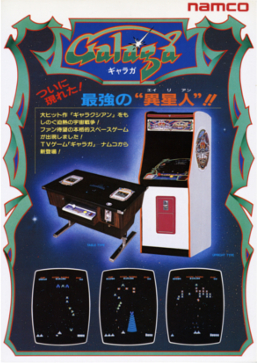

Gameplay and structure
Gameplay centers on pattern recognition, reflexes, and score maximization. Enemies enter in choreographed formations; some stages emphasize point bonuses rather than elimination. Players have a limited number of lives and can earn extra lives by reaching score thresholds. Typical arcade hardware presents each play in short, escalating stages that increase in speed and complexity.
Notable mechanics
Galaga introduced memorable mechanics that distinguish it from many contemporaries. Certain enemy "boss" ships can trap the player with a tractor beam; if a captured ship is later rescued, the two ships combine into a "dual fighter," doubling the player's firepower. Special bonus or "challenging" stages reward accurate shooting with large point bonuses and have distinctive enemy behavior, such as not firing during that round.
History, distribution and ports
Originally distributed in arcades, Galaga was produced for the early 1980s arcade market and was subsequently adapted for numerous home systems and compilation releases. Over time it appeared in home collections and digital reissues, helping maintain its visibility across generations.
Legacy and significance
Galaga is widely regarded as a classic of the golden age of arcade games. It influenced later shooters through its emphasis on formation tactics, risk‑reward mechanics, and the dual‑fighter concept. It also spawned sequels, inspired competitive high‑score play, and remains a frequent inclusion in retro arcade compilations and exhibitions.
Key features
- Fixed‑shooter arcade format with wave‑based enemies
- Tractor beam capture and dual‑fighter rescue mechanic
- Distinct bonus stages focused on point scoring
- Enduring presence through ports and compilation releases
Related articles
Author
AlegsaOnline.com Galaga Leandro Alegsa
URL: https://en.alegsaonline.com/art/37247