
Ferdinand Maria, Elector of Bavaria (1636–1679)
Wittelsbach ruler who governed Bavaria 1651–1679, guided post‑war recovery, reformed administration, and promoted Italianate court culture; father of Maximilian II Emanuel.
Ferdinand Maria (31 October 1636 – 26 May 1679) was a member of the Wittelsbach dynasty who served as Elector of Bavaria from 1651 until his death in 1679. He inherited the electorate as a boy and presided over a period of reconstruction and consolidation after the devastations of the Thirty Years' War. Under his rule Bavaria recovered economically and culturally and regained stability within the complex politics of the Holy Roman Empire.
Image gallery
3 Images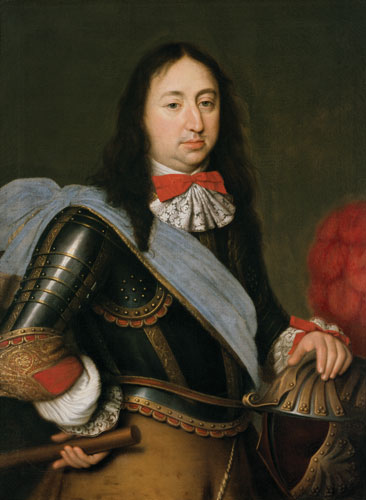


Accession and government
Ferdinand Maria succeeded his father as elector while still a minor and initially ruled under a regency before taking full control. As elector he reorganized central administration, sought to stabilize finances and encouraged agricultural and commercial recovery. He is credited with strengthening Bavarian institutions and increasing the efficiency of fiscal and judicial systems to restore public order and revenue.
Cultural patronage and court
His marriage to Henriette Adelaide of Savoy brought Italian influence to the Bavarian court. The couple were important patrons of architecture, music and church building in Munich. Projects associated with their taste and patronage helped shape the capital’s baroque character and introduced artistic fashions drawn from southern Italy and Savoy.
Foreign policy and military
Ferdinand Maria pursued a cautious foreign policy, aiming to keep Bavaria secure while avoiding prolonged entanglement in the era’s great wars when possible. He maintained a standing force adequate for regional defense and negotiated alliances selectively to protect Bavarian interests within the shifting balance of power of the Holy Roman Empire and neighboring states.
Legacy and succession
He died in 1679 and was succeeded by his son Maximilian II Emanuel. Ferdinand Maria’s reign is generally seen as a turning point in Bavarian recovery: he consolidated the electorate’s position, fostered economic revival, and left a court marked by baroque art and architecture. His policies laid administrative and cultural foundations that shaped Bavaria into the later 17th and early 18th centuries.
Notable facts
- Member of the Wittelsbach dynasty who ruled Bavaria during the post‑Thirty Years' War era.
- Promoted reconstruction, fiscal reform and a moderated foreign policy to preserve Bavarian autonomy.
- Patron of baroque art and architecture in Munich, influenced by his Savoyard consort.
- Father of Maximilian II Emanuel, who succeeded him as elector.
Related articles
Author
AlegsaOnline.com Ferdinand Maria, Elector of Bavaria (1636–1679) Leandro Alegsa
URL: https://en.alegsaonline.com/art/34005