
Error: meanings, types, causes, and ways to reduce them
An error is a deviation from accuracy, expectation, or correctness. This article explains common definitions, types (human, systematic, random), contexts (science, computing, law), and strategies to detect and prevent errors.
Overview
In general use, an error is a mistake or deviation from what is correct, true, or intended. The term applies to actions, judgments, measurements, calculations and system behaviors. Depending on the field, "error" can carry technical meanings (for example in statistics, computing or law) or remain a loose synonym for mistake or fault.
Image gallery
5 Images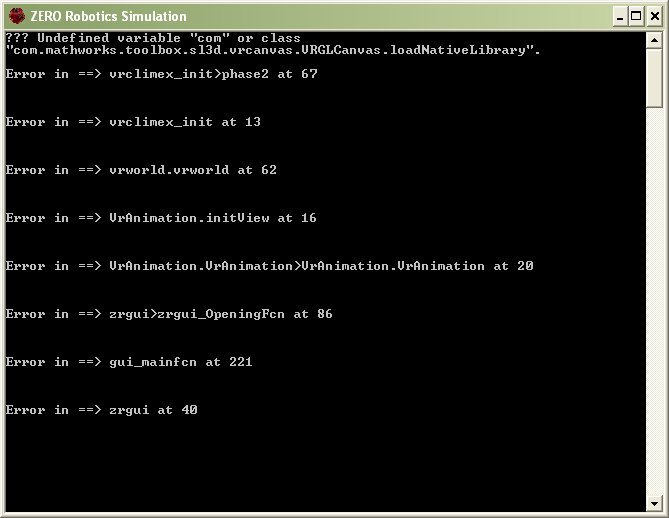


Common types of error
- Human error: slips, lapses, or incorrect decisions by people due to fatigue, misinformation, or cognitive bias.
- Systematic error: reproducible bias in measurement or process that shifts results consistently in one direction.
- Random error: unpredictable variability that affects precision but not necessarily accuracy.
- Logical or syntactic error: flaws in reasoning, algorithms, or code that prevent correct outcomes.
- Runtime error: in computing, a fault that occurs while a program runs (exceptions, crashes).
History and etymology
The English word "error" comes from Latin errare, meaning to wander. Historically it has been used in philosophy, theology and law to describe moral or factual mistakes, and later acquired precise meanings in science and engineering as those disciplines developed methods to quantify and control inaccuracies.
Contexts and examples
In science and metrology, distinguishing systematic bias from random variation is central to reliable measurement. In statistics, an "error term" models unexplained variability. In computing, error messages and exception handling signal problems that require correction or recovery. In law, an "error of law" may justify appeal. Language studies sometimes contrast errors (rule violations) with mistakes (performance lapses).
Causes and mitigation
- Causes: poor design, inadequate training, measurement instrument drift, ambiguous requirements, cognitive biases, environmental factors.
- Mitigation: checklists, standard operating procedures, calibration, redundancy, automation, peer review, error-correcting codes and robust testing.
Notable distinctions
Practically, people distinguish error (the observed incorrect state) from fault or defect (the underlying cause). "Uncertainty" describes limits of knowledge where error magnitude is unknown. Understanding the type and origin of an error is essential to choosing effective remedies, improving safety and increasing the reliability of results.
Author
AlegsaOnline.com Error: meanings, types, causes, and ways to reduce them Leandro Alegsa
URL: https://en.alegsaonline.com/art/32058
Sources
- simple.wiktionary.org : error