
Ellston, Iowa
Small rural community in southwestern Iowa, United States, known for its agricultural character, local history, and role as a typical Midwestern small town.
Overview
Ellston is a very small, rural community in the state of Iowa within the United States. It exemplifies the many modest settlements scattered across the American Midwest: low population density, a landscape dominated by farms, and a close-knit local character. Though small in size, places like Ellston contribute to the agricultural and cultural fabric of the region.
Image gallery
2 Images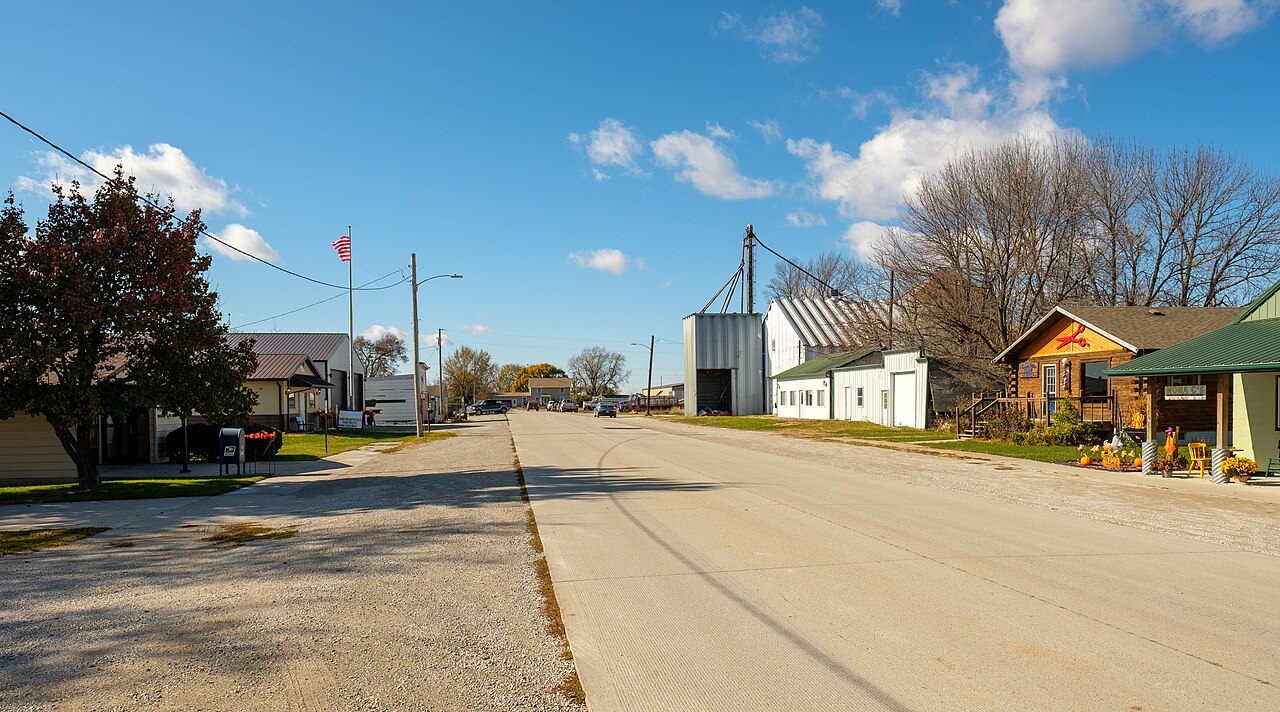

Geography and characteristics
Ellston is situated in a predominantly agricultural area of Iowa and is accessible by local county roads. The local environment typically features cultivated fields, pastureland, and occasional woodlots. Buildings and services in tiny communities are often concentrated along one or two main streets, with residential homes, a handful of public buildings, and farm-related structures nearby.
History and development
Like many Midwestern towns, Ellston grew from 19th-century rural settlement patterns. Small towns in Iowa often formed around farming communities, crossroads, or railroad stops and evolved as centers for trade, postal service, and community life. Over time, shifts in agriculture, transportation, and population have shaped Ellston’s size and role in the wider region.
Economy and community life
The local economy is primarily agricultural, focused on crop and livestock production common to Iowa. Community life in such places centers on family farms, volunteer organizations, nearby schools and churches, and regional events. Residents typically rely on larger nearby towns for many services, employment options, healthcare, and higher education.
Notable facts and context
Ellston is representative of many small Iowa communities: modest in population, historically rooted, and oriented toward agriculture. For practical information or local records, county resources and regional histories are useful starting points. Readers seeking maps, demographic data, or administrative details can consult county offices and state archives for authoritative information.
- Typical institutions: local church, volunteer groups, farm support services.
- Common challenges: population decline, consolidation of services, and changing farm economics.
- Research tips: check county records, state historical societies, or local newspapers for more detail.
Related articles
Author
AlegsaOnline.com Ellston, Iowa Leandro Alegsa
URL: https://en.alegsaonline.com/art/30977