
École normale supérieure
The École normale supérieure is a group of selective French grandes écoles known for advanced study, research, and training future academics, civil servants, and other leaders.
The name École normale supérieure refers to several highly selective French higher-education institutions, or grandes écoles. They are part of the French system but are not the same as ordinary universities. In everyday use, the term often points to the best-known schools in Paris, Lyon, Paris-Saclay, and Rennes.
Like other grandes écoles, an ENS does not admit all applicants who hold the baccalauréat. Entry is usually based on competitive examinations, often after preparatory classes, and the number of places is limited. This selective model has given ENS schools a reputation for academic excellence and for educating many people who go on to careers in research, teaching, public administration, and cultural life.
Image gallery
2 Images
Origins and purpose
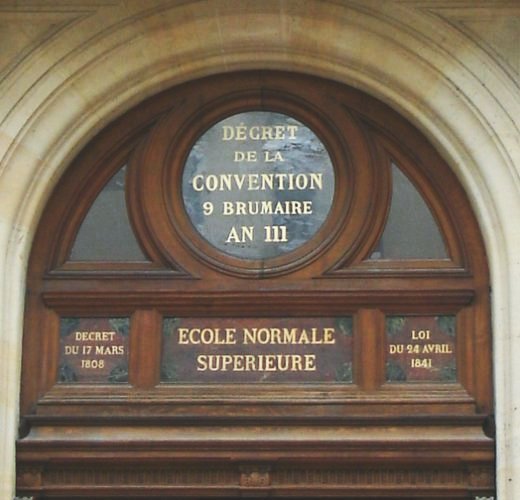
The ENS tradition grew out of the French Revolution and the 19th-century effort to create institutions that would train outstanding teachers and scholars. The word normale originally referred to the idea of setting a standard for teaching methods and intellectual preparation. Over time, the schools broadened far beyond teacher training and became major centers for advanced study in the humanities, sciences, and social sciences.
How an ENS differs from a university
French universities are generally open to anyone who has the required school-leaving qualification, while an ENS is highly selective. Universities are usually organized into faculties or departments covering separate fields. An ENS, by contrast, tends to group related subjects within one institution and often emphasizes close links between teaching and research. Students are commonly known as normaliens.
- Selectivity: admission is competitive and limited.
- Academic focus: strong emphasis on research and theoretical study.
- Institutional structure: fewer faculty divisions than a typical university.
- Career paths: many graduates enter academia, public service, or leadership roles in science and culture.
Importance in French higher education
ENS schools have long been associated with intellectual prestige and with the training of influential figures in philosophy, mathematics, literature, the natural sciences, and public life. They are important not only because of their rigorous admissions, but also because they represent a distinctive French model of elite education: small-scale, research-oriented, and closely tied to national academic and civic institutions.
For this reason, the École normale supérieure is often discussed as both a specific family of schools and a symbol of the broader grandes écoles tradition in France.
Related articles
Author
AlegsaOnline.com École normale supérieure Leandro Alegsa
URL: https://en.alegsaonline.com/art/29933