
Collines Department (Benin)
Central Benin department created in 1999, named for its hilly terrain. Capital Savalou since 2008. Predominantly rural, agricultural economy with several communes and a mix of local languages and cultural traditions.
Overview
Collines is one of the twelve administrative departments of the Republic of Benin. Its name derives from the French word for "hills," reflecting the rolling terrain that partly characterises the area. The department was created in 1999 as part of a national reorganisation that established twelve departments. In 2008 the departmental capital was designated as Savalou, which functions as an administrative and regional service centre.
Image gallery
3 Images

Geography and environment
Located in central Benin, Collines is landlocked and dominated by undulating hills, wooded savannah and cultivated fields. The climate is tropical with a clear wet season and dry season; seasonal rainfall shapes farming cycles. The natural environment supports small-scale agriculture, patches of woodland and local grazing areas.
Administrative divisions
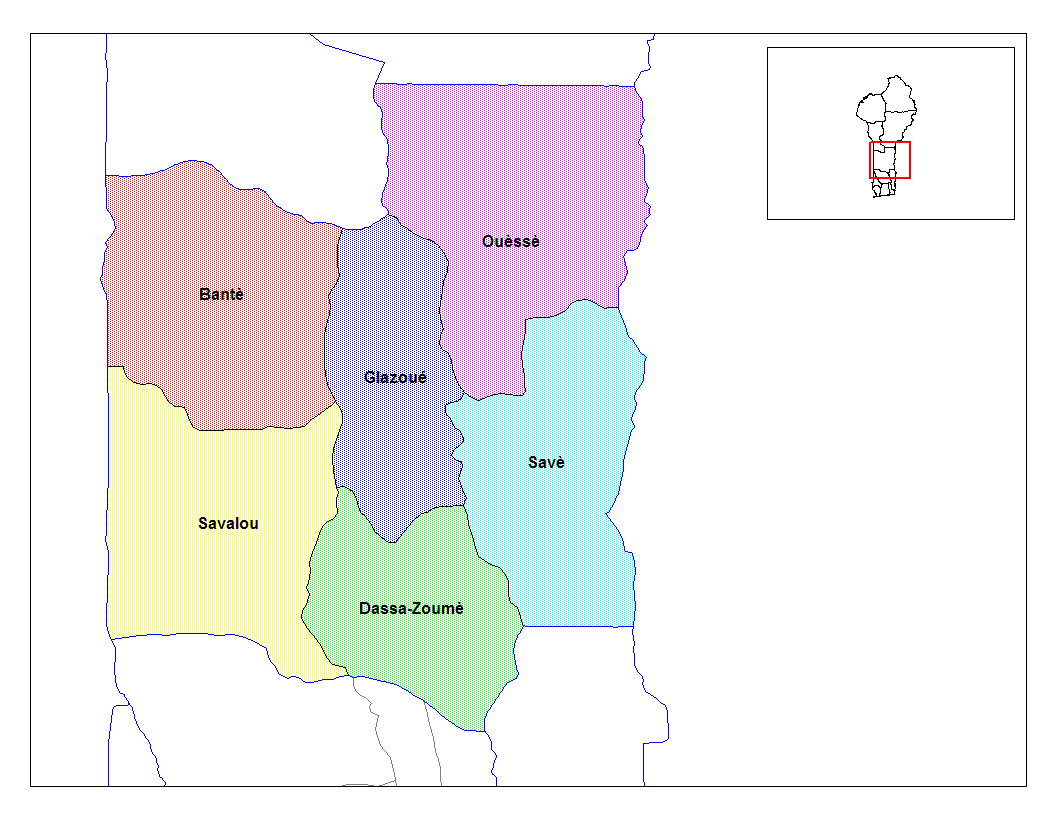
The department is subdivided into communes, which are further divided into arrondissements and villages for local governance. Major communes include:
- Bantè
- Dassa-Zoumé
- Glazoué
- Ouèssè
- Savalou (capital)
- Savè
Economy and society
The economy of Collines is predominantly rural and agricultural. Smallholder farms produce staple crops such as maize, cassava and yams alongside vegetables and cotton in some areas. Local markets in commune towns connect producers with regional traders. Communities are culturally diverse and multilingual: French is the official language of administration, while a variety of local languages and ethnic traditions are used in everyday life.
Transport, services and development
Main towns are linked by a network of regional roads that connect to national routes, although road quality and access can vary. Public services such as education, primary health care and local administration have been the focus of ongoing efforts to improve access and quality since the department's creation. The decentralisation process aimed to bring decision-making and basic services closer to local populations.
Culture and local life
Collines has a lively local culture expressed in markets, festivals and customary institutions. Traditional leaders and community organisations play an important role in social life. Visitors may find a mix of religious practices, artisan crafts and agricultural fairs that reflect the department's rural character and regional connections.
Related articles
Author
AlegsaOnline.com Collines Department (Benin) Leandro Alegsa
URL: https://en.alegsaonline.com/art/21649