
Charlton, London
Charlton is a district and electoral ward in southeast London, part of the Royal Borough of Greenwich. It blends riverside areas, parks and historic sites with residential neighbourhoods and a strong local identity.
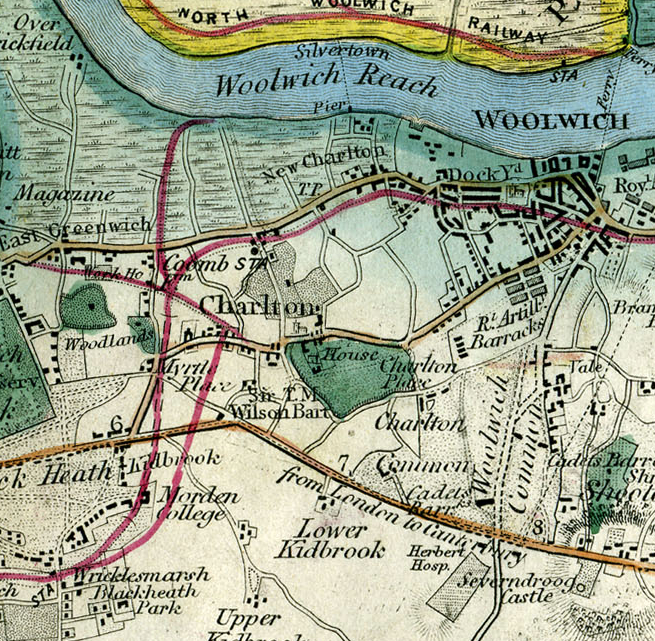
Charlton is a district and electoral ward in the south‑east of London, within the Royal Borough of Greenwich. It lies on the south bank of the River Thames between the better known neighbouring districts of Greenwich and Woolwich. As part of outer inner‑London, Charlton combines suburban streets with pockets of riverside and industrial land that have been changing in recent decades.
Image gallery
9 Images


Character and landmarks
The area contains a mix of mid‑Victorian and 20th‑century housing, local shopping streets and several public parks. Charlton House, a Jacobean manor now used for community and cultural purposes, is one of the district’s best‑known historic buildings. Another prominent local feature is The Valley, the stadium of Charlton Athletic, which functions as a focal point for community life on match days.
Along the Thames frontage there are industrial tracts and wharves that have attracted redevelopment proposals, while smaller green spaces and river paths provide recreation for residents. Local services include primary and secondary schools, health facilities and high‑street shops serving everyday needs.
History and development
Charlton has roots as a rural settlement that became increasingly urbanised with London’s 19th‑ and 20th‑century expansion. Historically part of the county of Kent, it was incorporated into the modern London borough structure in the 20th century and is now administered as part of Greenwich. The area’s growth was influenced by nearby docks, military sites and river trade, which stimulated housing and local commerce.
In the later 20th and early 21st centuries, parts of Charlton—particularly the riverside—have been the subject of regeneration plans aimed at introducing new homes, business space and public realm improvements. These projects seek to balance conservation of historic assets with new development.
Transport and community life
Charlton is served by a local railway station on suburban services, and several bus routes link it with central London and neighbouring districts. Road links provide direct routes to the east and west along the south bank of the Thames. Community life is shaped by local clubs, civic organisations and the presence of the football club, which contributes to a distinct local identity.
For a concise introduction to the area and civic services consult borough resources and local community pages for up‑to‑date information about planning, events and public amenities.
Related articles
Author
AlegsaOnline.com Charlton, London Leandro Alegsa
URL: https://en.alegsaonline.com/art/18852