
Business plan: purpose, components, history and common formats
A business plan explains an organization's goals, the rationale that they are achievable, and the strategies and resources for reaching them. It supports financing, management and strategic decision-making.
A business plan is a written document that describes a company's objectives, the reasons those objectives are realistic, and the steps planned to achieve them. It serves both as an internal guide for founders and managers and as an external summary for potential investors, lenders, partners and other stakeholders.
Image gallery
2 Images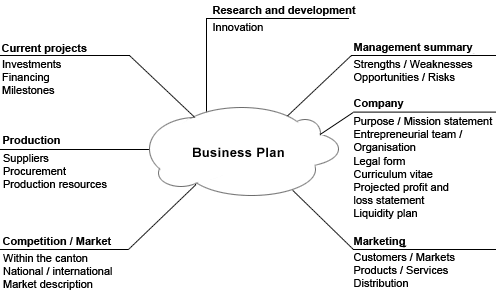

Typical contents and structure
Although formats vary, most business plans include a concise executive summary and sections that explain the business model, the market, how the product or service will be delivered, the organization that will run it, and the finances underpinning the project. Plans range from a single-page outline to a detailed multi-section report.
- Executive summary: snapshot of the opportunity and the ask.
- Market analysis: customers, competitors and demand drivers.
- Product or service: features, benefits and intellectual property.
- Operations and management: structure, key roles and suppliers.
- Financials: revenue model, budgets, cash flow and break-even.
- Risks and milestones: uncertainties and planned checkpoints.
Origins and development
The business plan emerged as a management tool alongside modern business education and corporate finance practices. Historically it became common as entrepreneurs sought bank loans or outside capital, and as managers needed a documented strategy to coordinate investors, staff and suppliers. Over time, templates and methodologies evolved to suit different sizes, industries and stages of growth.
Uses and practical importance
Business plans are used to raise funding, to test and refine an idea, to set priorities and measure performance, and to communicate strategy to employees and partners. A clear plan helps identify assumptions that must be tested, resources required, and the timing of expected returns. For many startups and projects, the plan is a key tool for negotiations with investors.
Different formats suit different situations: a detailed traditional plan for bank lending or large investments; a concise pitch deck for early-stage investor meetings; and one-page or canvas models for rapid iteration. Regardless of format, effective plans are realistic, evidence-based and updated as circumstances change.
Notable cautions: a plan is a living document, not a prophecy. Common mistakes include over-optimistic projections, incomplete market research, and failing to address execution risks. Regular review and adaptation improve a plan's usefulness as a guide to building and scaling a venture.
Related articles
Author
AlegsaOnline.com Business plan: purpose, components, history and common formats Leandro Alegsa
URL: https://en.alegsaonline.com/art/15604