
AIK Bandy — the bandy section of Allmänna Idrottsklubben in Solna
AIK Bandy is the bandy section of the Swedish multi-sport club AIK, based in Solna. Founded in 1905, the team won national championships in 1909, 1914 and 1931 and has a long regional sporting tradition.
Overview
AIK Bandy is the bandy section of Allmänna Idrottsklubben (AIK), a major Swedish multi-sport club. Based in Solna, just north of central Stockholm, the bandy team was established in 1905 and has been part of Sweden's winter‑sport landscape for more than a century. AIK Bandy competes in the sport of bandy, a team game played on ice with a small ball and large playing surface.
Image gallery
3 Images

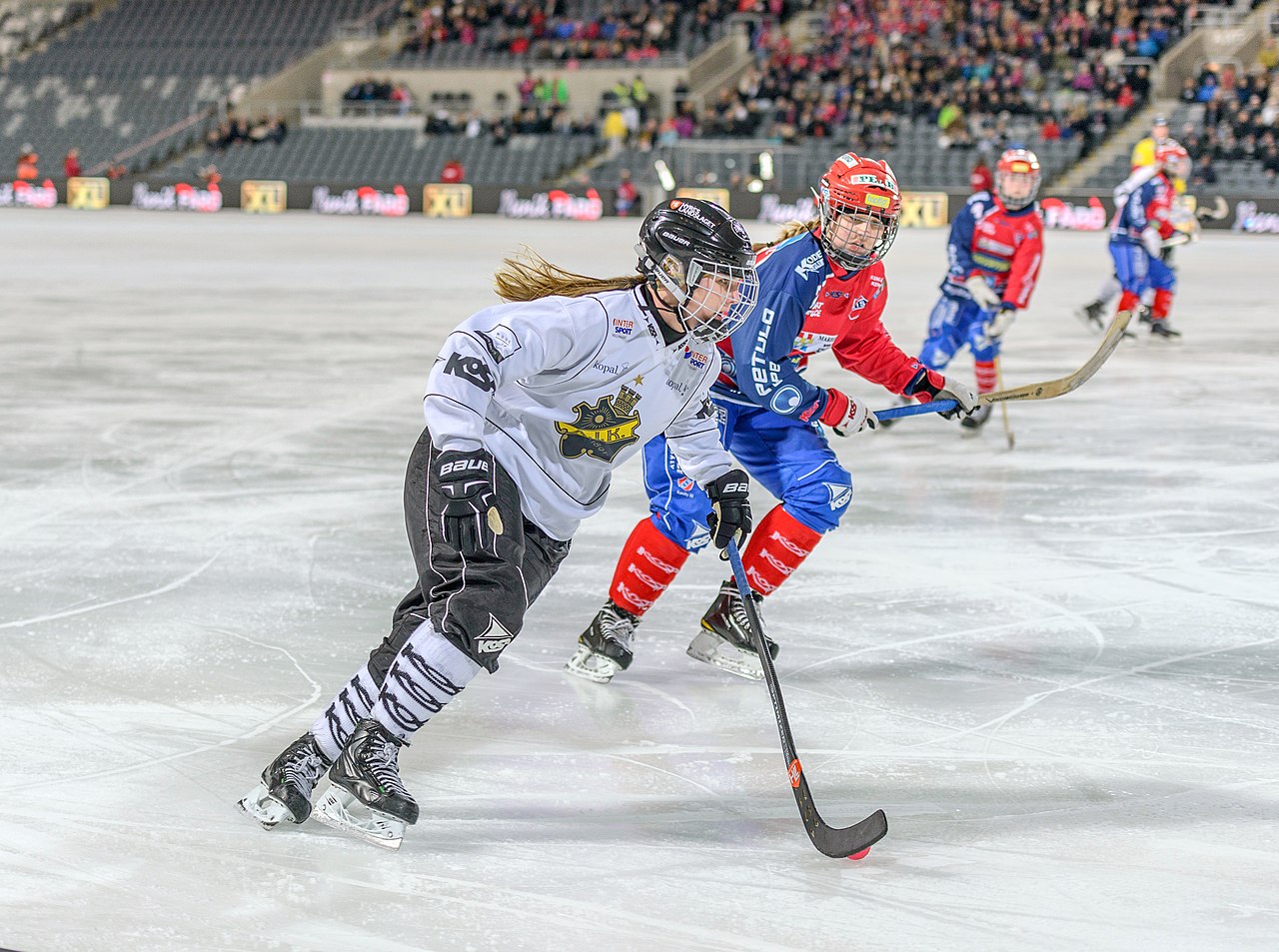
Characteristics of the sport and team
Bandy is played eleven‑a‑side on an ice field roughly the size of a football pitch, using curved sticks and a ball rather than a puck. Teams require specialized ice, skates and tactics that more closely resemble field football than ice hockey. Clubs like AIK maintain senior squads, youth teams and often engage volunteers and local supporters to run coaching and matchday activities.
History and development
The AIK bandy section was formed in 1905 during a period when organized winter sports were expanding rapidly in Sweden. AIK achieved notable national success in the early 20th century, capturing the Swedish men's bandy championship titles in 1909, 1914 and 1931. Those victories mark the club's golden era in the sport and helped establish its reputation in Swedish bandy circles.
Importance and role
As part of a large multi-sport organization, AIK Bandy has contributed to regional sporting culture in Solna and greater Stockholm. The section has served as a platform for player development, local competition and community engagement in winter sport. Swedish bandy championships remain among the sport's most prestigious achievements nationally.
Notable facts and present context
- Founded (bandy section): 1905.
- Swedish men's bandy champions: 1909, 1914, 1931.
- Part of Allmänna Idrottsklubben (AIK), a prominent multi‑sport club in Sweden.
Over time AIK Bandy's competitive level has varied, reflecting changes in resources, league structures and local interest. Nonetheless, its early championships and long history keep the section an enduring part of Sweden's bandy heritage and the broader AIK sporting identity.
Tags
Related articles
Author
AlegsaOnline.com AIK Bandy — the bandy section of Allmänna Idrottsklubben in Solna Leandro Alegsa
URL: https://en.alegsaonline.com/art/1551
Sources
- iof1.idrottonline.se : "SM-finaler genom åren"