
Vernon L. Smith — pioneer of experimental economics
American economist Vernon L. Smith (born 1927), Nobel laureate known for founding experimental economics, laboratory market studies, asset‑market experiments, and contributions to market design and economic methodology.
Overview
Vernon Lomax Smith (born January 1, 1927) is an American economist best known for establishing laboratory experiments as a credible tool for testing economic theory and studying market institutions. His work demonstrated how controlled, replicable experiments can reveal behavior in markets and institutions that theory alone may not predict. Smith shared the 2002 Nobel Memorial Prize in Economic Sciences with Daniel Kahneman for his role in developing experimental methods in economics; the prize citation emphasized the importance of laboratory experiments in empirical economic analysis. Nobel Prize (2002)
Image gallery
2 Images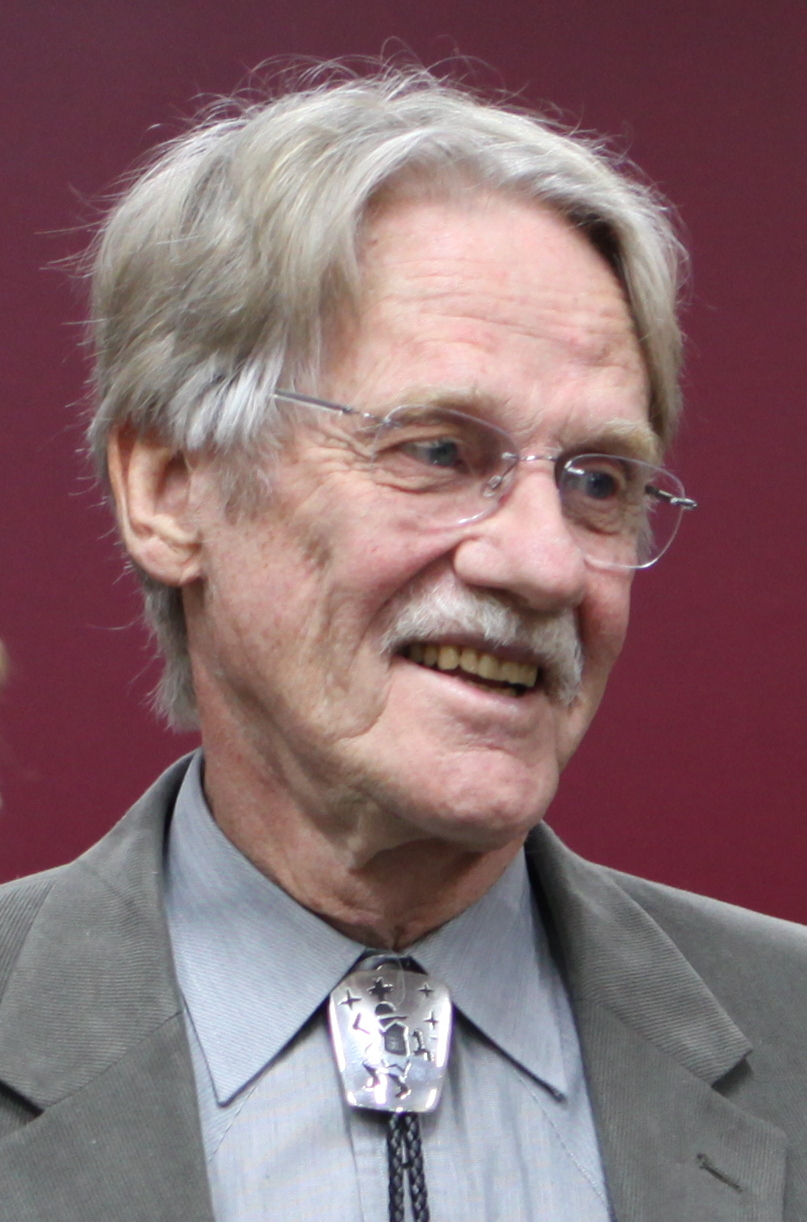

Major contributions and characteristics of his work
Smith pioneered experimental designs that isolate market rules and information structures so researchers can observe how prices, allocations, and strategies emerge. Among his key contributions are:
- Experimental double‑auction markets that show how competitive outcomes can arise even with few traders and limited information.
- Controlled asset‑market experiments that documented bubbles and crashes, highlighting how expectations, trading rules, and information shape price dynamics.
- Development of methods and protocols for laboratory economics, including incentives, subject recruitment, and replication standards.
These contributions helped transform economics by providing a bridge between abstract models and observed behavior, enabling scholars to test hypotheses about market performance, institutions, and policy interventions.
History and institutional roles
Over a long academic career, Smith held appointments at several universities and helped institutionalize experimental economics through centers and foundations. He was a professor at Chapman University’s Argyros School of Business and Economics and School of Law in Orange, California, where he continued to teach and advise students late into his career. Chapman University recognized his influence on teaching and research.
Smith founded and served as president of the International Foundation for Research in Experimental Economics (IFREE), an organization devoted to supporting experimental work and dissemination of results. IFREE promoted independent research on market processes and institutional design. He also maintained affiliations with policy and research organizations, including advisory and senior fellow roles; these connections helped translate experimental findings into public discussion and applied design. Institutional affiliations and advisory posts extended his reach beyond the laboratory.
Notable experiments and examples
Two recurring themes in Smith’s experimental program are market convergence and the origins of price fluctuations. His early laboratory studies of double‑auction markets showed that, under many conditions, prices converge to competitive equilibrium predictions despite noisy information and strategic behavior. Later asset‑market experiments—often replicated and extended by other researchers—revealed persistent price bubbles under certain trading rules and information environments, offering insights into financial volatility and trader psychology.
Recognition, influence, and legacy
Smith’s methods influenced generations of researchers in economics, finance, political economy, and related fields. The Nobel Prize formalized the acceptance of laboratory experimentation as a central empirical approach in economics. He received honorary degrees and had research centers named in his honor; for example, Universidad Francisco Marroquín awarded him an honorary doctorate and named a center for experimental economics after him. Experimental economics as a subfield now includes many laboratories worldwide and a broad range of applications, from auction design to public‑policy testing.
While experimental methods cannot answer every question, Smith’s legacy is a more empirical, testable, and institutionally grounded economics. His work remains a foundation for scholars who study how rules, incentives, and information shape real‑world economic outcomes. See also related resources and overviews at institutional pages and research centers. IFREE, discipline summaries, and archived lecture collections provide entry points for further reading.
Author
AlegsaOnline.com Vernon L. Smith — pioneer of experimental economics Leandro Alegsa
URL: https://en.alegsaonline.com/art/147248