
To Kill with Intrigue (1977 film)
A 1977 Hong Kong–South Korean wuxia action film directed by Lo Wei, starring Jackie Chan, Hsu Feng and Yuen Biao. An early, serious-patterned role for Chan before his comic kung fu breakthrough.
Overview
To Kill with Intrigue is a 1977 Hong Kong–South Korean martial arts film directed by Lo Wei. Its Chinese title is 劍花煙雨江南. The picture features an early screen appearance by Jackie Chan alongside Hsu Feng, George Wang and Yuen Biao. Unlike the comic kung fu films that later made Chan internationally famous, this production follows a more traditional, dramatic wuxia approach.
Image gallery
1 Image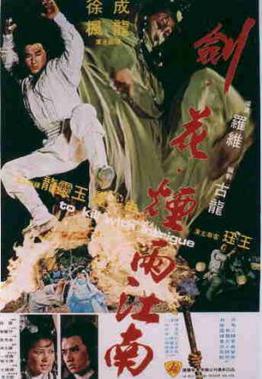
Plot and themes
The film revolves around swordsmen, vendettas and court intrigues typical of the wuxia genre. It emphasizes choreographed swordplay, shifting loyalties and melodramatic confrontations rather than the acrobatic slapstick that would come to define Chan's later persona. Themes include honor, betrayal and the personal cost of violent conflict.
Cast and key elements
- Jackie Chan — early starring/support role showcasing serious action work.
- Hsu Feng — a leading actress known for work in martial arts and period pieces.
- Yuen Biao and George Wang — supporting performers contributing to fight choreography and ensemble action.
Production and style
Directed by Lo Wei, who had worked with established martial arts stars, the film adheres to a more conventional, studio-era wuxia rhythm: poised sword fights, atmospheric sets and a melodramatic narrative. The action relies on hand-to-hand and weapon choreography rather than the physical comedy that later distinguished Chan's films. Like many regional co-productions of the time, it was distributed in multiple dubbed versions for different markets.
Reception and legacy
At release the film drew attention because of its cast but received mixed reactions from audiences and critics. It is often noted by film historians as part of Jackie Chan's formative period: a project that contrasts with his later breakthrough in comedic martial arts and helped shape his transition into a unique comic-action style. Today it is of interest to collectors and fans who study Chan's early career and the broader evolution of 1970s wuxia cinema.
Notable distinctions
- Represents a more serious, melodramatic take on wuxia compared with later, broadly comic kung fu films.
- Features early collaborations among performers who would continue to appear in Hong Kong action cinema.
Author
AlegsaOnline.com To Kill with Intrigue (1977 film) Leandro Alegsa
URL: https://en.alegsaonline.com/art/146909