
The Legend of Bagger Vance
A 2000 sports drama film directed by Robert Redford, adapted from Steven Pressfield's novel; it blends golf, spiritual guidance and redemption with notable performances and mixed critical response.
The Legend of Bagger Vance is a 2000 American sports drama film adapted from Steven Pressfield's 1995 novel. Directed by Robert Redford, it frames a golf tournament as the stage for a personal story of loss, recovery and moral guidance. The movie stars Will Smith, Matt Damon, and Charlize Theron, supported by Bruce McGill and a final film appearance by Jack Lemmon.
Image gallery
1 Image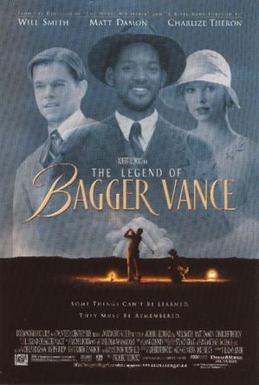
Plot and principal characters
The narrative follows Rannulph Junuh, a celebrated golfer and war veteran who has withdrawn from competitive life after trauma. He is drawn back into a high‑stakes match that symbolizes his attempt to reclaim self‑respect. Alongside him appears the enigmatic caddie Bagger Vance, whose calm guidance helps Junuh find his "authentic swing." The story mixes a period‑setting sporting contest with a mentor‑pupil relationship and romantic subplots.
Production and adaptation
Based on Pressfield's novel, the film translates literary allegory into cinematic imagery, using lush landscapes and measured pacing to evoke a bygone era. Redford's direction emphasizes mood and character rather than action, and the cast's performances anchor the film's introspective tone. The adaptation simplifies some novel elements to fit a feature film structure while retaining the central moral journey.
Themes and reception
Common themes include redemption, the search for purpose, and sport as metaphor for life's challenges. Many viewers noted spiritual overtones; some critics and audiences drew parallels to classic spiritual texts and to archetypal teacher‑student relationships. Reviews were mixed: performers and cinematography received praise while others criticized the film's sentimental tone and its handling of race and stereotyping. Commercially the picture reached a broad audience but divided critical opinion.
Notable facts and legacy
- Adapted from a 1995 novel by Steven Pressfield; the film kept the book's moral focus.
- Features leading performances by Matt Damon and Will Smith, and a role for Charlize Theron.
- Includes veteran character work by Bruce McGill and the final screen appearance of Jack Lemmon.
- Often cited in discussions of sports films that use athletics as philosophical metaphor.
Today the film is remembered for its contemplative style and for prompting discussion about how popular cinema adapts spiritual and historical source material into mainstream entertainment.
Author
AlegsaOnline.com The Legend of Bagger Vance Leandro Alegsa
URL: https://en.alegsaonline.com/art/146629