
The Heartbreak Kid (1972 film)
1972 dark romantic comedy directed by Elaine May, written by Neil Simon from a Bruce Jay Friedman story; noted for its biting tone, strong performances by Charles Grodin and Jeannie Berlin, and its lasting influence.
Overview
The Heartbreak Kid is a 1972 dark romantic comedy directed by Elaine May from a screenplay by Neil Simon, adapted from Bruce Jay Friedman’s short story "A Change of Plan." The film follows a newly married man whose sudden attraction to another woman forces him into a comic and morally awkward dilemma. Its combination of sharp dialogue, precise staging and an unflinching look at selfishness has led critics and scholars to regard it as a distinct example of adult-oriented American comedy of the early 1970s.
Image gallery
1 Image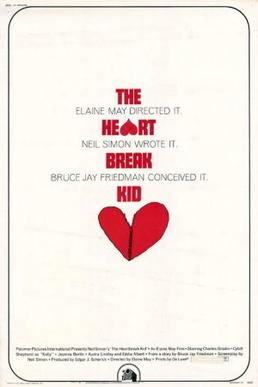
Plot, themes and style
The film explores themes of desire, commitment and the rituals of courtship. Rather than presenting romantic entanglement as idealized or sentimental, the story foregrounds an often cringe-inducing pursuit driven by personal vanity and immediate gratification. Elaine May’s background in sketch comedy and improvisation informs the film’s tone: scenes are tightly directed, performances are drawn with exactitude, and the humor frequently arises from character awkwardness rather than traditional punch lines. The result is a satire of romantic convention that remains uncomfortable and compelling.
Production and casting
Critics have long noted the strength of the cast and the director’s control. Charles Grodin plays the lead with a distinctive mixture of defensiveness and entitlement, while Jeannie Berlin—Elaine May’s daughter—turned in a performance that drew critical attention for its specificity and emotional restraint. The supporting ensemble includes veteran actors such as Eddie Albert and Doris Roberts, as well as an early screen appearance by Cybill Shepherd. May’s direction and Simon’s screenplay together shaped a film that balanced situational comedy with pointed social observation.
Reception and legacy
Upon release the film received considerable attention for its daring tone and strong performances; it has since been discussed in film studies for how it subverts expectations of the romantic comedy and centers a morally ambiguous protagonist. The American Film Institute acknowledged the film’s place in comic cinema by listing it at #91 on AFI's 100 Years...100 Laughs, a reflection of its continued recognition among notable American comedies. Over the decades the picture has been cited as influential for filmmakers and writers interested in darker, character-driven comedy.
Remake and continued interest
The central premise later returned in a contemporary remake released in 2007, which starred Ben Stiller and Malin Åkerman. While the remake updated certain elements for a modern audience, the original film is still studied for its tight scripting, its tonal risk-taking and the distinctive directorial voice of Elaine May. Film retrospectives and scholarly articles often highlight the movie as an important example of how comedy can interrogate personal ethics and social ritual.
Further context
Beyond its narrative and performances, the film is notable for bringing together the talents of a director with a strong background in live comedy and a screenwriter known for sharp urban wit. Its adaptation from a short story also illustrates a period in American cinema when adult themes and ambiguous protagonists became more prominent. For readers seeking more information, consult film histories and critical essays that examine 1970s American comedy and Elaine May’s broader career as a director and performer.
Cast (selected)
- Charles Grodin — lead role
- Jeannie Berlin — co-lead
- Eddie Albert — supporting
- Doris Roberts — supporting
- Cybill Shepherd — early role
Author
AlegsaOnline.com The Heartbreak Kid (1972 film) Leandro Alegsa
URL: https://en.alegsaonline.com/art/146618