
The Grass Harp (1995 film)
1995 film adaptation of Truman Capote's novella, directed by Charles Matthau. A lyrical comedy-drama with an ensemble cast portraying an eccentric small-town tale of friendship and escape.
Overview
The Grass Harp is a 1995 American comedy-drama film adapted from Truman Capote's 1951 novella. Directed by Charles Matthau, it seeks to capture the book's gentle, whimsical tone and Southern setting. The story centers on a band of outsiders who form an improvised household and resist the pressures of a small community; the film emphasizes mood, character interaction, and nostalgic reflection rather than broad plot mechanics. The adaptation aims to translate Capote's lyrical prose into a visual, character-driven piece.
Image gallery
1 Image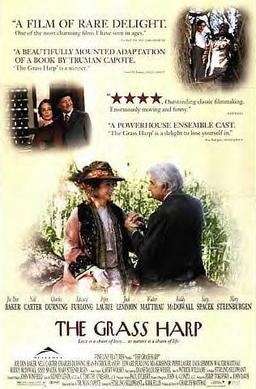
Cast
The movie features a large ensemble of established actors and character performers. Principal cast members include:
- Piper Laurie
- Sissy Spacek
- Walter Matthau
- Jack Lemmon
- Edward Furlong
- Roddy McDowall
- Mary Steenburgen — listed
- Charles Durning — listed
- Nell Carter, Doris Roberts and Scott Wilson appear in supporting roles.
Production and adaptation
Charles Matthau directed the film, drawing on Capote's compact novella as source material. Rather than expanding the storyline into a sprawling drama, the production compresses episodes and leans on performances and atmosphere to convey themes of belonging, innocence, and resistance to conformity. The movie was distributed by Fine Line Pictures and marketed as a small, character-led feature rather than a mainstream studio release.
Themes and style
The Grass Harp emphasizes a quietly poetic sensibility: warmth, wistfulness, and eccentric humor. It explores how marginalized figures can form chosen families and how small acts of defiance loosen the hold of social norms. Visually and tonally, the film favors intimate interiors, slow rhythms, and moments of comic warmth rather than action or suspense.
Reception and legacy
On release the film received mixed reviews: many critics and viewers praised the ensemble performances and the film's faithfulness to Capote's mood, while others felt the adaptation did not fully realize the novel's depth or that its pacing was deliberate to a fault. The Grass Harp remains of interest to fans of literary adaptations and viewers who appreciate character-focused, Southern-set stories. For more on the original writer, see Truman Capote, and for distribution details consult Fine Line Pictures.
Author
AlegsaOnline.com The Grass Harp (1995 film) Leandro Alegsa
URL: https://en.alegsaonline.com/art/146612